


▸ 🇮🇷 U.S. assures it has Iran war under control
▸ 🇸🇾 Syria’s Kurds sign integration deal
▸ 🇳🇪 Niger coup reveals country’s fragile state
Syria saw a major agreement this week between the new transitional government and the Kurdish separatists in the north-east, as the country continues to try to navigate its complicated post-Arab Spring future.
In the Gulf, the United States continues to argue that it is both winning the war and reopening the Strait of Hormuz. However, the Iranians are increasingly frustrated by the lack of progress in negotiations and could soon return to fighting.
In Niger, disgruntled army officers and special forces attempted to overthrow the government, as the junta governments fails to contain the ever-expanding Sahel war.
Now,
Lets get into it
No war, no worry?
What happened: After a month-long lull, the U.S. and Iran resumed clashes on August 30, when the U.S. struck what it said was an Iranian attempt to launch mine-carrying missiles to further disrupt Gulf shipping, killing three and prompting Iranian retaliation on U.S. assets in Jordan and the UAE. On September 1, the U.S. carried out its most extensive attack in weeks, targeting southern and western Iran and killing at least 13 military personnel along with five civilians attending a wedding, two killed on site and three who later died of their wounds. Tehran responded by widening its retaliation to hit Jordan, Bahrain, Kuwait, and Iraq's KRG.
Why it matters: U.S. Vice-President J.D. Vance has denied that what is unfolding constitutes a war, reinforcing Washington's narrative that it can quietly strangle Tehran economically while limiting itself to intermittent strikes aimed at denying Iran the ability to disrupt Gulf shipping. That narrative, paired with U.S. claims of helping move close to 18 million barrels a day out of the Gulf, is meant to reassure markets that this is a war which, despite dragging on, remains under control. Compared to April's Operation Freedom, Washington has strengthened its propaganda position, convincing economic actors that it has finally found a way to checkmate Tehran and no longer needs to urgently pursue a negotiated settlement. Iran-Oman talks over the Strait of Hormuz have stalled in parallel, as the U.S. leans instead on its own containment strategy.
What it means: The dominant narrative is that Tehran is buckling under economic pressure, an impression reinforced by conciliatory statements from Iran's executive branch in favour of diplomacy. But American and Iranian conceptions of time diverge sharply, and a reversal of fortunes in Tehran's favour looks more likely than a last-minute U.S. victory.
Risk metre (medium-high): Tehran has reportedly given Washington until mid-September to shift its stance or face an unprecedented Iranian offensive, a departure from its traditionally defensive doctrine. This escalation isn't set in stone. Domestic pressure to break the dominant U.S. narrative is mounting, but Iranian military officials are not known for abrupt doctrinal shifts and are more likely to wait and see how this cycle of low-intensity clashes and Gulf shipping disruption — with an added layer of attacks at sea — plays out in global markets. China, for its part, has signaled that while it won't align with U.S. secondary sanctions, it doesn't want Tehran to take the initiative on escalation, a preference Iran isn't bound by but may still feel pressure to accommodate.
Syria’s Kurds sign integration deal
What happened: This past week, Syrian-Kurdish leader Mazloum Abdi announced the dissolution of the Syrian Democratic Forces (SDF) during a press conference in Damascus. The announcement came as the majority of SDF forces have entered a process of integration with the military forces of the transitional government of Syrian President Ahmed al-Sharaa. Mazloum Abdi himself has accepted a position as presidential advisor of al-Sharaa on Kurdish matters. In the subsequent days Syrian government forces entered several key areas of the northeast, including the city of Hasakah, to take over security tasks from the defunct troops of the SDF.
Why it matters: The dissolution marks the formal end of Rojava’s decade-long military autonomy in northeastern Syria. Key factors driving the move include shifting U.S. diplomatic priorities toward Damascus, intense pressure and threats of military action from Turkey, and a centralizing push by Syria's post-Assad transitional authorities. The step significantly reduces the risk of a full-scale civil war between the central government and Kurdish forces, as the SDF formed the main alternative source of power opposite to Damascus.
What it means: The struggle for recognition and equal rights of the Syrian Kurds now transitions from the battlefield to the political arena. While Kurdish fighters gain official military standing and civilians secure citizenship and language rights, local self-governance has made way for central state authority. The integration’s long-term success hinges on whether Damascus will be willing or able to grant genuine constitutional protections and cultural rights to minority populations or reinstates authoritarian central rule.
Coup reveals country’s fragile state
What happened: Young Nigerian officers and Special Forces soldiers likely attempted to stage a coup against the junta government of General Abdourahamane Tiani. Mutineering soldiers took control of Airbase 101 and launched attacks on the Presidential Palace and the National Radio Station in the capital, Niamey. The Presidential Guard managed to push back the attacks on the Palace, while Russian Africa Corps soldiers recaptured the airbase, ending the coup.
Why it matters: The coup attempt demonstrates how the Nigerien government’s failure to contain the jihadist insurgency in the north is continuing to put pressure on its ability to maintain control away from the front lines. It also demonstrates the increasing success of Jama'at Nusrat al-Islam wal-Muslimin (JNIM), whose battlefield successes are now damaging the stability of the central government itself.
What it means: The incident has revealed a key weakness in Tiani’s government’s ability to fight the war, as the coup was launched due to discontent within the armed forces over favouritism. Reports indicate that Tiani had been giving preferential treatment to the Presidential Guard, the unit he formerly led, while sending the Special Forces to do the brunt of the fighting in the north with little support. The incident also shows how Tiani will now need to rely on the Russians, not only because he needed them to regain control, but because the Special Forces will now likely be purged. He will have to rely on existing units and the Russians, who will likely request more in return from him.
Risk metre (low-medium): Tiani’s government will likely remain in place in the short term. While it faces major setbacks in the north, Niamey is not as encircled as other major cities such as Bamako. With the main internal opponents also gone, another immediate coup attempt is unlikely. However, the entire incident shows how his government is incapable of managing both the domestic front and the fight against JNIM, meaning Niger will continue to face battlefield setbacks and further instability at home.
What will the Democrats do with power?
U.S. President Donald Trump has increased the power of the presidency to push through his own reforms while trying to tilt institutions in his party’s favour. However, Trump cannot be president forever, and a future Democratic president will need to figure out how they will use that expanded authority. The Democrats could try to use that power to restore democratic norms by pulling back Trump’s initiatives, but doing so creates risks of its own.
 The Geopolitical Desk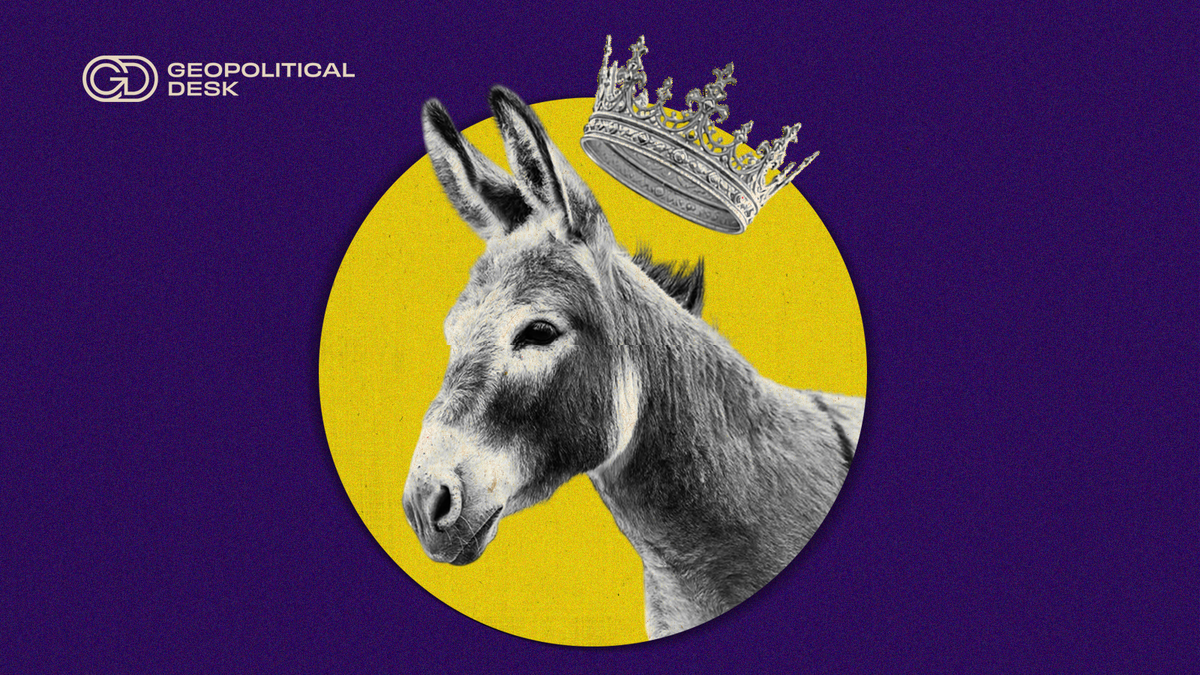
Upcoming Algeria-US Business Forum
U.S. and Algerian relations have had their ups and downs over the years, but have recently been stuck within the security architecture of the war on terror. There has been a concentrated effort over the years between Algeria and the U.S. to diversify their partnership beyond security, and an upcoming business forum in Algiers will provide an opportunity to cement a new relationship.
 The Geopolitical Desk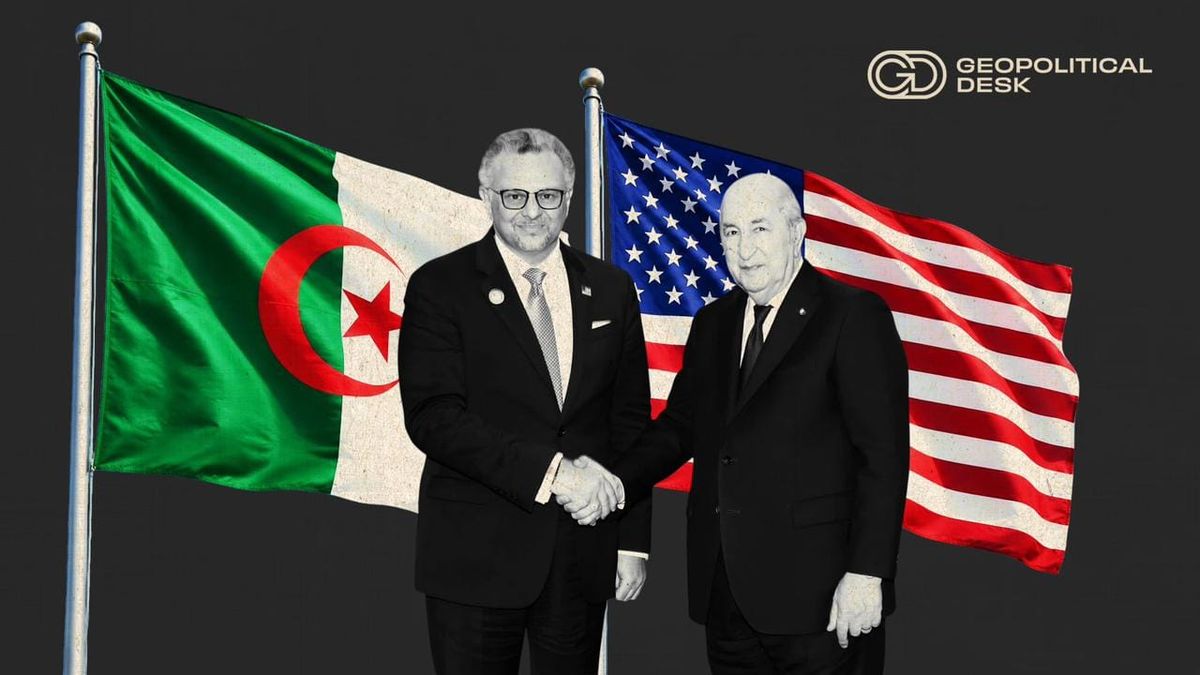
Buried heads as the Gulf fails to adapt to new reality.
The Gulf States have effectively tied themselves to America with the hope that warm ties would guarantee American protection. Yet the war in Iran has proven that the Gulf States can be pulled into disastrous American adventures. Many in the Gulf seem to think they can continue with the status quo, but if they want to avoid a crisis like this in the future, they need to look beyond Washington.
 The Geopolitical Desk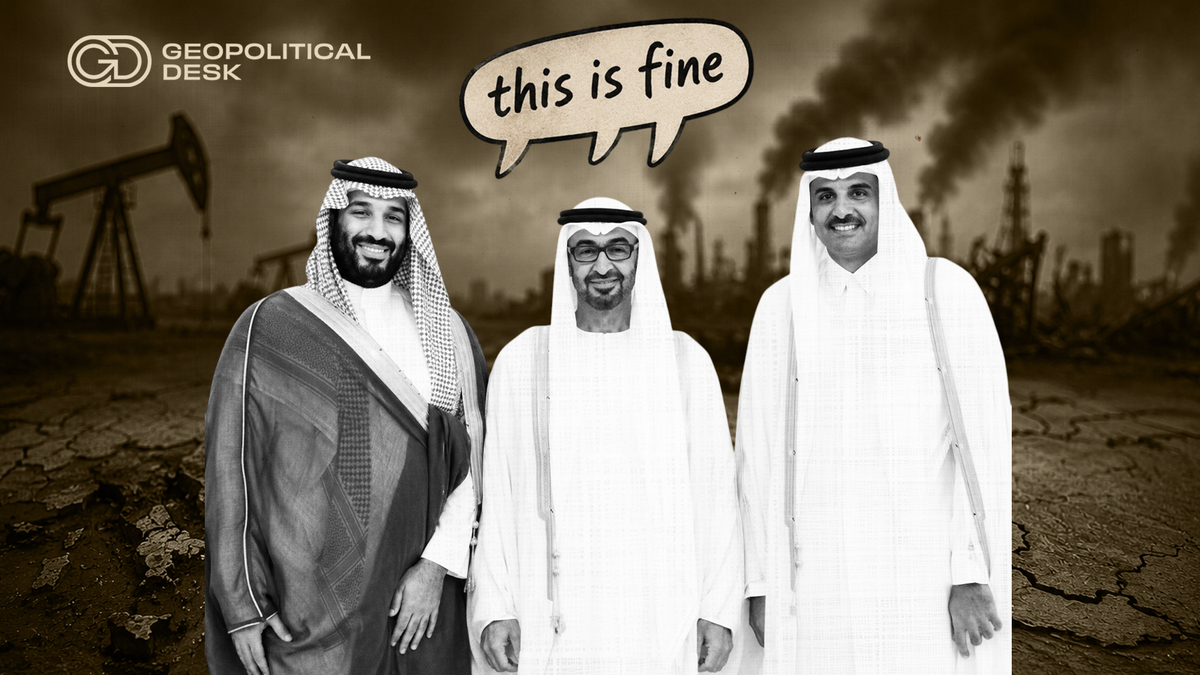
As always, thank you for reading and for your continued support.
Feel free to reply with feedback or suggestions.
See you next week,
The Geopolitical Desk team
P.S. Please forward this to anyone who might find it useful. If you’re reading this second-hand, you can sign up for our free newsletter here.
Professionals across energy markets, diplomacy, risk advisory and investment use GPD Intelligence to track geopolitical developments before they move markets.
If you find this coverage valuable, you can unlock the full Intelligence briefings and scenario analysis.



