The launch of O3 Group promises more than better internet connectivity. With ambitions spanning 5G, digital infrastructure and regional connectivity, the project could establish a new standard for development in Libya, with consequences extending well beyond technology.
The surprise ousting of Central Bank Governor Naji Issa represents a desire by major Libyan factions to move in a different direction, after negotiations over the unified budget lasted for weeks.
An armed attempt to impose a new deputy at Libya’s Audit Bureau has triggered an institutional standoff in Tripoli, exposing the growing influence of armed groups over sovereign institutions and the deteriorating political and security environment in the capital.
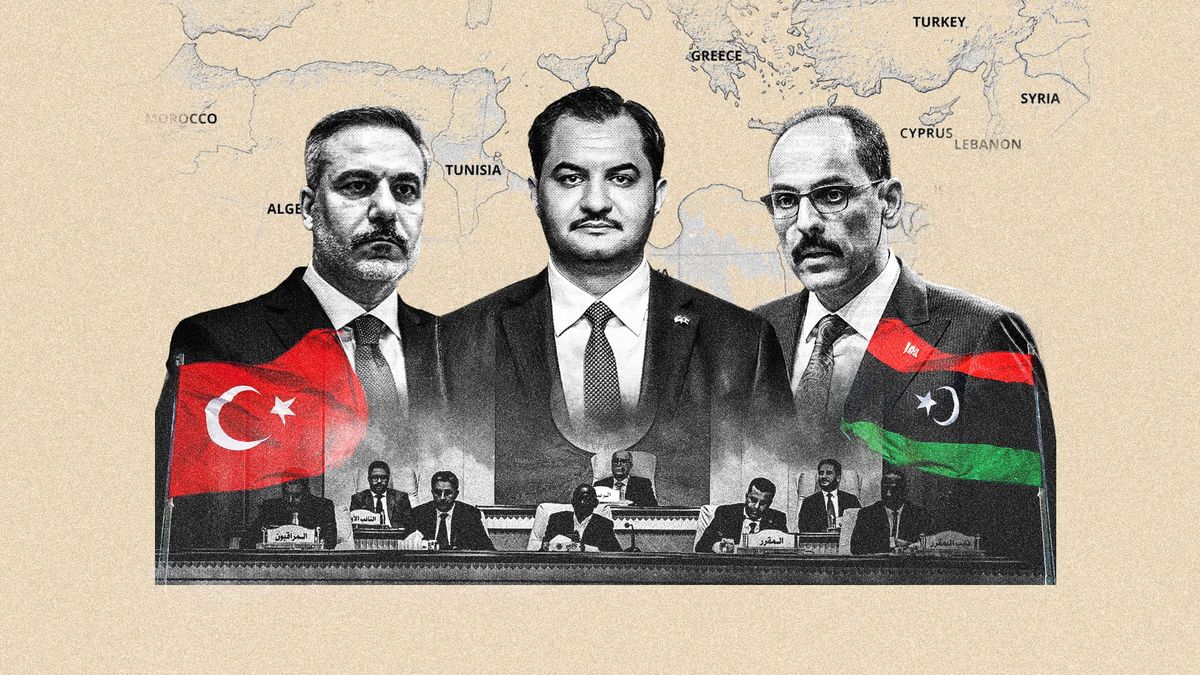
Eastern Libya’s approval of the maritime agreement removes a longstanding obstacle to closer relations between Turkey and the LNA, potentially reshaping Libya’s political future and the balance of power in the Eastern Mediterranean.
Once a tightly knit political family, the Dabaibas are increasingly divided by a struggle for influence, control over state institutions and the future of the Government of National Unity. With public frustration mounting, the consequences could extend well beyond the family.
The surprise ousting of Central Bank Governor Naji Issa represents a desire by major Libyan factions to move in a different direction, after negotiations over the unified budget lasted for weeks.
Once a tightly knit political family, the Dabaibas are increasingly divided by a struggle for influence, control over state institutions and the future of the Government of National Unity. With public frustration mounting, the consequences could extend well beyond the family.
With Iran's hardliners facing the war they had long prepared for, they now face increasing divisions on what the goals of the conflict are, and how it should end.
The launch of O3 Group promises more than better internet connectivity. With ambitions spanning 5G, digital infrastructure and regional connectivity, the project could establish a new standard for development in Libya, with consequences extending well beyond technology.
The surprise ousting of Central Bank Governor Naji Issa represents a desire by major Libyan factions to move in a different direction, after negotiations over the unified budget lasted for weeks.
An armed attempt to impose a new deputy at Libya’s Audit Bureau has triggered an institutional standoff in Tripoli, exposing the growing influence of armed groups over sovereign institutions and the deteriorating political and security environment in the capital.
Eastern Libya’s approval of the maritime agreement removes a longstanding obstacle to closer relations between Turkey and the LNA, potentially reshaping Libya’s political future and the balance of power in the Eastern Mediterranean.
Once a tightly knit political family, the Dabaibas are increasingly divided by a struggle for influence, control over state institutions and the future of the Government of National Unity. With public frustration mounting, the consequences could extend well beyond the family.
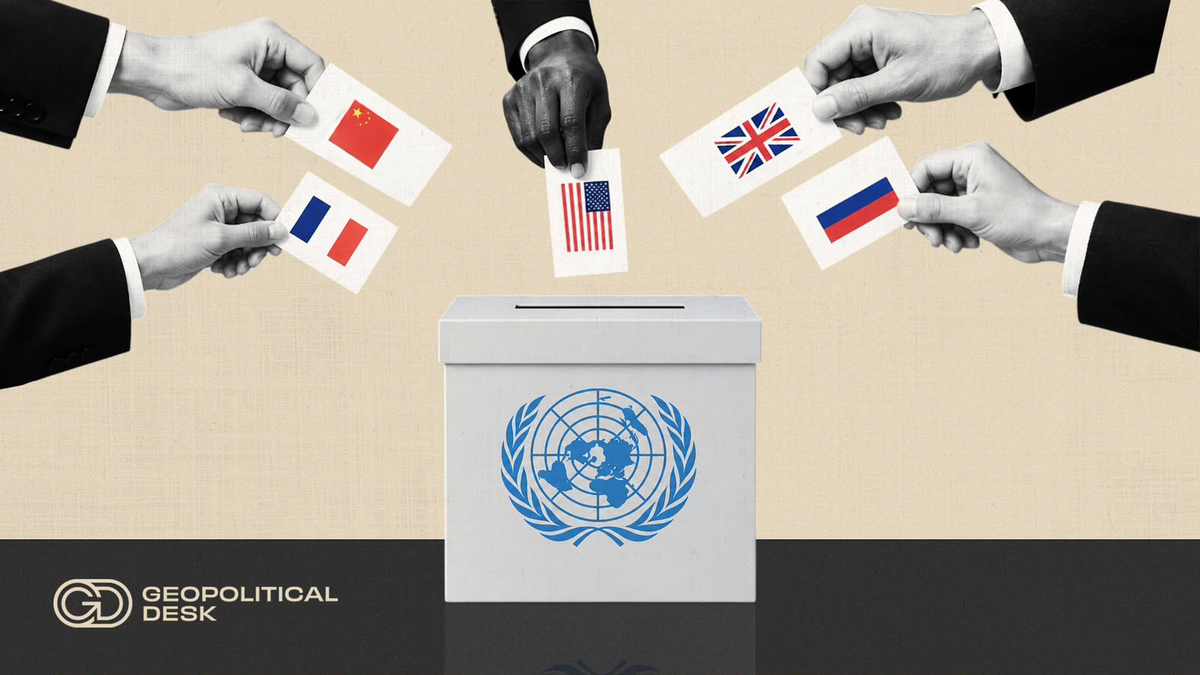
The contest to succeed António Guterres as UN Secretary-General will shape how the weakened body handles a more divided world. Months of closed-door polling have failed to produce consensus on a candidate, and the prospect of prolonged deadlock poses uncertain yet serious risks for the organisation.
Iran has never had more Caspian friends, or needed them more. So why are its neighbours lining up pipelines and corridors that could leave Tehran more exposed than ever?
Iraqi Prime Minister Ali al-Zaidi has bet his young government on a September 30 deadline to strip armed groups of their weapons, a high-stakes echo of the 2021 crisis that nearly got his predecessor killed.
Tehran and D.C. have been stuck in their own catch-22, both have been seeking to avoid a return to active fighting, but have no real capacity to cooperate diplomatically.
With Iran's hardliners facing the war they had long prepared for, they now face increasing divisions on what the goals of the conflict are, and how it should end.
What started as problems with card payments turned into an 18-day disruption that exposed the hidden fragility of one of Iran's most critical civilian infrastructures.
The launch of O3 Group promises more than better internet connectivity. With ambitions spanning 5G, digital infrastructure and regional connectivity, the project could establish a new standard for development in Libya, with consequences extending well beyond technology.
The surprise ousting of Central Bank Governor Naji Issa represents a desire by major Libyan factions to move in a different direction, after negotiations over the unified budget lasted for weeks.
An armed attempt to impose a new deputy at Libya’s Audit Bureau has triggered an institutional standoff in Tripoli, exposing the growing influence of armed groups over sovereign institutions and the deteriorating political and security environment in the capital.
Eastern Libya’s approval of the maritime agreement removes a longstanding obstacle to closer relations between Turkey and the LNA, potentially reshaping Libya’s political future and the balance of power in the Eastern Mediterranean.
Cut through the noise of global politics and get the inside story from our experts with one concise weekly email. Trusted by policymakers and business leaders worldwide.
Libya-Turkey maritime deal, Israel and Iran prepare for another round, protests return to Venezuela
Russia-Ukraine war heats up, ships sunk in Strait of Hormuz, protests expected in Tunisia
The Bab al-Mandab's never ending story
Bye bye Baghdad, tide turns in Ethiopia, Afghanistan’s restless borders
Behind the UNGA speeches, a war and a looming strike
What we're monitoring this week: ▸ 🇱🇾 Libya’s HoR ratifies maritime agreement with Turkey ▸ 🇮🇷 Diplomatic window narrows as Israel pushes for another round ▸ 🇻🇪 Venezuela sees largest protests since capture of Maduro
We are about to enter a busy election period, with votes scheduled in Brazil, Serbia, Israel and the U.S., following all the candidates and campaigns has been a busy job. But it is what might come after the vote which concerns us most.
The U.S. and Israel are building up their forces once again in what analysts fear will be another round of bombings on Iran in the aftermath of the U.S. midterms and Israeli Knesset elections.
A country which however does not have any elections planned anytime soon is Venezuela, where impatience among the opposition has risen so high they are now rallying in the streets.
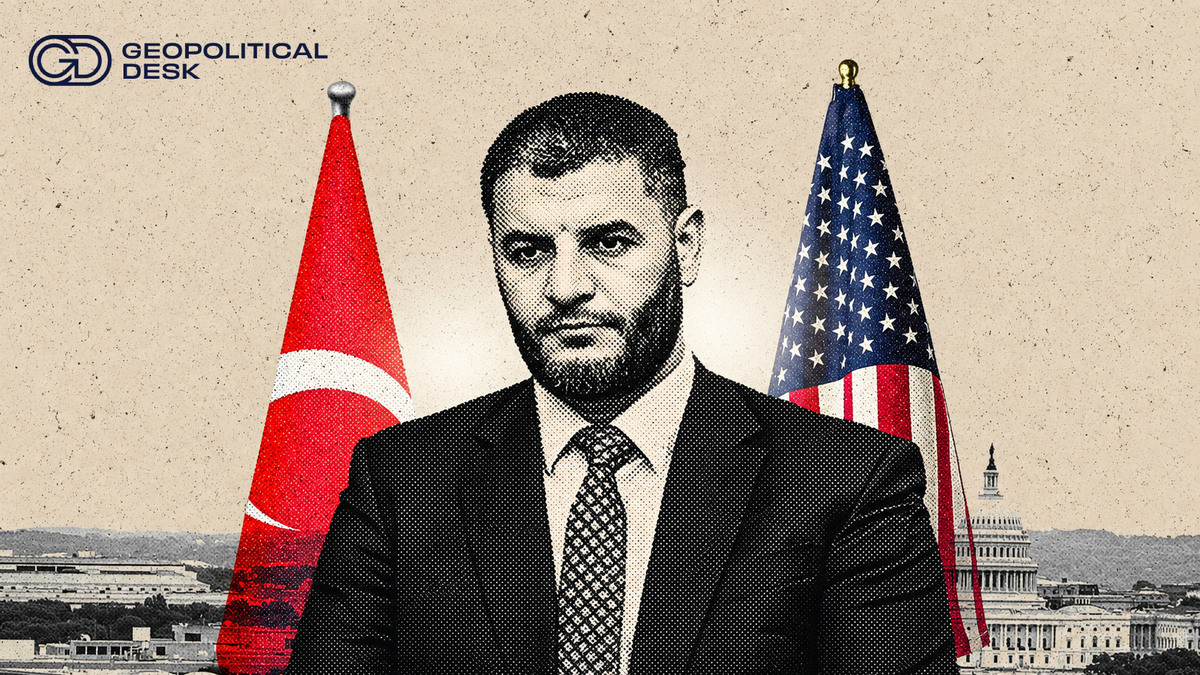
But the most dramatic news of the week came from eastern Libya, where the LNA-backed House of Representative ratified a controversial maritime demarcation deal with Turkey, in what many see as a clear break with the east’s traditional allies such as Egypt, Greece and the UAE.
Now,
Lets get into it
Libya fully ratifies the 2019 Turkey-Libya Maritime Agreement
What happened: The House of Representatives (HoR), based in Benghazi, announced that it had unanimously voted to adopt the 2019 Turkish-Libyan Maritime Agreement, which grants Turkey rights to explore for gas across large sections of the eastern Mediterranean. This was met with regional condemnation from Greece, Cyprus, the EU, Egypt and Israel, all of which view Turkey’s claims as infringing on their territorial waters.
Why it matters: Ratification has been a lengthy process, as the agreement was first introduced in 2019 and signed by Libya’s then Government of National Accord, based in Tripoli. The deal helped secure Turkish support for western Libya and has remained a key Turkish objective for years. However, as much of the maritime territory claimed by Turkey under the agreement lies off the coast of eastern Libya, the support of the eastern-based Libyan National Army (LNA) was necessary. Relations between the LNA and Turkey were previously hostile. However, the ratification demonstrates how Turkish-LNA relations have evolved over the past few years, with former adversaries becoming strategic partners.
What it means: Ratification was one of the final hurdles in building trust between the LNA and Turkey, as the agreement had remained in legal limbo within the HoR for the past year. This final step indicates that the LNA is willing to expand its relations with Turkey. For Ankara, it also provides the necessary political backing to pursue a unity government. Turkey had been lukewarm towards US and UN initiatives to establish a new unity government, fearing that it would lose influence. However, with all Libyan factions now recognising the agreement, Turkey could use its influence to encourage western factions to agree to unity talks.
Risk metre (High): The ratification has prompted regional backlash, as almost every country in the region has publicly rejected it. If Greece, Cyprus, the EU, Israel and Egypt were to coordinate their efforts, they could potentially undermine Turkish attempts to implement the agreement. However, many of these actors are also likely to be unwilling to damage their relations with the LNA. Several have already established ties with the LNA or have been strengthening them. With momentum growing towards the LNA becoming a major part of a unity government, these countries are unlikely to want to jeopardise their positions in a future Libyan state.
Diplomatic window narrows as Israel pushes for another round
What happened: Diplomatic traffic to Tehran intensified this week amid mounting fears of renewed war between Iran, Israel and the U.S.. Russian Foreign Minister Sergei Lavrov visited on 19 October, and the following day top security official Mohsen Rezaei publicly refused to let a single gram of enriched uranium leave the country, in what amounted to a rejection of Moscow’s plan to take the stockpile. Pakistan’s army chief Asim Munir was also in Tehran that day to press the leadership to take a more conciliatory line in its diplomacy, and a Qatari delegation arrived that same night. On 23 October, the E3+Italy and the R4 grouping of major regional powers met in Istanbul for the first time to discuss ways of averting a conflict that has brought a record number of attacks on shipping this month. Tehran’s diplomacy has amounted to a take-it-or-leave-it offer to the U.S. of a return to the June MoU.
Why it matters: None of the mediators carries much weight. Pakistan has lost standing in Tehran after yielding to U.S. pressure to limit its role as an alternative trade corridor for blockaded Iran, notably by adding administrative hurdles at border crossings. The real decision lies with Jerusalem, which believes another round of top-level assassinations and bombings could tip the balance and bring down the Islamic Republic. It also lies with Trump, who sees a strike on Pickaxe Mountain, one of the few nuclear sites left untouched, as a way to wrap up his war after the midterms. The stakes reach well beyond the region, with protesters in several countries, including France, regularly citing the conflict-driven rise in energy prices as a source of anger.
What it means: Electoral politicking, especially in Israel, inflates part of the war rhetoric, but hostility to Iran remains an ideological cornerstone of the current U.S. and Israeli leaderships. Tehran is convinced war is coming and will be better prepared, with automatic retaliation plans designed to hit harder if its civilian infrastructure is struck. Its own heightened rhetoric is also a way to deter an attack by raising the expected cost of one. As such, U.S. bases are unlikely to be Iran’s main targets this time. Iran’s main fear is assassination by infiltrators rather than air strikes, and the protection of senior commanders is likely to leave much to be desired.
Risk metre (High): As we have flagged over the past two months, the diplomatic window has been closing. Our base case is another misstep by Israel and the U.S., followed by a genuine breakdown and blame game between the two allies that pushes Washington back towards negotiations.
Street protests seek to challenge U.S.-backed transition.
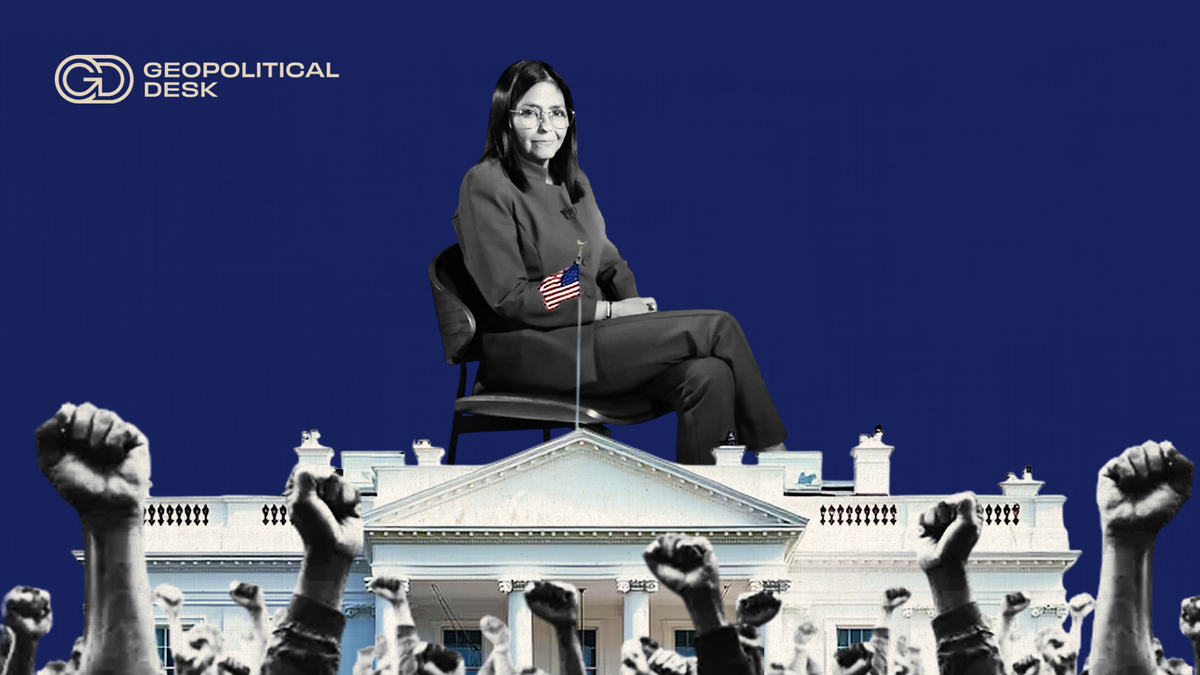
What happened: Several thousand Venezuelans gathered in cities all over the country on Thursday to demand early presidential elections as well as the return of opposition leader Maria Corina Machado, who had gone into exile a year ago and has since been denied the possibility to return. The protests come a day after the interim government of Delcy Rodriguez announced a deal with opposition negotiators on revising a number of repressive laws which had been implemented during her predecessor's reign. The agreement was presented as a boost to the political rights of Venezuelan citizens but almost immediately after the protests, Rodriguez resorted to her belligerent rhetoric, accusing protesters of trying to destabilize the country by spreading chaos.
Why it matters: The opposition’s call for nationwide protests have demonstrated a growing impatience with Venezuela’s political transition since the U.S. raid to capture Nicolas Maduro on January 3rd. While the U.S. has fully endorsed Delcy Rodriguez’ presidency, many within Venezuela fear she intends to turn her transitional mandate into a full presidential term. Pushing for early elections has therefore become a key demand of pro-democracy figures such as Maria Corina Machado.
What it means: Venezuela is navigating the fragile balance of a political transitional government which is internationally sanctioned but highly unpopular domestically. The government of Delcy Rodriguez seeks to entrench its own rule in the post-Maduro age, but is also forced to make symbolic gestures of a democratic opening towards the opposition at large. The opposition led by Maria Corina Machado continues to fill up this space and put increasing pressure on the regime for early elections and to allow for the return of Maria Corina herself.
Risk metre (Medium): The turnout of this round of protests remained quite small compared to earlier mobilisations by the Venezuelan opposition, so it is unlikely these rallies were the opening shot of a larger uprising against the ruling government. But points of friction remain. As long as Rodriguez continues to deny Machado’s entry into the country and remains vague about the potential date of a presidential vote, the opposition will continue to mobilise its base and seek to pressure the government through the streets.
We recently wrote an analysis of Delcy’s dilemma of seeking closer ties to the US without alienating her anti-imperialist base:
🇸🇾 Syria: Protests took place across southern Syria on Friday after Israeli forces shot dead a young man with a disability during a military incursion into the village of Jamlah (western Daraa). Frustration in the south has been growing with the government as Israeli forces from the Golan Heights have repeatedly entered southern Syria at will, conducting night-time raids in villages and arresting locals.
🇾🇪🇸🇦 Arabian Peninsula:On Tuesday, the UK announced it would send RAF fighter jets and pilots to help Saudi Arabia fend off Houthi drone and missile strikes, which have hit a number of targets since fighting in Yemen resumed over the summer.
🇸🇩 Sudan: In a very steep surge across the country, repeated drone strikes by both sides killed an estimated 160 civilians in just a few days. The deadliest incident took place in the disputed Abyei area, where a Sudanese Armed Forces drone struck a local market, causing a fire which led to the death of around 80 people.
🇺🇦 Ukraine: Despite public statements by American officials suggesting Starlink restrictions were resolved, Ukrainian military officers confirmed that terminals operating on fast-moving platforms remain capped at approximately 161 km/h (100 mph). The cap continues to disrupt interceptor drone operations tasked with downing fast Russian jet-powered UAVs and Shahed drones.
🇲🇱 Mali: Militants affiliated with the Islamic State in Sahel Province (ISSP) entered the city of Menaka and slaughtered and estimated 48 people in what was the largest massacre in the region in years. The fighters allegedly accused local residents of passing on ISSP positions to the Malian military.
Libya gets new Central Bank Leadership
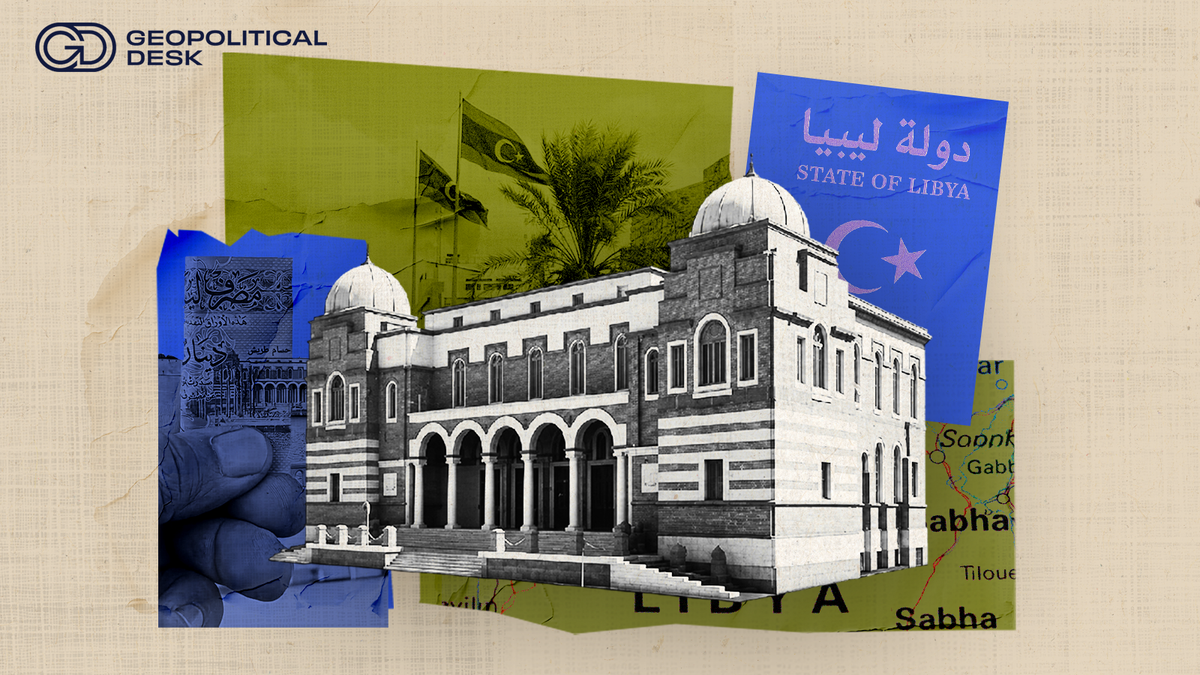
Libya was caught off guard when the House of Representatives announced they had retroactively accepted the resignation of Central Bank Governor Naji Issa, and replaced him with a new interim transitional committee. Within a few hours, the new leadership had taken control of the building in Tripoli despite protests from Issa, indicating increased cooperation among Libya’s rival actors.
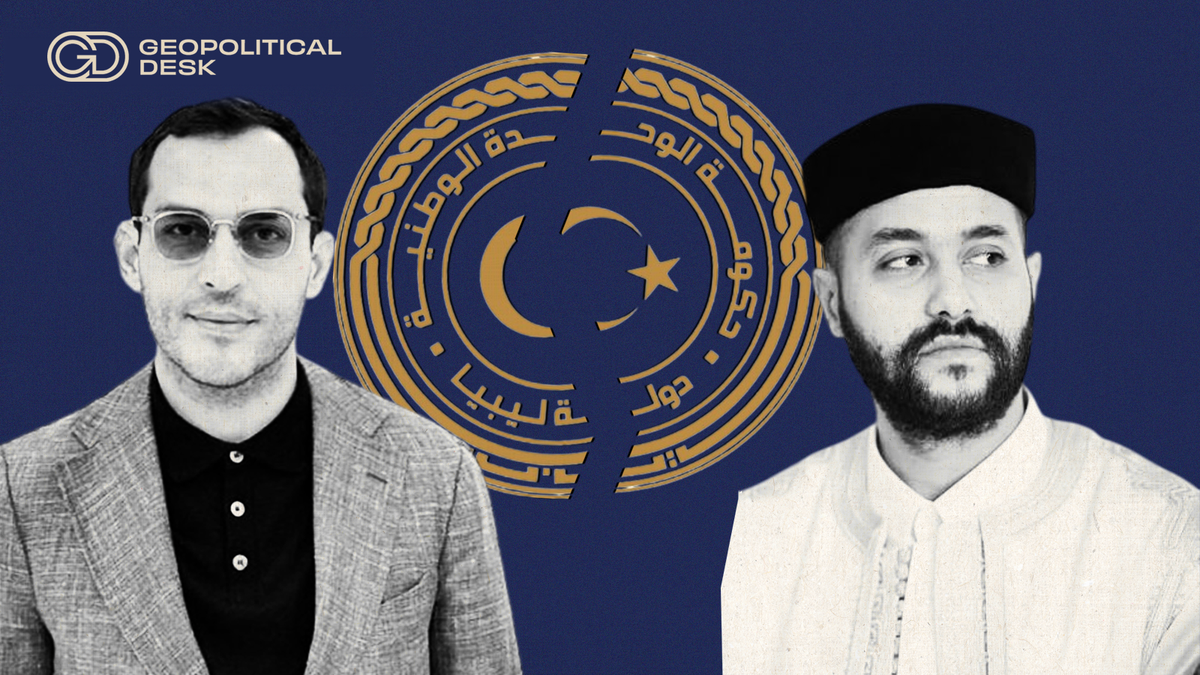
Once a tightly-knit political machine at the heart of western Libya, the Dabaiba family is now fractured by a bitter internal power struggle between Prime Minister Abdulhamid Dabaiba’s son, Mohamed, and his nephew, Ibrahim. As both camps vie for control over key economic assets, state institutions, and political alliances, their escalating rivalry is dismantling the fragile coalition keeping the Government of National Unity afloat.
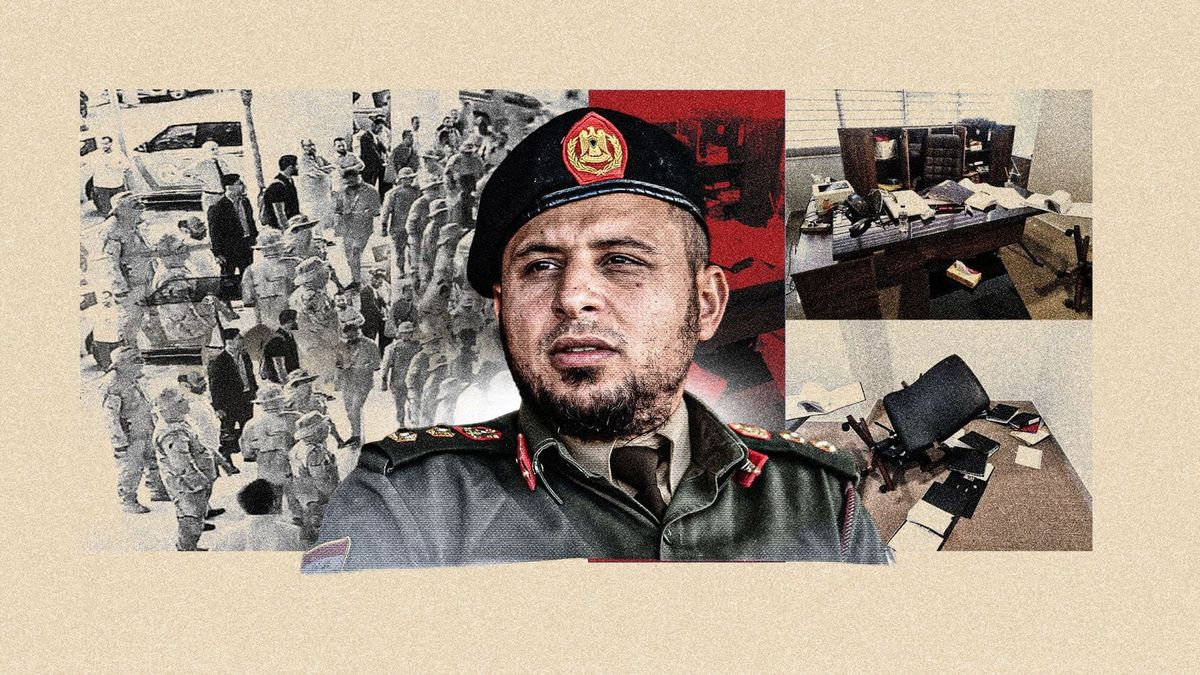
An armed attempt by the 444th Brigade, led by commander Mahmoud Hamza, to install a disputed deputy at Libya’s Audit Bureau has triggered a severe institutional standoff in Tripoli. Bypassing established legal channels, the move exposes how armed groups are increasingly penetrating and leveraging financial oversight bodies for political and financial control. This brazen takeover attempt not only threatens the rare independence of one of Libya's most crucial state institutions but also highlights the deepening deterioration of security and governance in the capital just as broader national political settlements are being negotiated.
Professionals across energy markets, diplomacy, risk advisory and investment use GPD Intelligence to track geopolitical developments before they move markets.
If you find this coverage valuable, you can unlock the full Intelligence briefings and scenario analysis.
What we're monitoring this week: ▸ 🇺🇦🇷🇺 US-mediated "energy ceasefire" already collapse ▸ 🇮🇷 Hormuz attacks by Iran spike ▸ 🇹🇳🇱🇾 North Africa social unrest brewing
Do you know those weeks that feel like a quiet before the storm? Well at GPD we feel like this might be one of those moments.
a U.S.-declared “energy ceasefire” between Russia and Ukraine already collapsed within 24 hours leading to a dangerous escalation in missile and drone attacks.
Meanwhile recent strikes in the Strait of Hormuz by Iran have hurt the recent U.S. narrative that shipping is recovering to normal levels.
And North Africa is reaching a breaking point. After weeks of persistent power cuts amid the heat of summer mass protests have been announced in Tunisia. There are genuine worries if the country erupts in fury, the fire will quickly spread to its neighbors.
Now,
Lets get into it
U.S.-declared “energy ceasefire” collapses before the ink is dry
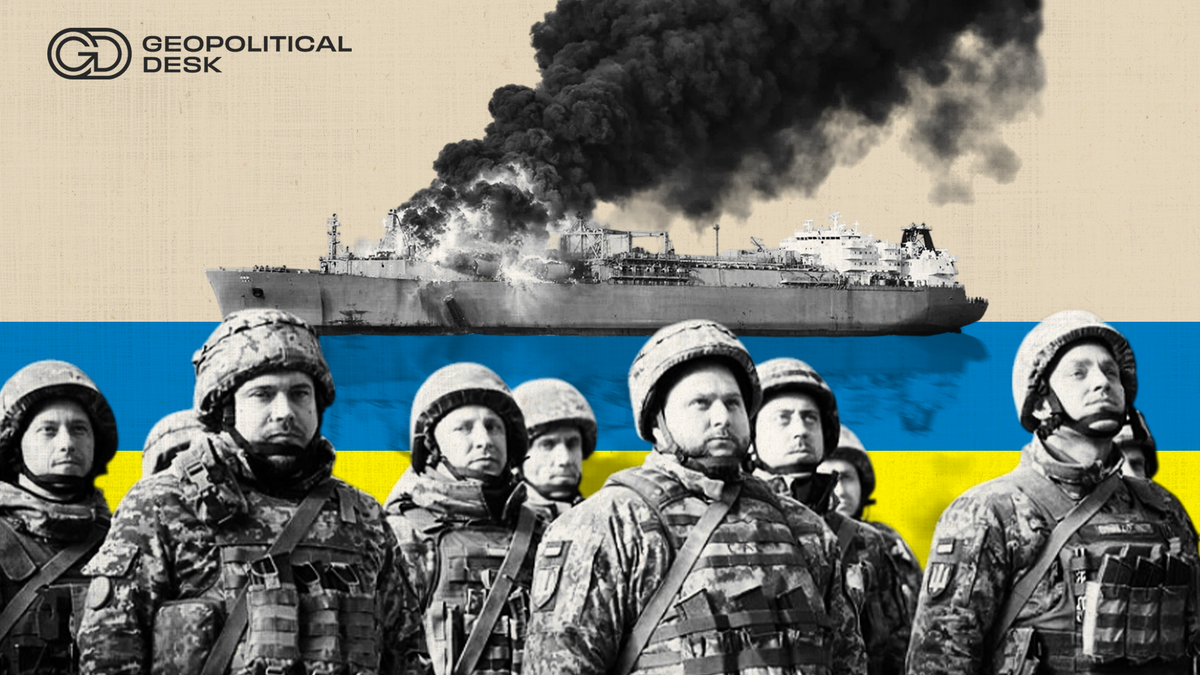
What happened: Despite Trump’s claim of a unilateral “energy ceasefire”, which came with Washington’s unexpected decision to lift sanctions on Russian diesel exports, strikes on the Russian and Ukrainian energy grids only intensified. Russian missile and drone barrages continued hitting Ukrainian power plants and electrical transmission grids in Kyiv, Kharkiv, and southern regions ahead of winter. In response, Ukrainian President Volodymyr Zelenskyy clarified that Kyiv was never consulted on a formal energy truce, and Ukrainian long-range forces resumed deep-strike drone operations targeting Russian refineries, including the Ryazan facilities.
Why it matters: The unilateral U.S. move to ease Russian oil restrictions aimed to curb domestic fuel prices ahead of upcoming midterm elections, but it has come to represent the latest low-point in U.S.-Ukraine relations. Days later, an unannounced cap on Ukraine’s Starshield terminals, reportedly ordered from the White House, briefly grounded drone missions. The US initiative signaled a fracture in Western sanctions cohesion while doing little to stop active military targeting. Moscow capitalized on the situation by doubling down on winter grid strikes, while Kyiv demonstrated that its long-range strategic targeting of Russian fuel supplies remains active.
What it means: The "energy ceasefire", triumphantly announced by the U.S., has already collapsed on the ground. Both Russia and Ukraine appear to only be doubling down on strategic infrastructure strikes. Russia aims to cripple Ukraine's heating grid and economic stability before winter, and Ukraine is striking back against Russian refining capacity to squeeze Moscow's war revenue. The dispute also accelerates pressure on European allies to fill potential U.S. financing and defence supply gaps for Kyiv.
Risk metre (High): The failure of diplomatic signals to halt the grid war, combined with growing friction between Washington and Kyiv and sustained heavy strikes on power infrastructure, has sharply worsened Ukraine’s humanitarian outlook as winter approaches.
Hormuz sinkings puncture the recovery narrative
What happened: A container ship and a dry bulk carrier sank near the Strait of Hormuz this week, bringing the number of merchant vessels sunk since the war began to three. The bulk carrier had been hit on 23 September and stayed afloat for weeks before going down. The IRGC attributed the container ship’s sinking to a sea mine, saying the vessel had used an “unauthorised and hazardous route”, while other accounts point to a projectile strike. Both sinkings came after a senior IRGC official warned on 7 October that routes through the strait considered “illegal” by Tehran would soon be blocked.
Why it matters: Since Operation Economic Outcast began in August, Washington has argued that Iran has lost control of the strait. Regional crude exports topped pre-war levels on 14 days in September, according to Kpler, helped by U.S. naval cover for a route along Oman’s coast, Gulf tankers sailing dark, July U.S. strikes on Iran’s coastal surveillance, and Saudi and Emirati pipelines bypassing the strait. The recovery also partly reflected Iranian restraint, driven by concern over crew deaths and oil spills, reluctance to alienate Asian buyers, and the need to preserve munitions and fast-attack boats during a lull in U.S. strikes. That recovery was real but probably unsustainable, and October’s escalation in Iranian attacks has reversed it, with Hormuz crude flows averaging 8.5 million bpd in the week to 7 October, nearly 40% below pre-war levels.
What it means: Tehran wants to raise the cost of the current stalemate before it has to answer the U.S. response to its own diplomatic proposal. Washington’s position, an enhanced version of the June MoU, demands concrete nuclear steps Iran is unwilling to take, but turning it down flatly would invite strikes. Pressure at sea is a middle course. The IRGC navy now says ships using unauthorised passages will be pursued and punished anywhere in the region, and it has already repeatedly hit vessels in the Gulf of Oman. Extending attacks into the Arabian Sea or Indian Ocean would do far more damage to the U.S. narrative that it is keeping the lanes open. Iran lacks the capabilities to strike that far often. It may not need to, though: a few hits with newer anti-ship missiles, or with help from cyber attacks, could further unsettle shipping and put pressure on Trump ahead of the midterms.
Risk metre (High): Diplomatic deadlock, U.S. aircraft carriers moving back towards Iran, Trump declining to rule out a MOAB strike, possibly on Pickaxe Mountain, and Iranian forces staying on high alert all point to renewed escalation.
Tunisia sees new protests
What happened: Tunisia saw its largest protest in years, led by the influential trade union, the Tunisian General Labour Union (UGTT). They were joined by opposition groups, doctors, lawyers and other sectors demanding change in a national economy and political reality long seen as stagnant. Around 3,000 people reportedly took part, capping off a summer defined by immense heatwaves and prolonged power outages.
Why it matters: These protests mark growing national anger towards the government of Kais Saied, who came to power vowing to renew the nation both economically and politically. Yet, over the years, he has only further tightened his grip on power, while the economy has continued to struggle. The protests also mark a return to popular demonstrations, drawing comparisons to those in 2011 that would later spark the regional Arab Spring.
What it means: The protests in Tunisia are not an isolated event but reflect general social frustration across North Africa. In Morocco, the first woman-led government is attempting to solve a growing youth unemployment crisis, while in Algeria, the government of Abdelmadjid Tebboune is expanding the country's international footprint in the hope of preventing another Hirak movement. In Libya, as talks to form a new unity government draw closer, growing social frustration over the lack of government and social services is boiling to the surface. Meanwhile, in Egypt, there continues to be general public malaise towards the government of President al-Sisi.
Risk metre (Medium): While significant, these protests in Tunisia are unlikely to lead to Saied's downfall, at least not immediately. They are also unlikely to lead to another widespread movement like the one seen in 2011, as North African states have somewhat adapted and learned from the initial protests. However, they are clear indicators of growing public frustration across the region, especially as the hopes of the Arab Spring remain unrealised. For Saied, this means he will likely find less room to manoeuvre as public pressure continues to build against him.
🇪🇹🇪🇷 Ethiopia: Ethiopian government troops reached the Eritrean border in Tigray as the rebel TPLF continues to melt away from all the major cities. Reports continue to come in of Eritrean forces on Ethiopian territory although no major fighting between the two countries has erupted as of yet. Meanwhile Prime Minister Abiy Ahmed has appointed a new interim administration for Tigray, aiming to hold regional elections within six months.
🇾🇪 Yemen: Houthi forces continued their advance on the city of Taiz this past week after cutting off the last road into town, completing their siege. Taiz has been under Houthi assault since 2015, a battle which has taken a heavy toll on its civilian population. It is expected the city will fall in the coming time.
🇸🇩 Sudan: An Egyptian air strike killed between 72 and 200 Sudanese miners in the Egypt-Sudan border region on Sunday. It marks the second major Egyptian strike on a Sudanese mine in the past six months. Since the war started, an estimated 4 million Sudanese have started working in illicit gold mines, leading to an explosion of mining sites around the country. Egyptian border guards accuse Sudanese prospectors of crossing the unmarked frontier to mine near sites run by Egyptian firms.
🇨🇩 DR Congo: Former Congolese president Joseph Kabila joined hands with the Rwandan-backed M23 rebel movement. Kabila announced the news at a press conference flanked by several rebel leaders. They mean to set up a new rebel coalition which seeks to oust sitting president Felix Tshisekedi.
🇸🇴 Somalia: Militias and local security forces aligned with former South West State leader Abdiaziz Laftagareen mobilised and took control of the strategic town of Buur-Hakaba in the Bay region. Somali President Hassan Sheikh Mohamud publicly denied the country was sliding back into a political war, but developments in the south highlight growing armed opposition to Mogadishu's central authority.
Secretary or general? The stalled race to lead the UN
As António Guterres prepares to step down at the end of the year, the race to lead a financially constrained and geopolitically fractured United Nations has hit a turbulent deadlock. Months of closed-door straw polls have left frontrunner Rebeca Grynspan struggling against a rising tide of veto-threatening "discouraged" votes while the P5 remain deeply divided over whether the next chief should act as a strict bureaucrat or an autonomous mediator.
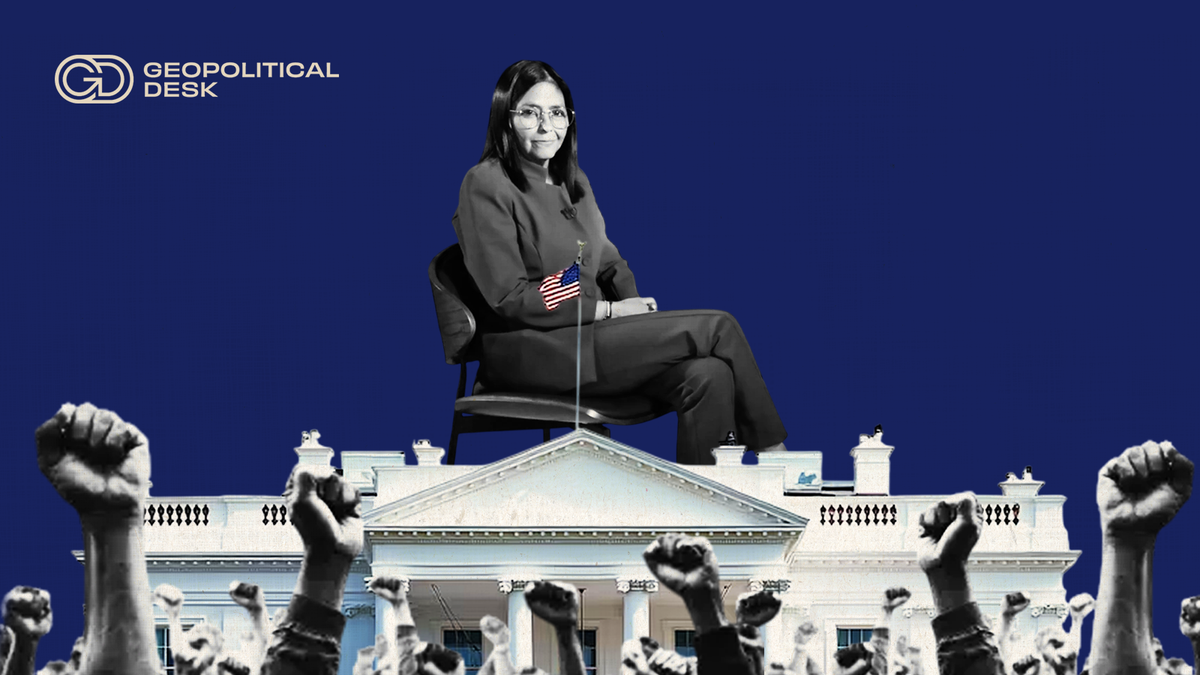
In the wake of Nicolás Maduro’s removal, interim president Delcy Rodríguez has successfully broken Venezuela's international isolation through high-stakes diplomacy in Washington and New York. However, by embracing a U.S.-backed oil deal and shifting away from traditional allies like Cuba, she has alienated hardline Chavistas and sparked domestic protests without securing the backing of dissidents within the opposition. Propped up almost entirely by White House endorsements, Delcy’s administration faces growing internal vulnerability as a government operating without a true domestic constituency
Professionals across energy markets, diplomacy, risk advisory and investment use GPD Intelligence to track geopolitical developments before they move markets.
If you find this coverage valuable, you can unlock the full Intelligence briefings and scenario analysis.
What we're monitoring this week: ▸ 🇾🇪 Yemeni government launches counteroffensive ▸ 🇪🇹🇪🇷 Eritrea and Ethiopia meet on the battlefield ▸ 🇺🇸 US Republicans fret as midterm draws closer ▸🇺🇦🇰🇷 Ukraine and South Korea at odds.
There are times where it feels like the entire world is descending into war, and unfortunately this past week felt like one of those moments.
In Yemen, the Yemeni government and its allies launched a new offensive on the Houthis, hoping to reclaim the Red Sea coastline it had lost to the rebels only weeks ago.
Meanwhile the Horn of Africa grows closer to a regional war by the minute as Eritrean troops have entered the battlefield in northern Tigray
And from the battlefield to the electoral arena as in the United States the midterms are drawing near, and Republicans are getting nervous.
Now,
Lets get into it
Riyadh caught between a debilitating war and a costly peace
What happened: Yemen’s Presidential Leadership Council launched Operation Dawn of Yemen on 5 October, with the Giants Brigades and Homeland Shield forces leading the ground push under heavy Saudi air cover. Government forces took ground around Dhubab but turned the offensive into a battle of narratives by prematurely declaring Mocha and the Bab al-Mandab coast retaken, before fighting for both resumed two days later. The Houthis, who deny losing Mocha, have tightened their siege of Taiz by cutting its last main road to Aden. They have also struck at the core of the Saudi economy, hitting energy sites where officials are likely downplaying the damage. The strikes have carried a war once felt mainly in Yemen’s southwest to Riyadh, where attacks on the airport killed three people on 8 October and reportedly killed 12 more on 10 October, injuring hundreds and forcing flight cancellations.
Why it matters: Despite high oil prices, Riyadh is under financial strain, with flows through Hormuz volatile, Yanbu its main export route now threatened by the Houthis, and deficits funded by borrowing. Having already cut back its megaprojects this year, the leadership may see the war as part of the same house cleaning, putting its finances in order and removing the Houthi threat on its border once and for all. The bet looks ill-advised, as its allies remain lukewarm. The Mecca Pact offers defence rather than offence, as Pakistan frees Saudi units but will not cross into Yemen and Turkey rules out offensive operations. Elsewhere, Washington has so far refused strikes, France has yet to deploy at Yanbu and the UAE stays out, while Oman urges de-escalation and Tehran offers help only through a return to the 2023 roadmap, which largely mirrors Houthi demands.
What it means: Riyadh faces two bad choices, a debilitating war or a costly peace that would have it fund salaries in Houthi areas, lift restrictions on their ports and airport, and face demands for billions in war reparations. The PLC’s promise to liberate Sanaa looks, for now, far-fetched, and gains on the coast are unlikely to bring a breakthrough inland. Pragmatic behind their anti-al-Saud rhetoric, the Houthis are escalating to push Riyadh towards peace on their terms, but this could instead harden Saudi resolve and lock both sides into a war of spectacular strikes inside the kingdom and gains and reversals in Yemen that settle into stalemate.
Risk metre (High): Should the US-Iran war resume, Iran-aligned Iraqi militias could strike energy facilities across the Eastern Province, the heart of Saudi oil production, leaving the kingdom’s exports under fire on both its Gulf and Red Sea coasts. If reports that Riyadh is seeking Syrian troops prove true, it would also show how desperate the kingdom has become.
Week 3 of the war: Ethiopia and Eritrea meet in the battlefield
What happened: Eritrean military forces moved into northern Ethiopia's Tigray region, carrying heavy weaponry. Dozens of trucks were sighted passing through the town of Adigrat, on their way to the front further south. In response, the Ethiopian National Defense Force (ENDF) launched drone strikes targeting Eritrean troop formations and positions within Ethiopian territory. Ethiopia formally notified the UN Security Council that it faces an "all-out invasion" and must defend itself, demanding an immediate Eritrean withdrawal. Meanwhile, Asmara rejected the accusations, claiming Addis Ababa is inventing pretexts to launch an offensive to seize Red Sea port access.
Why it matters: This direct military clash marks the transition from an indirect proxy conflict to open state-on-state war. The Eritrean incursions into northern Tigray is the last nail in the coffin of the 2018 peace agreement. By engaging Eritrean forces directly with air assets and appealing to international bodies, Ethiopia is attempting to strike the first blow, not waiting for the Eritreans to attack.
What it means: The conflict is expanding into a sovereign cross-border war. With Ethiopian drone strikes actively targeting Eritrean personnel, reciprocal strikes or counter-offensives by Asmara are likely. The fighting risks locking both nations into sustained border battles across the rugged terrain of northern Tigray, and potentially Afar state as well, worsening regional escalation, and giving casus belli to Ethiopian Prime Minister Abiy Ahmed to pursue his expansionist ambitions and launch an invasion of Eritrea’s Red Sea coastline.
Risk metre (High): Active clashes between the two national armies are a matter of time if they haven’t taken place already. This will irreversibly draw Eritrea into Ethiopia’s internal conflict. The repercussions of this war will be felt across the region, especially in Sudan and Somalia, already gripped by brutal conflict and instability.
Republicans fret as midterm draws closer
What happened: The U.S. midterm elections are now less than a month away, with voting scheduled to take place on 3 November, and political campaigns are making their final pitches to voters. Polling, as well as results from previous special elections, has revealed deep unpopularity towards U.S. President Donald Trump and his Republican Party, with growing internal fears that the party will suffer a major defeat. In response, the party has sought to withdraw funding from campaigns it considers unlikely to win, in an effort to shore up support in other closely contested elections.
Why it matters: Since the 2024 general election, the Republican Party has held what is known in U.S. politics as a ‘trifecta’, meaning control of the presidency, the House of Representatives and the Senate. This control has not resulted in Congress passing many laws, largely due to the Republicans’ slim majorities in both chambers. However, it has allowed President Trump to avoid significant legislative scrutiny of his executive actions, as Congress is designed to hold the presidency accountable. While Trump will remain president until 2028, if the Democrats are able to take control of at least one chamber of Congress, they will likely be able to create multiple legal obstacles and launch investigations into the Trump presidency.
What it means: Recent polling in the United States has revealed that many Americans are unhappy with Trump and feel that he has failed to deliver on his campaign promises, including improving the economy, ending foreign wars and deporting only ‘criminal immigrants’. Trump has also increasingly tied the Republican Party’s identity to his own, meaning that his unpopularity has begun to weigh on Republicans in key stronghold states such as Kansas, Texas, and Iowa. However, this also means that, even if the Democrats secure major victories in the upcoming midterms, these gains are less likely to represent a permanent political shift. Once Trump is no longer president, these Republican-leaning states will likely return to their political median.
Risk metre (low): It is important to highlight that polling does not directly translate into election results. Although current predictions suggest that the Democrats could win multiple gubernatorial races and gain control of both chambers of Congress, there is also a very real chance that their victories will be more limited. If the Democrats do achieve major victories, however, there is a small risk that Trump could attempt to disrupt the election process. He has already begun to discredit elections publicly, but it remains unclear whether he will take further action, such as deploying the National Guard to polling stations or preventing newly elected lawmakers from taking office. While the likelihood remains low, the risk is unusually high for the United States, highlighting the extent to which its political institutions have weakened under Trump.
In 2025, GPD highlighted how the midterms would become a major moment in his turbulent presidency. Read the article here:
An unexpected diplomatic fallout between two friends
What happened: South Korea announced it will recall its ambassador to Ukraine, its first such recall of an envoy since 2008. The dispute erupted after Ukrainian President Volodymyr Zelensky revealed during his speech at the UN General Assembly that Kyiv had transferred two captured North Korean POWs to Seoul. South Korea strongly protested the public disclosure, arguing that revealing this sensitive information put the soldiers' families in North Korea at severe risk of retaliation. Ukraine hit back by voicing its displeasement over recent allegations regarding South Korean fuel shipments which allegedly reached Russian ports.
Why it matters: The fallout undermines a delicate geopolitical relation. South Korea has provided humanitarian and financial assistance to Kyiv but has resisted direct arms transfers to preserve regional stability and manage relations with Moscow. Kyiv's public disclosure compromised Seoul’s quiet intelligence channels regarding North Korean military personnel deployed in the conflict. In response, Kyiv urged calm, stating diplomacy must prevail over emotional overreactions while remaining open to restoring diplomatic channels.
What it means: The recall marks a significant rupture in bilateral trust. It stalls prospects for expanded defense cooperation between Kyiv and Seoul, including potential South Korean artillery or air defense support. The public exposure of the POW transfer made South Korea’s president Lee Jae-myung look weak in safeguarding the safety of North Korean transferees or their families. Not reacting forcefully would have invited intense political backlash from human rights organisations and conservative opposition lawmakers. Kyiv miscalculated on this matter and risks alienating a vital non-NATO partner capable of providing high-tier defense manufacturing support just as North Korea deepens its combat integration with Russian forces.
Risk metre (low): Recalling the Korean ambassador will likely prove sufficient in South Korea to satisfy domestic critics of president Lee. In the coming months, relations will therefore gradually be restored again behind the scenes. But what this entails for the future transfer of North Korean POWs to South Korea is hard to say.
The front lines this past week
🇺🇦 Ukraine: More than 30 people were killed in the city of Kramatorsk in the Donbas region when Russian glider bombs hits two passenger buses on Thursday. Russian drone and missile attacks have steadily increased over the recent days, leading to numerous civilian casualties, sometimes dozens at a time.
🇸🇩 Sudan: Forces belonging to the Tasis coalition (RSF and SPLM-N) launched a cross-border incursion from Ethiopia into Sudan’s Blue Nile state, establishing a foothold in the district of Wad al-Mahi. This latest push places the rebels within 60 kilometers of the regional capital of Ed Damazin.
🇲🇱 Mali: On Tuesday Malian government troops and Russian mercenaries returned to the city of Kidal in the far north of the country. Kidal had been lost to the FLA/JNIM coalition in April and had functioned as theb Tuareg’s defacto capital ever since. This time however the FLA withdrew from the city without a fight, leaving it abandoned before the Malian military even arrived.
🇲🇲 Myanmar: Having failed to defeat the Arakan Army in a direct confrontation, junta troops stationed in the regional capital Sittwe have tried on several times to outflank the rebel group. An attempt on Friday to land troops on the nearby island of Ngapyi ended in disaster with junta soldiers forced to withdraw under heavy enemy fire.
Who is Libya’s new parliament speaker?
In a dramatic shift for eastern Libya's political landscape, the House of Representatives ousted its 12-year leader Agila Saleh, replacing him with low-profile parliamentarian; al-Saleheen Abdul Nabi al-Abidi. The tactical selection by the Libyan National Army (LNA) brings the legislature into direct alignment with military leadership while carefully preserving regional interests as well as Obeidat tribal allegiances.
Morocco's new premier faces a tough house and tired public
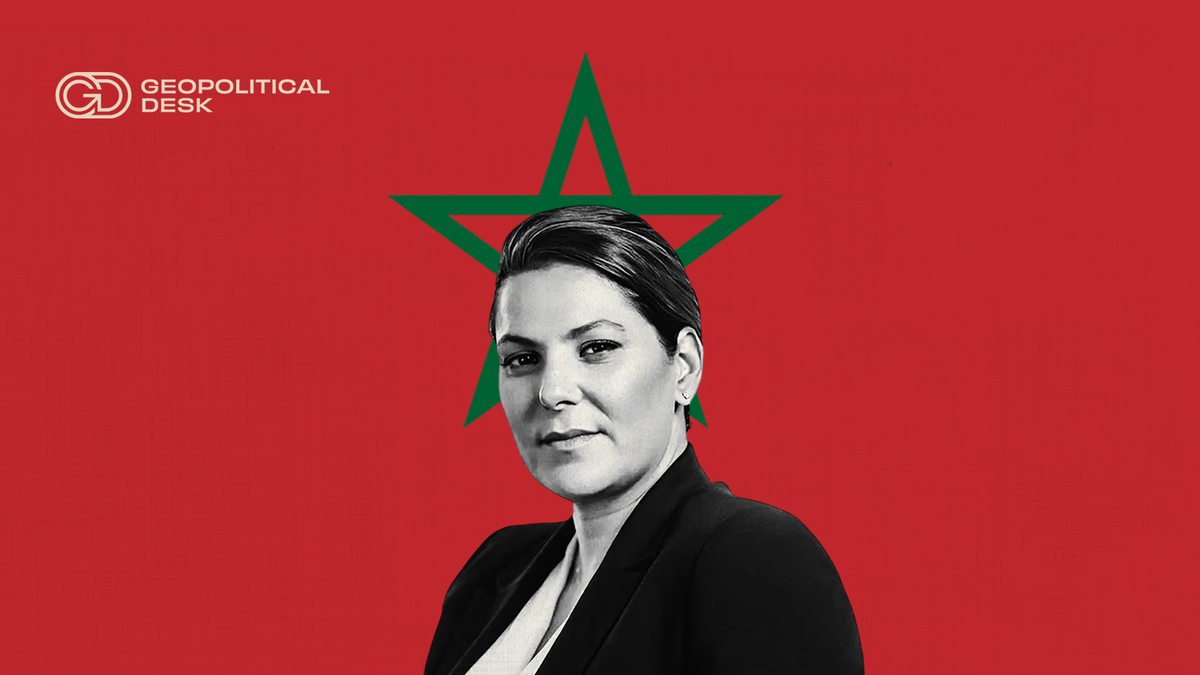
Following the Authenticity and Modernity Party’s (PAM) victory in Morocco's September 2026 legislative elections, Fatima Zahra el-Mansouri was appointed as the nation’s first female head of government. Taking office amid record-low voter turnout, el-Mansouri faces the immediate challenge of forming a working coalition without her party’s former key ally, the RNI. Beyond navigating complex social and religious protocols, her incoming government must address widespread public frustration driven by rising fuel costs, persistent youth unemployment, and high living costs.
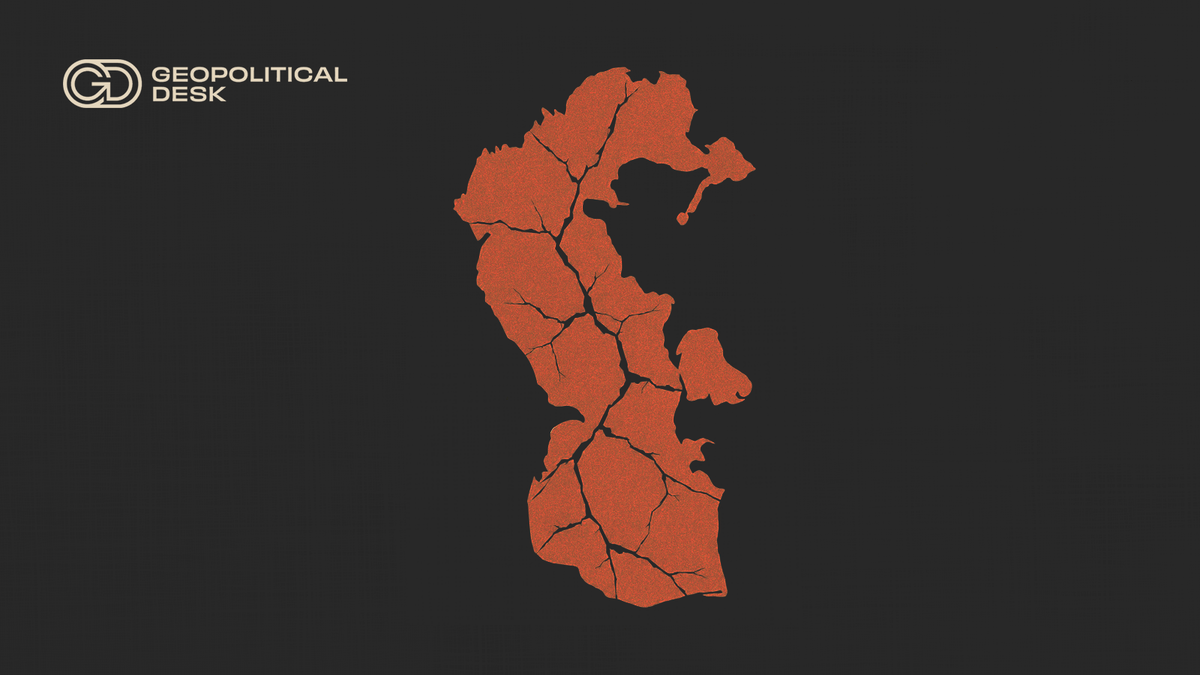
Iran’s northern partnerships have grown increasingly important amid wartime disruptions and pressure on its southern trade routes. However, despite improved relations with its Caspian neighbours, Tehran has made limited progress on longstanding disputes over maritime boundaries, energy infrastructure and regional security. As the prospect of new transport and gas corridors threatens to further sideline Iran, the country faces difficult choices over whether to ratify the Caspian Sea’s legal framework and how to protect its strategic interests.
Professionals across energy markets, diplomacy, risk advisory and investment use GPD Intelligence to track geopolitical developments before they move markets.
If you find this coverage valuable, you can unlock the full Intelligence briefings and scenario analysis.
What we're monitoring this week: ▸ 🇮🇶 US forces withdraw from Iraq ▸ 🇪🇹 Government troops turn tide in Ethiopia ▸ 🇦🇫 Pakistan strikes Afghanistan
What for years would have been considered as breaking news passed this week with little fanfare.
The U.S.-led coalition has left Iraq, but Washington's hold over Iraqi oil revenues and dollar access keeps its leverage intact, as Iran-aligned militias refuse to disarm and Erbil grows more dependent on Baghdad.
But where a chapter is closed in Iraq, another one in Ethiopia is wide open. Federal government troops are advancing on the Tigray capital of Mekelle as a rebel offensive seems to have collapsed.
And after a period of relative calm Pakistan has resorted back to launching strikes on Afghan territory, claiming it means to neutralize the threat of Pakistani insurgent groups across the border zone.
Now,
Lets get into it
U.S. troops leave, but Washington's leverage stays
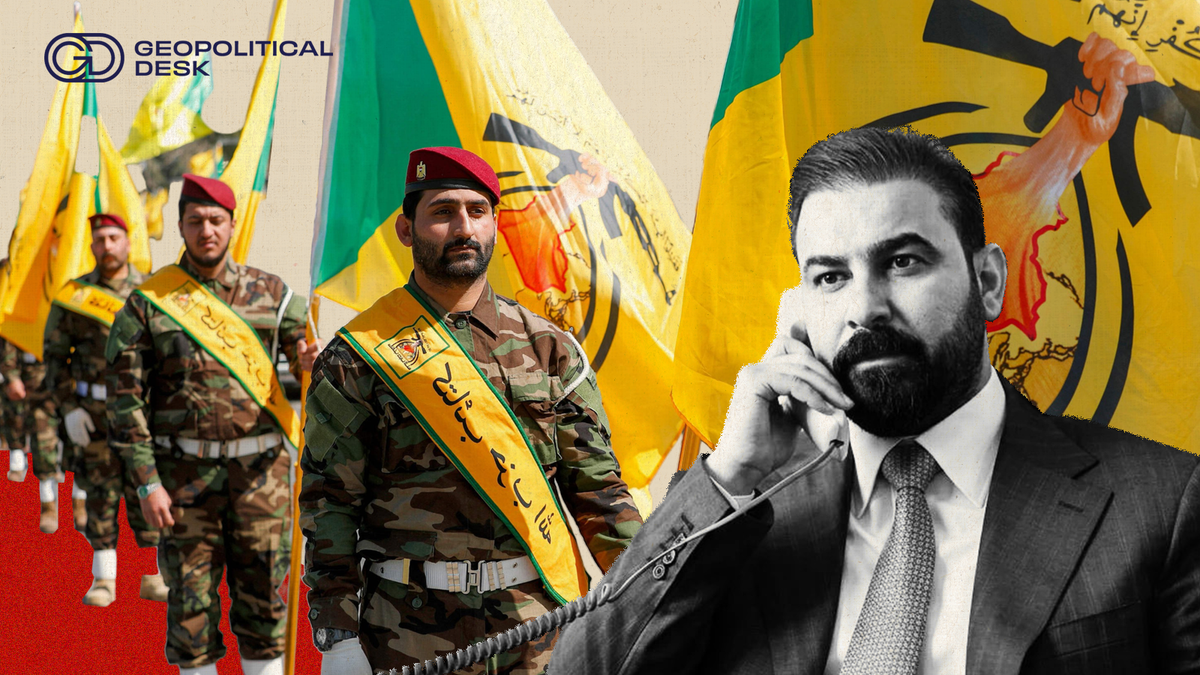
What happened: The U.S.-led coalition completed its withdrawal from Iraq on September 30. Prime Minister Ali al-Zaidi hailed it as the start of an era in which Iraq would stay out of regional conflicts and take its decisions independently, while the IRGC congratulated Iraqis on what it framed as a victory over the U.S. The withdrawal had been tied to a deadline for disarming Iran-aligned militias, which al-Zaidi has now pushed back to June 2027. Groups within the Islamic Resistance in Iraq, including Kataib Hezbollah and Harakat al-Nujaba, had long made disarmament conditional on the departure of foreign troops. They now say they must keep their weapons to respond to any U.S. or Israeli violation of Iraqi sovereignty, and they demand an end to what they call American political and economic interference.
Why it matters: The factions' new demands point to where U.S. influence now lies, since Washington's leverage over Baghdad rests less on troops than on its control over Iraq's finances. Iraq's oil export revenues are held at the Federal Reserve Bank of New York, which gives Washington a hold over the country's access to dollars. These funds are protected from seizure by parties with legal claims against Iraq only as long as Washington keeps renewing an emergency order, which currently runs until May 2027. Baghdad secured short-term U.S. waivers allowing Iraqi Airways and Iranian carriers, except Mahan Air, to resume flights between religious city Najaf and Iran, though other Iraqi airports remain closed to Iranian airlines.
What it means: Al-Zaidi is caught between Iraq's financial dependence on Washington and Iran-aligned factions that reject his authority over their weapons. Postponing the deadline rather than abandoning it lets him appear serious to the U.S. while avoiding a confrontation. It also risks repeating the experience of Mustafa al-Kadhimi, whose pledges to rein in the militias stalled under Iranian and factional pressure. Iran may claim the withdrawal as a win, yet without U.S. troops as a foil, Iraqi frustration is more likely to turn towards Tehran and its allies. That frustration would centre on Iran's encroachment on Iraqi sovereignty, the corruption of the militias and the ideological framing they seek to impose on the state.
Risk metre (Elevated): The June 2027 deadline is likely to be missed as well, and a Kataib Hezbollah security official has warned al-Zaidi against pursuing the U.S.-backed disarmament drive, threatening that any government not serving its people would be overthrown by all means. The U.S. embassy in Baghdad and consulate in Erbil remain likely targets in any regional escalation. In Kurdistan, the end of U.S. funding for the Peshmerga leaves Erbil dependent on Baghdad for the pay of its forces, with the KRG seeking an extra 450 billion dinars in the 2027 budget to bring Peshmerga pay in line with federal forces. As Washington increasingly channels Kurdish security through the federal government, this dependence risks becoming a new source of friction in already fraught relations between Erbil and Baghdad.
Week 2 of the war: government forces are advancing
What happened: Fighting raged across the north of Ethiopia for the second week. Ethiopian military forces (ENDF) managed to turn the tide on the rebels of the Tigrayan People’s Liberation Front (TPLF) and Fano, advancing in Amhara, southern Tigray and the Afar region. Among the most significant victories was the capture of the strategic city of Alamata. On the diplomatic front, Ethiopia ordered the closure of its embassy in Eritrea and expelled Eritrean diplomats. This triggered a full severance of diplomatic ties by Asmara. Simultaneously, Ethiopia expelled a senior Egyptian diplomat from Addis Ababa, prompting Cairo to respond with a tit-for-tat expulsion of an Ethiopian envoy.
Why it matters: The rapid breakdown of diplomatic bridges between Ethiopia and its neighbours increases the risk that the ongoing domestic civil war could escalate into a regional conflict. Addis Ababa accuses Asmara and Cairo of funding and arming internal insurgencies, primarily the Tigrayan TPLF, but also Fano rebels, amid longstanding friction over the Grand Ethiopian Renaissance Dam (GERD). Cutting ties with Eritrea means the deathblow of the already fragile 2018 peace deal between the two countries, while the spat with Egypt further isolates Ethiopia diplomatically across the wider region.
What it means: Ethiopia is now fighting a multi-front war internally while raising tensions with its neighbors. The 2022 Pretoria Peace Agreement has all but collapsed, and Ethiopia is seizing the advantage. It’s likely that Ethiopia will use the ongoing conflict to reassert its claim over Eritrea’s Red Sea coastline, accusing Asmara of being an existential threat. This raises the risk of interstate clashes between Ethiopia, Eritrea, which down the road might draw in other Egyptian-backed forces such as Sudan.
Risk metre (High): As Ethiopian government and military officials are already publicly accusing Eritrea of aiding the rebels, the stage is being set for a direct confrontation between the two. Addis Ababa might also see reason to double down on its support for the RSF in Sudan, meaning violence in that country is set to worsen as well.
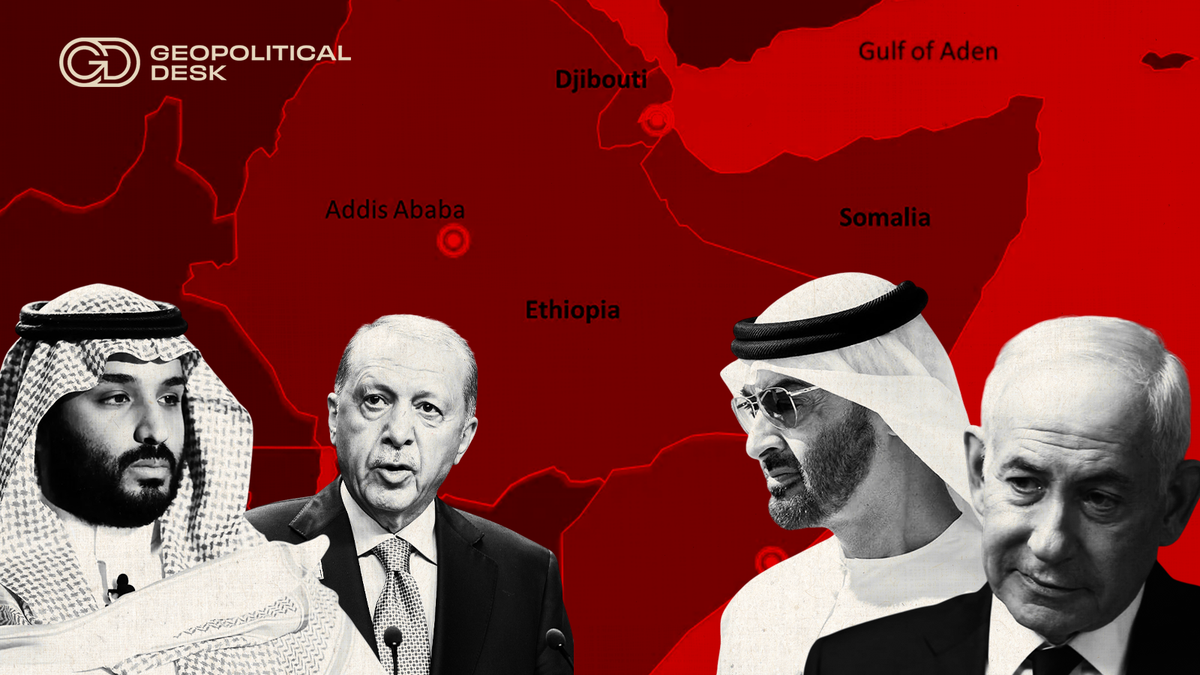
Events in the Horn of Africa do not take place in isolation but are part of a larger struggle for influence in the region:
Pakistani strikes Insurgent groups across Afghan territory
What happened: Pakistan’s Ministry of Information announced that the military had launched airstrikes in Afghanistan, claiming to have killed 22 members of Tehreek-e-Taliban Pakistan (TTP) and the Balochistan Liberation Army (BLA) and destroyed weapons caches. Taliban spokesperson Zabihullah Mujahid denounced the strikes, stating that they had targeted Helmand and Kunar provinces, destroying three homes, killing nine people and wounding 11. The United Nations Assistance Mission in Afghanistan (UNAMA) separately stated that the strikes had killed at least 10 civilians, most of them children.
Why it matters: The strike is a reminder that Afghanistan and Pakistan continue to face severe tensions along the border. While neither side can sustain a prolonged period of border fighting, periods of calm can still easily give way to increased kinetic activity. It also shows that Pakistan remains willing to use force to target armed groups based in Afghanistan, despite the possibility that such strikes could lead to broader border skirmishes. It further demonstrates Pakistan’s continued willingness to conduct strikes in civilian areas, as many Pakistani airstrikes in Afghanistan have resulted in collateral damage.
What it means: The root cause of tensions between the two former allies is the continued presence of the TTP in Afghanistan and its ongoing attacks against Pakistani security forces in Khyber Pakhtunkhwa (KP) province, and with the issue nowhere close to being addressed, these tensions will continue for the medium to long term. The provinces targeted by Pakistan are also notable. While Kunar is a typical target for Pakistani airstrikes due to its border with KP, Helmand has not been targeted as frequently. This could indicate that the BLA is increasing its operations in the southern province, which borders Pakistan’s Balochistan province, with the Taliban potentially becoming more willing to host another antagonist to Islamabad.
Risk metre (low): Despite the severity of the attack, if it leads to another period of border fighting, it is unlikely to last very long. Neither Pakistan nor the Taliban has the capacity to engage in a prolonged military campaign, as both sides continue to deal with their own internal political and security challenges. Both sides are essentially stuck in a stalemate, unwilling to return to negotiations but militarily unable to achieve their objectives. However, recent tensions in Yemen could also mean that Pakistan puts the issue of Afghanistan on the back burner, with both of its Mecca Pact allies, Ankara and Riyadh, increasing efforts to mediate between Kabul and Islamabad over the past few months.
The front lines this past week
🇺🇦 Ukraine: The 3rd Army Corps announced the capture of 250 Russian soldiers, in what it described as the largest mass surrender of Russians since the spring of 2022. The POWs, which were taken captive on the front, north of Lyman, were shown on video spread by the Ukrainian military. Many looked exhausted and malnurished.
🇸🇩 Sudan: The Sudanese Armed Forces (SAF) continued their advance across the North Kordofan region, as on Friday they announced the capture of the town of Al-Mazroub from the RSF. The announcement comes at a time when groups of RSF fighters are once again defecting towards the SAF in the dozens.
🇲🇱 Mali: JNIM jihadists reported on Tuesday to have ambushed a Malian/Russian convoy in the Ségou region in central Mali. At least seven Russian mercenaries, belonging to the Africa Corps were reported to have been among the casualties. Footage released by the jihadists showed large quantities of weaponry having been seized in the assault.
🇲🇲 Myanmar: A deadly junta bombardment in Rakhine state resulted in the death of over 50 people on Monday. Two bombs hit both the main market and a busy overpass in the town of Kyauktaw in AA-territory, during peak hours of the day. The strike was condemned internationally by the UN, US, and human rights organisations.
🇾🇪 Yemen: Government forces claimed to have inflicted heavy losses on the Houthis as attempts by the Iranian-backed rebel groups to complete its encirclement of the city of Taiz have been averted. Saudi Arabia meanwhile accused the Houthis of being behind a drone attack on an electricity facility in the holy city of Medina on Thursday
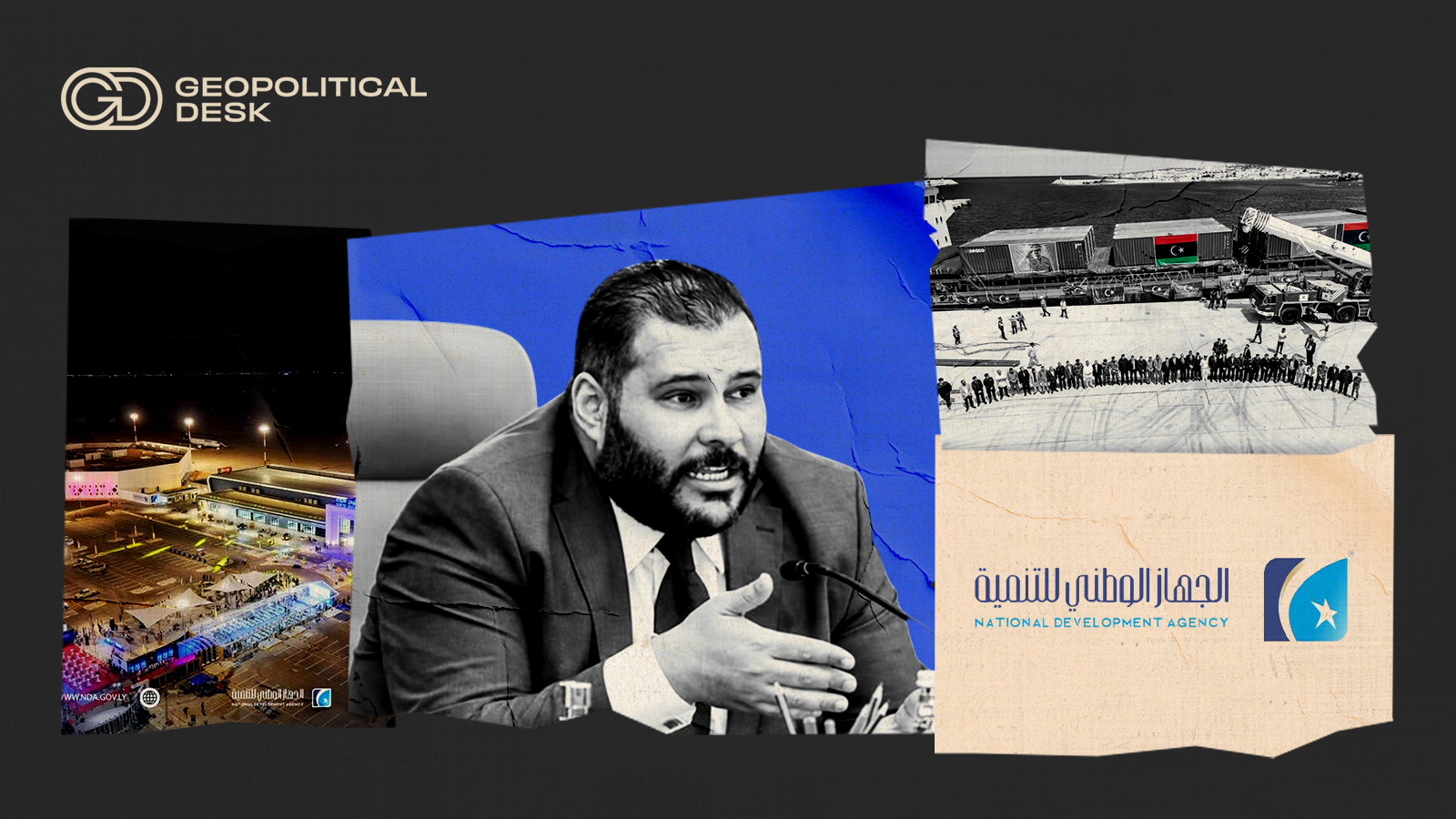
The NDA is turning Sirte into Libya’s administrative centre
Under the direction of Saddam Haftar, Libya’s National Development Agency (NDA) is driving a rapid transformation in Sirte to establish the central coastal city as the nation's new administrative capital. By restoring vital transport hubs, building government complexes, and expanding development projects into the southern city of Sebha, the NDA is using economic reconstruction to secure regional stability. With this project Saddam not only hopes to bridge the long-standing divide between eastern and western factions, but also positions the NDA as a prime conduit for foreign investment in Libya.
Government of National Unity (GNU) Interior Minister Emad al-Trabelsi has once again put himself at the forefront of Western Libya's security architecture, taking advantage of recent delays in the security track. Al-Trabelsi is still trying to recover from last year's fighting in Tripoli, which saw him sidelined within the GNU and largely disregarded by the international community.
Professionals across energy markets, diplomacy, risk advisory and investment use GPD Intelligence to track geopolitical developments before they move markets.
If you find this coverage valuable, you can unlock the full Intelligence briefings and scenario analysis.
What we're monitoring this week: ▸ 🇪🇹 A rebel coalition declares war in Ethiopia ▸ 🇱🇾 Libya moves closer to a deal ▸ 🇮🇷 Iran faces air blockade and fears renewed attack
The UN General Assembly is where the world's unresolved crises come to be aired, and this week's gathering in New York offered no shortage of them.
In Ethiopia, the worst-case scenario materialised as several armed opposition groups formed an alliance and declared open rebellion against the federal government.
In Libya, a deal is gradually coming into view, although internal rivalries are beginning to intensify.
Iran's diplomatic efforts in New York yielded no positive response from the U.S., and the regional situation points to renewed escalation as Tehran contends with a form of air blockade and believes Washington could launch another major strike.
In Venezuela, interim president Delcy Rodríguez scored diplomatic victories in New York while unrest spread at home amid recurring power cuts.
Now,
Lets get into it
A rebel coalition declares war on the government of Ethiopia
What happened: On Monday a coalition of seven armed opposition groups formally announced its formation. Bringing together several rival ethnic rebel groups including the Tigray People's Liberation Front (TPLF), the Amhara Fano National Movement (Fano) and the Oromo Liberation Army (OLA), the coalition called itself the Alliance for Survival, stating its intent to overthrow the Prosperity Party government led by Prime Minister Abiy Ahmed. By Wednesday the rebel coalition had launched a major coordinated offensive against federal forces across the northern regions, including Tigray, Amhara and neighbouring Afar. TPLF forces seized the regional airport in Mekelle, prompting flight suspensions and widespread internet disruptions. Heavy clashes and drone strikes were reported near strategic border towns and World Heritage sites such as the ancient church town of Lalibela, resulting in hundreds of reported casualties and fresh waves of displacement.
Why it matters: The escalation marks a near-total collapse of the 2022 Pretoria Peace Agreement, which brought an end to two years of brutal war in Tigray. The coalition aims to isolate Addis Ababa and choke off vital supply lines, ultimately toppling the state. Simultaneously, the renewed violence threatens to draw in both neighbouring Eritrea and Sudan, which have maintained close ties with the rebel coalition and reportedly played a role in its creation.
What it means: Ethiopia faces a grave risk of descending back into full-scale civil war, severely threatening stability across the entire Horn of Africa. Widespread disruption to humanitarian access, supply lines and domestic travel leaves civilian populations vulnerable to severe shortages and displacement. Combined with the wars in neighbouring Sudan and Somalia, and further away in Yemen, the current eruption of violence has the potential to plunge the region into its worst humanitarian catastrophe in decades.
Risk metre (High): The multi-front military escalation by a unified rebel coalition seriously threatens the survival of not just the current government but the Ethiopian state in its entirety. Some members of the coalition have made no secret of their ethno-nationalist and separatist ambitions. Even if the government fell tomorrow, these groups would very likely turn on each other for control of land and resources. This means an end to the violence is very unlikely for the foreseeable future.
Libya moves closer to a deal as internal power struggles intensify
What happened: Talks towards a unity agreement advanced this week under the American initiative led by Massad Boulos, while disputes on the ground escalated. A Waha Oil Company board reshuffle triggered protests at the Zawiya Refinery and the closure of a pipeline carrying Sharara crude, causing $75 million in losses, according to the National Oil Corporation. Meanwhile, around 100 parliamentarians attempted to hold a session aimed at removing Speaker Agila Saleh, only to be blocked from entering parliament by Libyan National Army forces.
Why it matters: According to Libya Desk's reporting, Prime Minister Abdulhamid Dabaiba's son, Mohamed, pushed through the Waha changes with LNA approval, sidelining Zintani interests and bypassing Ibrahim Dabaiba, who normally manages these arrangements. Ibrahim reportedly backed the guards' protests, while Zintani forces subsequently closed the pipeline. Negotiating salaries alone could not resolve a crisis rooted in appointments and influence. The episode exposed growing tensions within the ruling family and the consequences of disrupting the GNU's broader alliances.
What it means: This reinforces our earlier warning that the closer Libya gets to a deal, the more turbulent its politics will become. Factions are negotiating a settlement while demonstrating how much disruption they can cause if their interests are overlooked. Saleh secured LNA protection after pushing the 4+4 Agreement through parliament, but in doing so exposed his growing dependence on it. The High Council of State, meanwhile, has yet to ratify the agreement. Progress between the main powerbrokers is placing their own alliances under strain.
Risk metre (High): A unity agreement remains within reach, but the oil losses show how quickly political bargaining can inflict economic damage. Boulos this week acknowledged progress and the work still required, reaffirming American support for unifying institutions and establishing a credible path towards elections. Sustained engagement must now translate those assurances into implementation, contain disputes and protect the economy. More will be needed to ensure Libya does not stumble before the finish line.
Iran: "Buckle up, we're expecting a few bumps ahead"
What happened: After the Salalah regional meeting on the Iran-Oman Hormuz framework was postponed in mid-September, Iran used the UN General Assembly to re-up an offer for reopening the strait, reframing the messaging without changing the substance. Washington rejected it outright and kept tightening economic pressure, this week getting major regional airports such as DXB to stop servicing Iranian carriers and others such as IST to cut Iranian flights to a minimum. Tehran initially threatened regional airports but later dialled back its rhetoric, saying it would respond with unspecified countermeasures.
Why it matters: The UN offer looks like a half-hearted bid to preempt an attack Tehran considers likely, possibly with Israeli involvement, either within weeks or soon after the 3 November US midterms. Mossad and the CIA may have rebuilt networks inside Iran and located more of the generals on their kill list, which makes a new round of strikes on the capital a dangerous prospect for Tehran. Iraq, whose airports have also closed to Iranian aircraft, is particularly exposed as it prepares to start disarming non-state armed groups next week. Baghdad now faces domestic charges of subservience to Washington and threats from those groups to raid airports unless Iranian flights resume.
What it means: Renewed conflict would land just as Q4 brings European carriers back to Gulf airports and opens the tourism season, delaying the region's recovery and casting doubt on hopes that the war's fallout will have faded by late 2027. Europe would feel it in energy too, with Washington weighing a diesel export ban and the EU already urging member states to curb demand, particularly for gas.
Risk metre (High): Signals point to renewed escalation, with the Israeli and US elections likely the main brake in the coming weeks. In Tehran, hardliners pushing to go on the offensive to break the US siege have yet to win the debate, and the security establishment still favours harsher retaliation over an pre-emptive campaign.
Rodríguez meets Trump on the sidelines of UNGA
What happened: At the UN General Assembly in New York, Venezuela's acting president, Delcy Rodríguez, delivered her first address since taking power. She promised that elections would take place at the "right moment", without specifying when that would be. After her speech, Rodríguez held several high-profile meetings, the most prominent of which was with President Trump, who praised her leadership of the country following the capture of Maduro in January. With all eyes on New York, opposition leader María Corina Machado tried to return to Venezuela, having left the country late last year. Her plan, however, fell through when her plane was prevented from taking off from Panama following the intervention of an unspecified foreign government. Meanwhile, protests erupted in several states across Venezuela as regular power cuts continued to plague millions of people.
Why it matters: Rodríguez's appearance signals a further endorsement of her administration by Western and Latin American nations such as the US, Panama, Spain and the Netherlands. Economic and energy cooperation agreements with the US aim to boost oil production and revive Venezuela's strained economy. But for Venezuelan citizens, little has changed on the political front. There are no indications that Rodríguez's government will be any less authoritarian than Maduro's, as critics continue to be arrested and harassed.
What it means: Rodríguez is pursuing economic recovery for the country and global recognition for her presidency, yet deep structural and political problems persist. Without fixed dates for elections or reforms to protect civil society, political stability remains elusive. Venezuelans are growing impatient as promises of reform yield few results.
Risk metre (Medium): Diplomatic re-engagement and energy partnerships offer Rodríguez an economic lifeline, but the lack of an electoral timeline and continued repression leave political and social stability uncertain.
The front lines this past week
🇺🇦 Ukraine: Russian drones and missiles targeted the Ukrainian capital, Kyiv, on multiple occasions this past week, killing several people, including a 14-year-old boy. Ukraine, in turn, struck the Moscow oil refinery and later hit the Perm refinery in the Urals, forcing both facilities to halt operations.
🇸🇩 Sudan: The Sudanese Armed Forces (SAF) captured the town of Sodari in North Kordofan on Friday, pushing the Rapid Support Forces (RSF) out of one of the last urban centres it controlled in the state. In the preceding days, the SAF downed several large RSF drones that were targeting army positions and civilian infrastructure across the region. The drones were said to be Emirati-supplied CH-95 UCAV models.
🇲🇱 Mali: An attack by the jihadist group JNIM on an army camp in Dioura, in the Mopti region, reportedly killed 150 soldiers and led to the capture of 93 others. Video footage released by the jihadists showed dozens of Malian soldiers in their custody and hundreds of weapons seized in the attack.
🇲🇲 Myanmar: Junta forces reportedly suffered heavy casualties in Karen State, where a column of troops trying to reach the town of Hpapun met heavy resistance, leaving 150 soldiers dead. The state is dominated by the Karen National Liberation Army (KNLA), one of the country's main armed groups fighting the junta.
🇾🇪 Yemen: Following their capture of the Red Sea coastline, Houthi rebels have tried to tighten their siege on the city of Taiz. Government forces and tribal militiamen claimed to have repelled several Houthi attempts to cut off the main road, but heavy fighting continues.
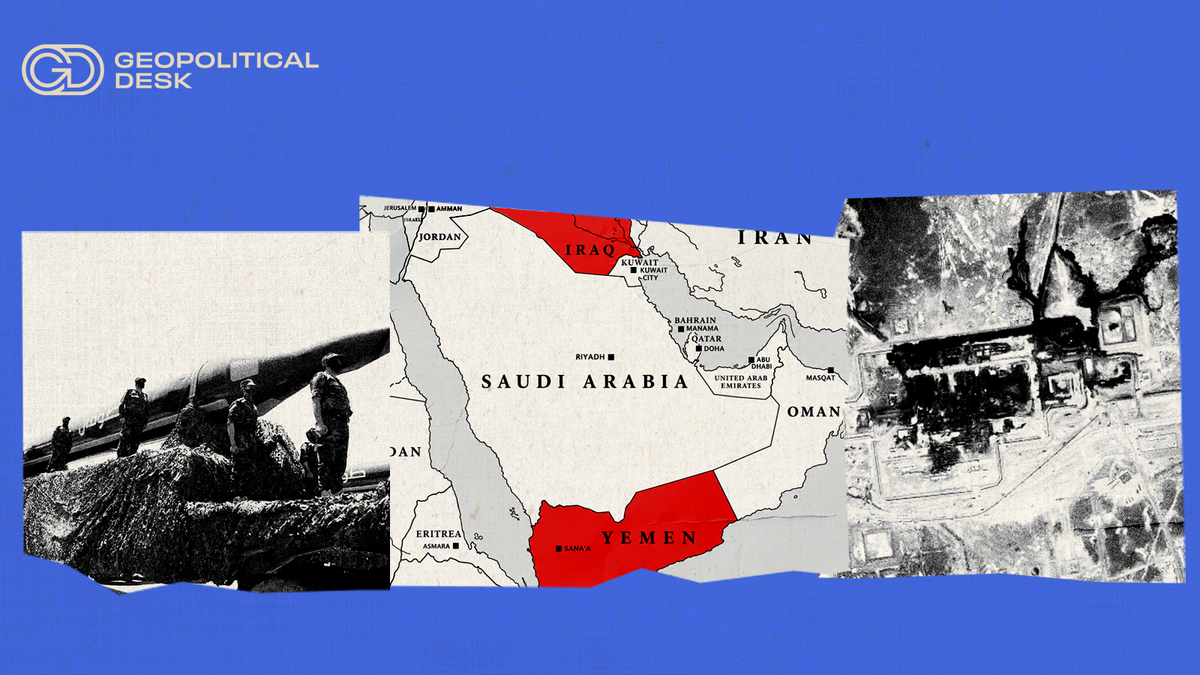
Is Iraq becoming a Houthi front against Saudi Arabia?
Saudi Arabia's efforts to bypass the vulnerable Strait of Hormuz through its cross-country East-West Pipeline are facing a growing threat : the Houthi’s presence in Iraq, which is transitioning from political posturing to active operational coordination. By pairing strikes from Iraqi soil with rapid Houthi advances along Yemen’s Red Sea coast, Iran-aligned networks are exerting pressure on both sides of the Arabian Peninsula simultaneously.
Rumours of Ukrainian military personnel in western Libya were once easy to dismiss, but GPD sources have now confirmed their presence, with Ukrainian trainers and technicians supporting GNU-aligned forces in drone warfare. As investigations allege that Libya is being used to target Russia's shadow fleet, Ukrainian expertise is contributing to a drone race among Tripoli's armed groups and raising questions over a possible confrontation with Russian forces in the LNA-controlled east.
Algeria's small government reshuffle reveals bigger calculations
After record-low turnout in Algeria's legislative elections, President Abdelmadjid Tebboune opted for a limited government reshuffle rather than a full overhaul. Yet the handful of changes, concentrated in finance, industry and interior, suggest a president tightening his grip on key economic files while seeking to rein in increasingly influential ministers ahead of the 2029 presidential election.
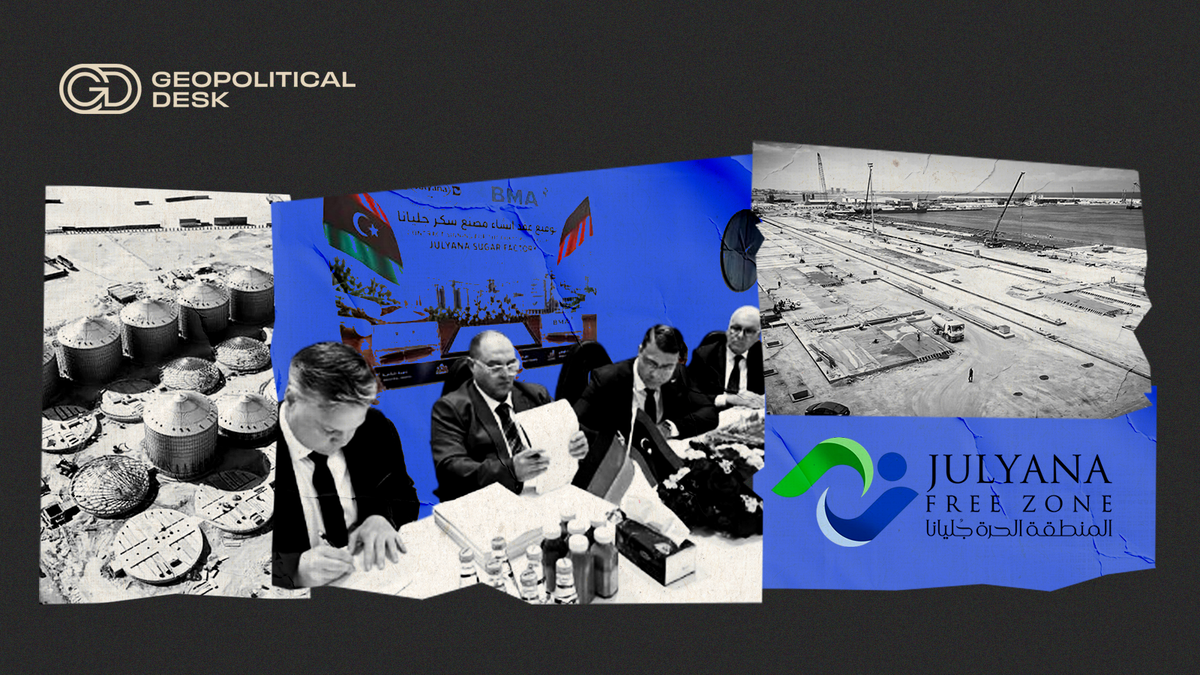
Benghazi's Julyana Free Zone Port, owned by a Haftar-family development agency, has seen shipping traffic surge since its 2021 redevelopment and is drawing projects ranging from a planned sugar plant to a direct COSCO line from China. Tied to a wider build-out in steel, cement and food processing, the port is central to eastern Libya's bid to turn Benghazi from an import gateway into an export platform with growing regional weight.
Professionals across energy markets, diplomacy, risk advisory and investment use GPD Intelligence to track geopolitical developments before they move markets.
If you find this coverage valuable, you can unlock the full Intelligence briefings and scenario analysis.
The launch of O3 Group promises more than better internet connectivity. With ambitions spanning 5G, digital infrastructure and regional connectivity, the project could establish a new standard for development in Libya, with consequences extending well beyond technology.
The surprise ousting of Central Bank Governor Naji Issa represents a desire by major Libyan factions to move in a different direction, after negotiations over the unified budget lasted for weeks.
An armed attempt to impose a new deputy at Libya’s Audit Bureau has triggered an institutional standoff in Tripoli, exposing the growing influence of armed groups over sovereign institutions and the deteriorating political and security environment in the capital.
Eastern Libya’s approval of the maritime agreement removes a longstanding obstacle to closer relations between Turkey and the LNA, potentially reshaping Libya’s political future and the balance of power in the Eastern Mediterranean.
Once a tightly knit political family, the Dabaibas are increasingly divided by a struggle for influence, control over state institutions and the future of the Government of National Unity. With public frustration mounting, the consequences could extend well beyond the family.
Algeria is North Africa’s largest country by landmass and a pivotal gas supplier to Europe. Since 2019, the state has prioritized stability, energy revenues and strategic autonomy.
After record-low turnout, pressure for change was high. Tebboune opted for limited changes, but they bring Algeria's economic files closer to the presidency while curbing influential ministers.
The long standing relations between Algiers and Abu Dhabi established by the Bouteflika government have now officially collapsed, as both capitals move in two different geopolitical directions.
Algiers and Niamey's previous relationship had been upended by the wave of Sahel coups in the early 2020s, but recent events in the region have allowed for an opening.
The Africa Energies Summit is hosted in London and brings together governments, investors and innovators to provide unrivalled insight into Africa's rapidly evolving upstream landscape.
The World Energies Summit is the global meeting place for upstream leaders. Hosted in London, it brings together governments, investors and innovators from every energy-producing region.
The World Energies Summit is a leading platform that brings together energy executives, policymakers and investors to assess global energy market trends.