




▸ 🇮🇱 Impasse in Israeli elections between Netanyahu and opposition
▸ 🇷🇸 Serbian students send shockwaves through the region by defeating Vučić
▸ 🇧🇷 Lula da Silva makes surprise comeback, scaring Bolsonaro into exile
▸ 🇻🇪 Return of María Corina Machado rekindles political process in Venezuela
What a week this has been! Three elections in different corners of the world captured the attention of billions.
In Israel, a close race between the block of Benjamin Netanyahu and his main contender Gadi Eisenkot resulted in a slight victory for Netanyahu, but the real winners were the Arab parties who could now become kingmakers.
In Serbia, students who had formed their own party, shocked many when former president Aleksandar Vučić admitted his defeat, ending 14 years of rule by his SNS party.
In Brazil, Lula da Silva made a spectacular comeback by winning the presidency, after finishing behind Flavio Bolsonaro in the first round, ending the right wave which had swept Latin America.
And on top of it all, Venezuela returned to the centre of attention when opposition leader María Corina Machado made a surprise return to the country after almost a year in exile, making the transitional government of Delcy Rodriguez quite nervous.
Now,
Lets get into it
Israel elections show tensions at the heart of the state’s identity
What happened: Israeli voters went to the polls on 27 October to vote in the first national parliamentary elections since the 7 October 2023 attacks, when Hamas attacked Israeli communities outside the Gaza Strip. The two main blocs were the pro-Netanyahu faction, led by Prime Minister Benjamin Netanyahu’s Likud party and made up of various far-right nationalist parties, and the anti-Netanyahu bloc, comprising Jewish conservative, liberal and military establishment parties. Netanyahu’s bloc won 53 seats, while the opposition won 48. However, neither could form a government due to the surprise strength of the Arab parties, which won a record-breaking 19 seats.
Why it matters: The election was seen as a referendum on Netanyahu’s leadership since the 7 October attacks, for which his government received much of the blame for failing to anticipate the assault. For both sides, the election is immensely consequential. Netanyahu needs to retain his position as Prime Minister to avoid facing his current corruption charges, as well as accountability for the attacks. The opposition believes that Netanyahu’s constant wars across the Middle East are turning the country into a pariah state and if it takes power, it can restore Israel’s international reputation without fundamentally changing the country’s current foreign policy direction. For Israel’s Palestinian citizens, the election provided an opportunity to express their frustration with worsening living conditions, increased racism, and the situations in Gaza and the West Bank.
What it means: The aftermath of the election has revealed the growing question at the centre of the Israeli state: who is the country for? During the campaign, opposition figures repeatedly insisted that they would not govern with the Arab parties, while Netanyahu and his far-right allies used racist portrayals to claim that Israeli Arabs supported the 7 October attacks. Following the election, some prominent opposition members also stated that they would only form a ‘Zionist’ government. After it became clear that the Arab parties had made significant gains, Netanyahu accused Israeli Arabs of attempting to sabotage the state and accused unnamed foreign agents of ‘stealing’ the election. Portraying Israeli Arabs, who are citizens of Israel, as secret agents seeking to destroy the state, while Jewish parties refuse to work with relatively moderate parties solely because they are Arab, exposes the weaknesses in the claim that Israel is a democratic state for all its people. Given the electoral impasse and rising social tensions, the country could remain without a new government for a prolonged period.
Risk metre (Medium): There is a high chance that Israel could be left with a Netanyahu-led caretaker government in the medium term, as the opposition has no clear path to unseating him. Currently, the opposition is unlikely to partner with the Arab parties. Although there is always a chance that it could take the pragmatic option, a similar situation arose in 2019, when the anti-Netanyahu opposition declined to partner with the Arab parties multiple times. The same scenario could play out again, forcing Israel to hold multiple elections with similar results each time: neither bloc secures a majority, and the opposition refuses to work with the Arab parties. This could continue until Netanyahu is able to secure a new unity government. However, the opposition parties may still refuse to do so, remembering that Netanyahu broke his agreement with them the last time they formed a government together. Additionally, if Netanyahu proceeds with expected attacks on Iran soon, opposition parties might be more willing to join forces with the Arab parties in an attempt to wrest control of the state. However, it is more likely that the opposition will continue to reject such an alliance, knowing that partnering with the Arab parties could lead to significant unpopularity among the Jewish electorate.
Student movement defeats ruling party in watershed elections
What happened: Following weeks of intense campaigning, a big-tent coalition of opposition activists, academics and youth, known collectively as the Student List swept the polls in Serbia, securing over 50% of the votes. Long-serving President Aleksandar Vučić conceded the historic defeat for his ruling Serbian Progressive Party (SNS) on the night of the elections dispelling fears of a potential stealing of the vote. The election result delivered the Student List a decisive victory after nearly two years of anti-corruption demonstrations following the Novi Sad railway canopy collapse. Vučić stated he would go into the opposition, and has since lamented calls by the opposition for an overhaul of state institutions, describing the moves as “revolutionary terror.”
Why it matters: This political shift dismantles state capture and centralised control in the largest economy of the Western Balkans. Now that the Student List will occupy the majority of seats in parliament, it will likely be able to rapidly form a government and try to combat the endemic corruption within Serbian state institutions, which drove so many voters to the polls. Geopolitically, the victory could be read as a modest shift away from pro-Kremlin posturing toward European integration, as over 75% of the Student List's supporters favour aligning with the European Union.
What it means: With the students having won the parliamentary elections, the next step will be winning the presidential vote, which is scheduled to be held at the end of December. Regionally, Vučić’s exit removes a key source of friction with neighbouring states, opening doors to de-escalate long-standing bilateral tensions with Montenegro as well as Bosnia and Herzegovina. In Albania, Vučić’s loss will be viewed as an inspiration to protesters and a blow to Prime Minister Edi Rama. Vučić was one of Rama’s closest regional allies and his defeat will only encourage protesters gathering in the streets of Tirana. There is little progress to be expected regarding Kosovo, which declared independence from Serbia in 2008, as the student movement views it as an integral part of Serbia under the constitution. Nonetheless, the political transition does create a fresh opening to restart the stalled Belgrade-Pristina talks mediated by the EU.
Risk metre (High): While the democratic elections have been peaceful and the government admitted defeat without incident, it is expected that the SNS will put up hurdles along the way to frustrate the political transition. The Student List being a big-tent coalition, is also very vulnerable to internal fractures, considering it includes both progressive pro-EU elements, and far-right nationalist voices. This is a weakness Vučić and the SNS party will undoubtedly seek to exploit.
Last minute alarm returns Lula to Presidency
What happened: Brazilian President Luiz Inácio Lula da Silva, known as Lula, won a surprise fourth term, narrowly defeating far-right candidate Flávio Bolsonaro in a run-off election. The run-off followed a first round in which Bolsonaro finished ahead of Lula. With the eliminated candidates generally more aligned with Bolsonaro, he was expected to cruise to victory in the second round. However, a last-minute online voter mobilisation drive by Lula’s team, coupled with fears that the son of former President Jair Bolsonaro could take the presidency, helped drive a much higher turnout in the second round, giving Lula the boost he needed. Shortly after Brazilian media declared Lula the victor, Bolsonaro fled to the United States and declared himself president-elect.
Why it matters: The election has temporarily halted the conservative wave sweeping across Latin America, which has seen right-wing governments come to power in Colombia, Argentina and Chile. Bolsonaro had the support of U.S. President Donald Trump, as Trump and Lula had become minor rivals, clashing multiple times over foreign policy and U.S. actions in the region. The result is also a positive sign for Brazil’s democracy, as it was expected that Flávio Bolsonaro would pardon his father and others who took part in the attempted 2023 coup, as well as target members of the judiciary who led the case against them. However, Bolsonaro’s flight to the United States in an effort to avoid corruption charges against him means that he could remain a force in Brazilian politics from afar.
What it means: Lula’s victory was not definitive, as he only narrowly defeated his opponent, with many voters unhappy with the economy and security under Lula’s presidency. Rising costs continue to hamper Brazil’s middle class, and it will be difficult for Lula to address these issues. This means that, while the far right has been held back for now, a failure to address these concerns could lead to its victory in the next election, especially with one Bolsonaro in jail and his son presenting himself as politically persecuted from abroad. The result will also likely contribute to poor relations with the United States, as Trump called the recent election rigged.
Risk metre (low): While Bolsonaro declared himself president-elect and announced that he would lead the opposition from abroad, comparing himself to former French general Charles de Gaulle, it is unlikely that he will be able to return during Lula’s government. Although the United States has allowed Bolsonaro to live in Florida, and Trump has provided rhetorical backing for claims that the election was rigged, the U.S. appears unwilling to materially support Flávio Bolsonaro and his new opposition movement. After he declared himself president-elect, it was reported that Trump officials told him to rework his statement in order to avoid further damaging relations with Brazil. Additionally, Bolsonaro’s own Liberal Party has officially conceded the election. While Flávio was criticised across Brazil for fleeing, and his influence in the country is likely to have been damaged, this setback does not necessarily mean defeat, as Donald Trump’s political career has demonstrated. Despite a rocky start, Bolsonaro could still attempt to lead opposition efforts from abroad and, if Lula becomes unpopular, eventually try to return to the country.
Maria Corina Machado returns to Venezuela, to the dismay of the government.
What happened: Following nationwide demonstrations calling for her safe return, exiled opposition leader María Corina Machado made a surprise return to Venezuela via Colombia on Sunday. Starting her return journey to Caracas from a church in Barquisimeto, María Corina drew massive crowds as tens of thousands of supporters gathered along the highway to celebrate her return. Her comeback to the political scene in Venezuela comes as U.S.-supported transition talks between Venezuela's interim government under Delcy Rodríguez and opposition factions concluded their latest round. Acting President Rodríguez dismissed Machado's return as a "show" aimed at media attention, while U.S. officials framed her entry as a victory for diplomatic reconciliation and pushed all sides toward peaceful negotiations. In subsequent days, Marco Rubio laid out the details of his strategy to complete the political transition, including a new electoral commission, reform of the Supreme Court, and eventually presidential elections.
Why it matters: Machado’s physical presence inside the country reshapes the dynamics of Venezuela’s political transition. Having been sidelined from formal U.S.-led talks with the interim government, her return injects grassroots momentum into demands for a clear binding electoral calendar, judicial reforms, and the release of political prisoners. It forces both Washington and Caracas to make concrete steps in the transition process while at the same time engaging with the popular opposition's frontrunner rather than negotiating solely with interim authorities.
What it means: Venezuela is entering a high-stakes test of its democratic roadmap. While Washington favours a structured transition that protects economic normalisation and oil sector recovery, Machado's return pressures the regime to restore political rights and speed up electoral timelines. If interim authorities attempt to arrest or restrict Machado, it could rupture the diplomatic framework and trigger renewed anti-government unrest across major urban centres. Yet Maria Corina’s demonstration of mass support through the crowds she drew at her return have made Delcy Rodriguez and her allies visibly nervous. Even if Rodriguez’ options regarding Machado are limited for the moment, tensions are expected to rise in the coming weeks.
Risk metre (High): Machado's physical presence on the ground directly tests the interim regime's tolerance. The overlap of popular mobilisation, political uncertainty surrounding election dates, and hardline regime rhetoric keeps the risk of potential incidents high.
🇲🇲 Myanmar: Burmese resistance fighters ambushed and repelled two separate junta columns which were moving through the Indaw township in northern Sagaing, attempting to establish control over key roads. The resistance reports dozens of soldiers were killed and a large number of weapons seized.
🇭🇹 Haiti: Following the earlier kidnapping of four Salvadoran soldiers in a gang-dominated area of the capital Port-au-Prince, Salvadoran President Nayib Bukele announced the deployment of 2,000 soldiers to Haiti to reinforce and assist an ongoing international peacekeeping mission, and double down on rescuing the missing personnel.
🇸🇩 Sudan: Drone strikes by both sides continued to escalate across the country this past week. One particular strike by the SAF on a crowded market in the RSF-held city of Nyala in Darfur led to 36 deaths and over a 100 people injured according to the MSF organisation.
🇺🇦 Ukraine: A localised, multi-day humanitarian ceasefire took effect in the Russian-occupied city of Oleshky (Kherson Oblast) to allow food, medical supplies, and civilian evacuation operations. Oleshky, which sits on the left bank of the Dnipro river had been cut off from the outside world for months, leading to reports of a local famine among the town’s residents. The current ceasefire was reported to have been mediated by the U.S. under the directive of First Lady Melania Trump.
🇳🇪 Niger: In a watershed decision, the Algerian parliament voted to deploy its armed forces to neighbouring Niger, in the first foreign mission of the country since 1973. Around the same time French troops returned to neighboring Chad, as foreign deployment to the wider Sahel region surged.
The O3 Group and Benghazi’s digital leap
With the launch of the O3 Group in Benghazi under former LPTIC chairman Dr. Faisel Gergab, eastern Libya is embarking on its most ambitious digital and technological transformation since 2011. Spanning 5G mobile networks, digital payments, cloud infrastructure, and a strategic connection to the Medusa submarine cable, the initiative aims to build a comprehensive digital ecosystem rather than a short-term fix.
 The Geopolitical Desk
Turkey could be the bridge between the LNA and Algeria
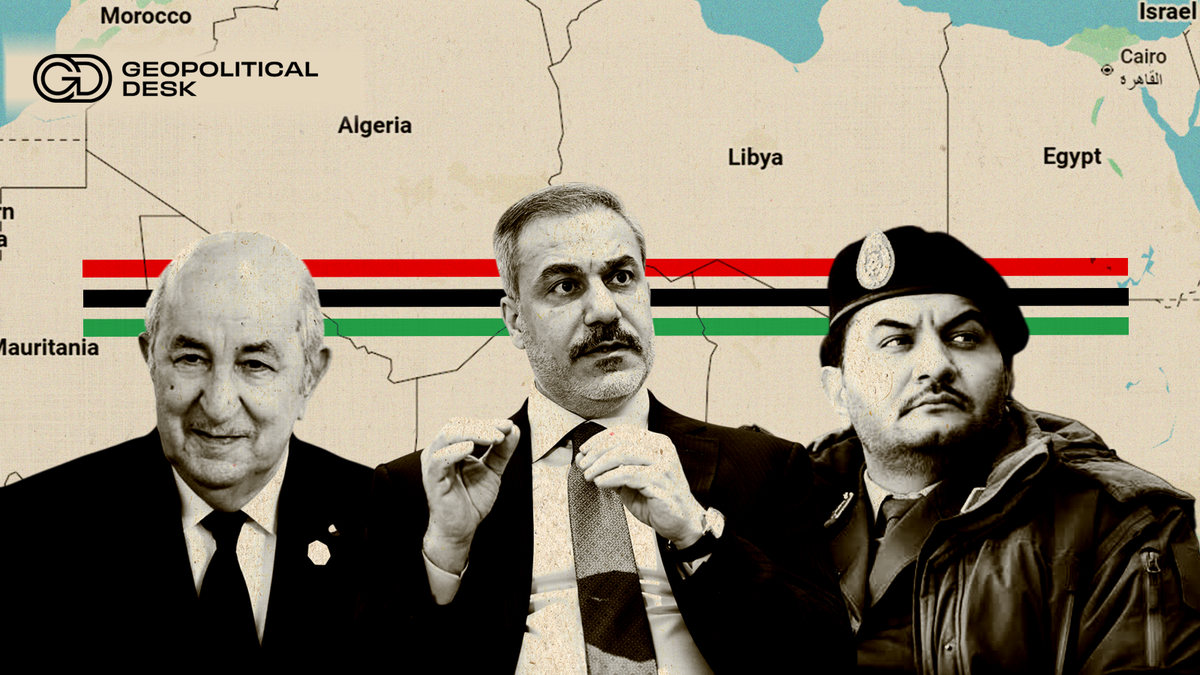
Despite lingering mistrust rooted in Libya’s 2019-20 war, shifting regional dynamics and the LNA’s growing autonomy, highlighted by the recent ratification of the Turkey-Libya maritime agreement, have created a rare opening for strategic cooperation. With strong ties across Algiers, Benghazi, and Tripoli, Ankara is uniquely positioned to act as a diplomatic bridge between the three actors.
 The Geopolitical Desk
Algeria’s political success hinges on balancing its budget
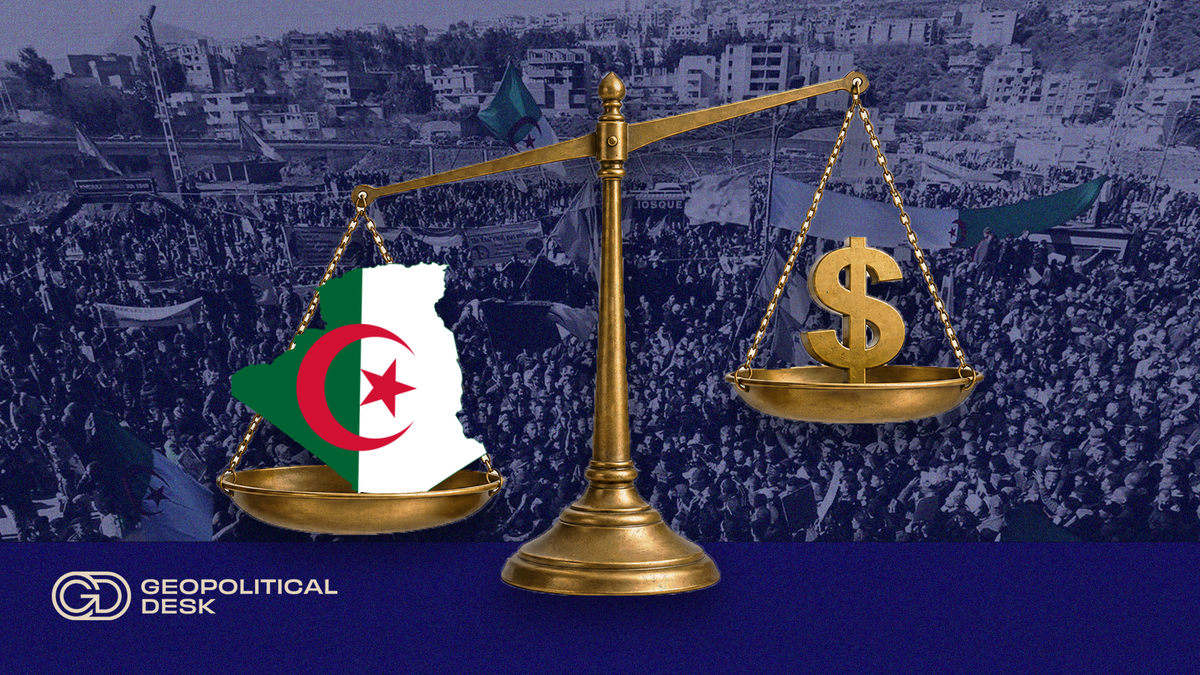
Under President Abdelmadjid Tebboune, Algeria has nearly doubled state spending since 2019 to fund ambitious military, infrastructure, and social welfare programs, but a lack of economic diversification has left a staggering $64 billion projected deficit for 2027. To bridge the funding gap without reigniting post-Hirak social unrest, Algiers is turning to unconventional financing, targeted "sin taxes," and market-based fuel price adjustments.
 The Geopolitical Desk
Global Insights Group new reports
GIG, the parent company for GPD, has launched its newly redesigned Iran Desk, alongside a complimentary new report. The Sarnakh-e Iran Report aims to pull at the threads behind the headlines, providing clear-cut analysis and insight amid a constant stream of ever-changing news. The report, designed to be a broad resource for financial professionals and companies active in the Mideast, examines the increased likelihood of a renewed Israeli-American offensive against Iran, how Tehran might respond, and the potential implications for global energy markets.
 Global Insights Group
GIG also released its recent findings about tensions in the eastern Mediterranean, and the fallout of the Turkey-Libya Maritime Agreement
 The Geopolitical Desk

As always, thank you for reading and for your continued support.
Feel free to reply with feedback or suggestions.
See you next week,
The Geopolitical Desk team
P.S. Please forward this to anyone who might find it useful. If you’re reading this second-hand, you can sign up for our free newsletter here.
Professionals across energy markets, diplomacy, risk advisory and investment use GPD Intelligence to track geopolitical developments before they move markets.
If you find this coverage valuable, you can unlock the full Intelligence briefings and scenario analysis.



