

▸ 🇮🇶 Iraq's new PM designate and what it signals about U.S.-Iran competition for influence
▸ 🇦🇪 The UAE's exit from OPEC and what it means for the oil cartel's future
▸ 🇲🇱 The Islamist offensive in Mali and the accelerating collapse of Sahel security
▸ 🇬🇧 King Charles in Washington and the state of the U.S.-U.K. relationship
▸ 🇺🇸 Another assassination attempt on Trump and the domestic security picture
▸ 🇮🇷 The Iran war's widening shadow across the region
More than 2 months in, the war in Iran continues to reshape the geopolitical landscape in ways that extend far beyond the immediate theatre of operations. This week, several of those downstream consequences came into sharper focus.
In Iraq, a new prime minister designate has emerged. Ali al-Zaidi, a political newcomer and a compromise candidate acceptable to Washington, has been tasked with forming a government after the U.S. blocked multiple other contenders deemed too close to Tehran.
It is a telling moment: Iraq, a country that has spent two decades navigating its position between American power and Iranian influence, is now being asked to make that choice more explicitly than ever.
Earlier this week we published an analysis of exactly that dilemma, examining how the Iran war is pulling Iraq in two directions at once, and what the consequences of that tension could be for one of the region's most fragile states.
In the Gulf, the UAE made a decision that has sent shockwaves through energy markets after Abu Dhabi announced it was leaving OPEC, citing long-standing frustration with production restrictions that it says have prevented the country from meeting market demand.
The timing, in the middle of a global energy crisis, is not incidental.
In West Africa, the security situation in the Sahel deteriorated sharply. Islamist militants and Tuareg separatists launched coordinated nationwide attacks across Mali, seizing the cities of Kidal and Mopti and killing Defence Minister Sadio Camara.
It is one of the most significant military reversals the Mali junta has suffered since coming to power in 2020, and it raises serious questions about the viability of security arrangements (built around Russian Wagner forces and a break with Western partners) that Bamako has staked its survival on.
Across the Atlantic, King Charles III travelled to Washington in what is being framed as an attempt to use his personal relationship with Trump to address a series of bilateral frictions, from Greenland to the Iran war, that have strained the U.S.-U.K. relationship to an unusual degree.
And in Washington itself, Cole Tomas Allen was charged with attempting to assassinate the President after approaching the White House Correspondents' Dinner armed with a shotgun, a handgun and multiple knives.
It was, by any measure, a week that illustrated how many simultaneous pressure points the current global moment contains.
Let's get into it.
Iraq finds a compromise PM, but the pressure on its political model is growing
What happened: Iraqi President Nizar Amedi has tasked Ali al-Zaidi, a political newcomer with no strong factional affiliation, with forming a new government. Al-Zaidi emerged as the compromise candidate after the U.S. blocked multiple other contenders it considered too closely aligned with Iran. His appointment reflects the acute difficulty of governing Iraq when Washington and Tehran are in open conflict and Baghdad sits directly between them.
Why it matters: The U.S. veto of Iran-aligned candidates is not a new phenomenon in Iraqi politics, but the exercise of that veto in the current climate carries a different weight. Iraq hosts U.S. military assets, maintains deep economic and political ties with Iran, and is simultaneously subject to pressure from both sides to choose. Al-Zaidi's appointment buys time, but it does not resolve the underlying tension. A government built on being acceptable to Washington is, almost by definition, one that will struggle for legitimacy with significant parts of the Iraqi political class.
What this means: The formation of al-Zaidi's government — who he appoints, what coalitions he builds, and how he handles the Iran file in his early months — will be an important indicator of whether Iraq can maintain its balancing act or whether the Iran war has finally made that position untenable. Our analysis this week examines exactly that question in depth.
Read the full analysis:
 The Geopolitical Desk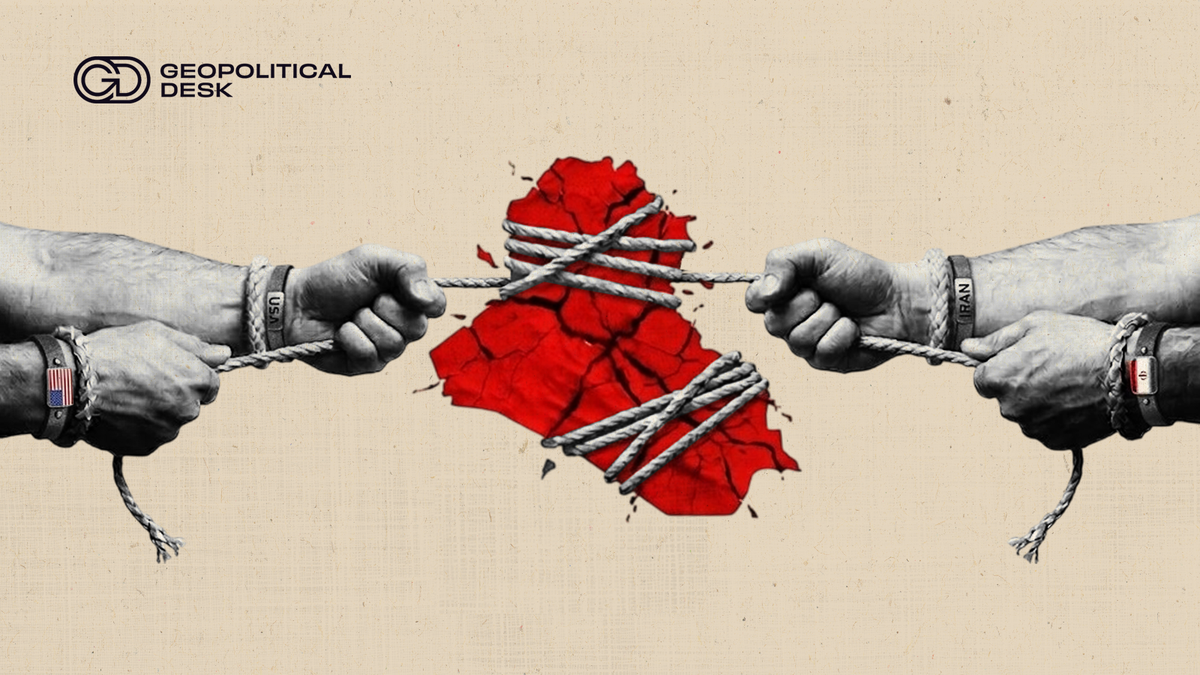
Why the UAE is leaving OPEC
What happened: The United Arab Emirates announced this week that it will leave OPEC, ending a membership that has defined Gulf energy diplomacy for decades. Abu Dhabi cited long-standing frustration with production restrictions that it says have prevented the country from responding to market demand, a complaint that has been building for years but which the current crisis has made impossible to contain.
Why it matters: The UAE holds some of the largest proven reserves in the world and has invested heavily in expanding its production capacity precisely because it wants to use it. The tension between Abu Dhabi's ambitions and OPEC's quota architecture has been the cartel's most significant internal fault line for some time. The UAE's departure removes that tension by resolving it (in Abu Dhabi's favour) and leaves OPEC with a structural question about its own coherence at a moment when the global energy order is being redrawn by the Iran crisis.
What this means: The immediate market implication is that UAE production will likely rise, adding supply at a moment when prices are elevated and the global economy is under stress. For Saudi Arabia, which has invested enormous diplomatic capital in managing OPEC cohesion, the UAE's departure is a significant setback. For energy traders and market analysts: the OPEC price management architecture just became materially weaker. And for the broader geopolitical picture, the UAE's "AND economy" posture, which we noted a few weeks ago, now extends to energy policy.
Background reading from the GPD Archive:
The Geopolitical Desk The Geopolitical Desk
Islamic militants kill Mali's Defence Minister
What happened: Islamic militants and Tuareg separatists launched coordinated nationwide attacks across Mali this week, seizing the cities of Kidal and Mopti in what represents one of the most significant military reversal the ruling junta has experienced. Defence Minister Sadio Camara was killed in the offensive, a loss that is as much symbolic as it is operational.
Why it matters: The Mali junta made a series of irreversible choices: expelling French forces, breaking with ECOWAS, and building its security architecture around Russian Wagner personnel. Those choices were presented domestically as a reassertion of sovereignty and a more effective approach to the Islamist insurgency. This week's events suggest the opposite. Kidal, a city with enormous symbolic significance as a centre of Tuareg political identity, has fallen. Mopti sits in the geographic heart of the country. The coordinated nature of the offensive across multiple fronts suggests an adversary that has been planning, organising and accumulating capacity while the junta's attention and resources were elsewhere.
What this means: The Sahel's security deterioration is no longer a slow-moving story. The Mali junta's survival is now a genuine question, and the regional implications — for Niger, Burkina Faso and the broader arc of Wagner-backed governance experiments across West Africa — are significant.
Background reading from the GPD Archive:
The Geopolitical Desk
A royal visit and an assassination attempt
What happened: Two stories from Washington this week that say something about the state of American political life. King Charles III travelled to Washington in a diplomatic repair mission, using his personal rapport with Trump to address bilateral frictions that have strained the so-called "special relationship" to an unusual degree. This took place just a few days after the President survived a second assassination attempt.
Why it matters: The two events illuminate different dimensions of the same underlying reality. The King's visit reflects how seriously London takes the current deterioration in the relationship and how limited its conventional diplomatic tools are. The assassination attempt, meanwhile, is the second against Trump since his return to office. Individual incidents have individual causes. But a pattern of repeated attempts on a sitting president reflects a degree of political polarisation and institutional stress that has implications well beyond the security brief.
What this means: The world's most powerful democracy is receiving a state visit from a constitutional monarch because conventional diplomatic channels have broken down. Perhaps unsurprisingly, the White House marked the occasion with a social media post captioned "TWO KINGS," a not-so-subtle jab at the "No Kings" protests held in the U.S. to oppose the actions and policies of the second Trump administration. Trump himself has now survived two assassination attempts in a single term. His foreign policy is generating public rebukes from the Pope, strained relationships with its closest allies and a domestic economic squeeze that is visibly eroding political consensus.
As always, thank you for reading and for your continued support.
Feel free to reply with feedback or suggestions — or, if you're in Madrid next week, to arrange a meeting.
See you next week,
Oliver Crowley
Co-Founder, The Geopolitical Desk
P.S. Please forward this to anyone who might find it useful. If you’re reading this second-hand, you can sign up for our free newsletter here.
Professionals across energy markets, diplomacy, risk advisory and investment use GPD Intelligence to track geopolitical developments before they move markets.
If you find this coverage valuable, you can unlock the full Intelligence briefings and scenario analysis.
