
▸ 🇱🇾 Whether the Haftar-Dabaiba technical talks can translate into something real
▸ 🇱🇾 How the Swiss-based oil trader BGN is still operating in Libya
▸ 🇸🇩 Sudan's war and the humanitarian catastrophe the world is not watching
▸ Key takeaways from Semafor World Economy in DC
This was a busy week for The Geopolitical Desk team and a pretty consequential one for the regions we cover.
I've spent the past few days in Washington at Semafor World Economy, in a room with CEOs, finance ministers, central bankers and geopolitical risk analysts all grappling with the same question: what does the global system look like on the other side of the Iran crisis?
The conversations were candid in a way that formal statements rarely are, and I came away with a clearer sense of where institutional thinking is landing on energy security, capital allocation and the longer-term map.
Meanwhile, the team published three exclusive articles, including the results of an investigation into Libya's energy sector.
The first exclusive broke the news that the Haftar and Dabaiba factions have agreed to enter technical talks on Libyan unification. This development would have seemed implausible even a few months ago, and carries significant implications for Libya's energy sector and for European strategic interests.
The second is a visual investigation into the war in Sudan: a conflict that has produced one of the worst humanitarian crises in the world, and which remains dramatically underreported.
And finally, we published a deep dive into Libya's energy sector that finds how BGN, the Swiss-based crude trader widely believed to have exited the market, never actually left.
The story of how it did so draws on sources across Libya's Ministry of Oil & Gas, National Oil Corporation, Attorney General's Office, and wider market participants and says something important about how Libya's energy sector actually works.
This is the kind of week GPD Intelligence exists for. If you're not yet a subscriber (or your organisation isn't on an Enterprise plan) now is a good time to change that.
Let's get into it.
Exclusive: Haftars and Dabaibas set for technical talks on unification
What happened: GPD exclusively reported that representatives of the Haftar and Dabaiba families, the two dominant power centres in Libya's east-west divide, are set to enter technical talks on unification. The talks represent the most substantive engagement between the two sides in years.
Why it matters: Libya's political division is not merely a governance problem. It is the structural condition that has blocked economic recovery, suppressed oil production capacity and made the country a persistent source of instability for its neighbours and for European migration and energy policy.
Any movement toward a unified institutional framework, however imperfect, changes the operating environment for every actor with exposure in Libya. This is also consistent with the renewed diplomatic momentum we reported last week around Massad Boulos, whose re-engagement appears to be producing tangible results.
What this means: Technical talks are not a political settlement, and the history of Libyan negotiations counsels caution. Talks have begun before and collapsed quickly. But the fact that both sides have agreed to engage on a technical basis, which is often where durable arrangements are actually built, below the level of political grandstanding, is a meaningful signal.
Read the full exclusive:
 The Geopolitical Desk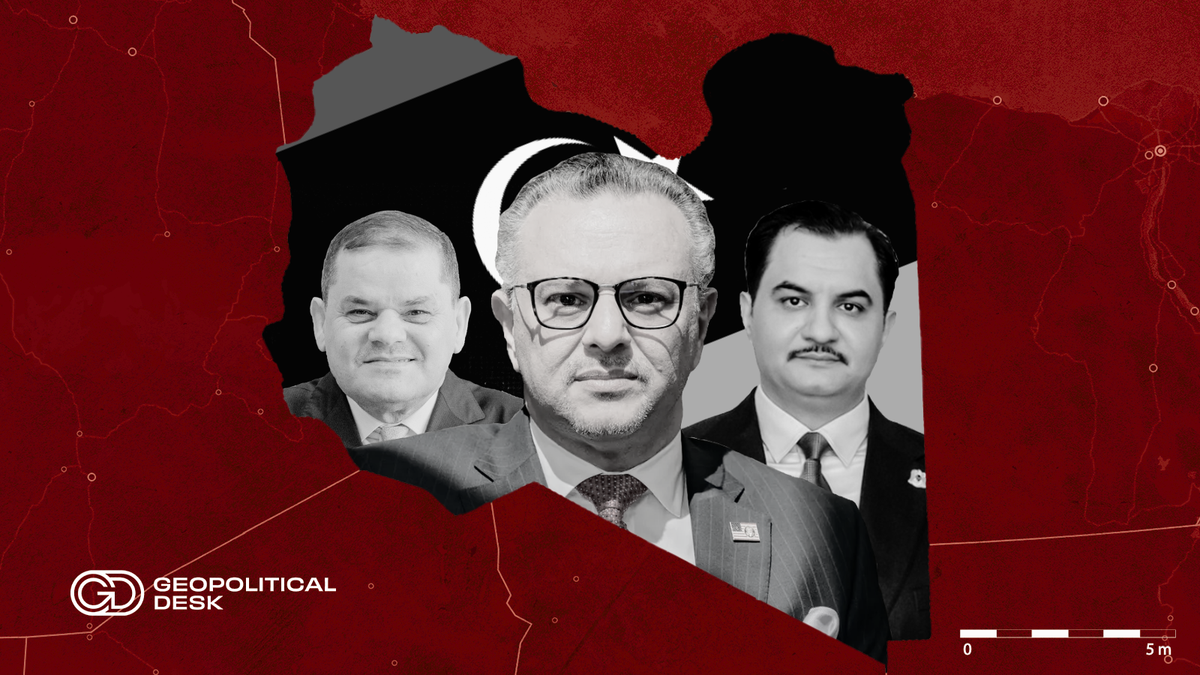
A visual investigation into one of the world's most ignored wars
What happened: GPD published a visual investigation into the war in Sudan, mapping the scale of the conflict and the shifting fault lines that have received a fraction of the international attention directed at other theatres.
Why it matters: Sudan's war has displaced more people than any conflict on earth. It has produced mass atrocity, famine and the systematic destruction of civilian infrastructure. The reasons it remain underreported are structural, but the absence of coverage does not diminish the scale.
What this means: The investigation is deliberately visual because the numbers alone have not been sufficient to hold attention. We wanted to produce something that makes the reality of this conflict harder to look away from. Read it, share it, and if you work in a field where Sudan's trajectory is material to your decisions, this piece is a great starting point.
Read the full investigation:
The Geopolitical Desk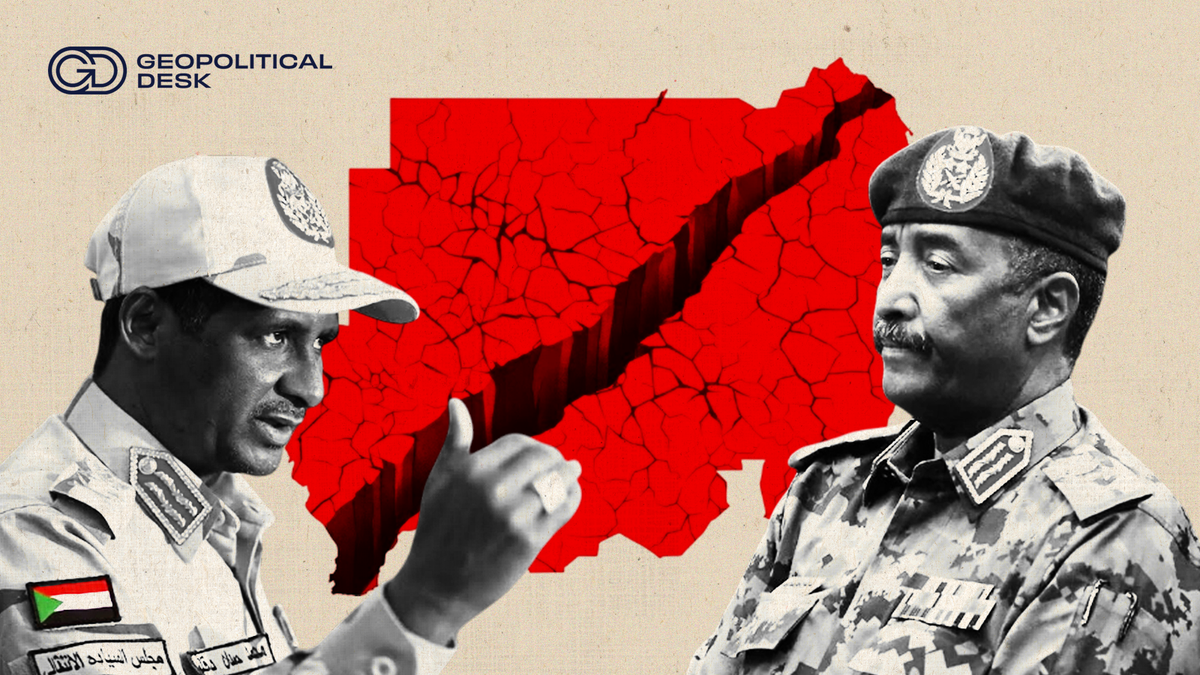
How BGN rewired its operations in Libya
What happened: A GPD investigation drawing on sources across Libya's Ministry of Oil and Gas, former NOC officials, individuals familiar with inquiries at the Attorney General's Office, and market participants found that BGN, the Swiss-based crude trader widely believed to have exited Libya's market, did not leave.
Why it matters: The narrative that Libya's oil sector was finally opening up to competitive, transparent trading was, on the evidence gathered by GPD, premature. If the accounts provided by sources prove accurate, BGN's reported re-entry through proxy structures would demonstrate that the networks shaping Libya's energy economy remain capable of absorbing political pressure and adapting to it.
What this means: This is not, ultimately, a story about one company. It is a story about a system in which access is negotiated through relationships rather than regulation, and in which the scale of potential value diversion from a state whose population has long borne the costs of that dysfunction is likely far greater than what has yet been documented.
For operators, investors and policymakers with exposure in Libya: the technical talks between the Haftar and Dabaiba factions represent a genuine opportunity. But political process and commercial reality are not the same thing. Understanding who actually controls access to Libya's crude, and through what channels, remains as consequential as it has ever been.
Read the full exclusive:
The Geopolitical Desk
GPD at Semafor World Economy
What happened: GPD spent four days at Semafor World Economy in Washington this week, in conversation with and listening to some of the most influential figures shaping the global economic and energy landscape — among them TotalEnergies CEO Patrick Pouyanné, IEA Executive Director Fatih Birol, and Dubai Economic Development Corporation CEO Hadi Badri. The throughline across sessions was consistent: the Iran crisis has not just disrupted global energy markets, it has structurally altered them in ways that will outlast any ceasefire.
Why it matters: The consensus in the room, if it can be called that, was that the world is not returning to the pre-crisis baseline. Pouyanné was direct about the precedent: a closed Strait of Hormuz creates a template that other actors in other chokepoints will study and potentially replicate. Birol's concern was that the cost of this crisis is not being borne by major economies but by net energy importers in the developing world, in a pattern that echoes the 1970s debt spirals. And Badri's underlined the UAE's resilience in spite of the war, claiming that consumer spending has recovered to just shy of pre-crisis levels and arguing that capital is not fleeing the region, it is repositioning within it.
What this means: Three things emerged from Washington that, for me, are worth thinking about. First, energy security and trust in geopolitical systems has become a distinct investment criterion, sitting alongside price and technology in a way it never did before.
Second, the gas industry faces a credibility problem it has not yet fully reckoned with: two major gas crises in four years is beginning to deter the long-term infrastructure commitments that emerging economies need to make, which presents a significant opportunity for U.S., Canadian and Australian exporters and a significant challenge for everyone else.
Third, the psychological shift caused by the Iran war may matter as much as the operational reality, if not more. The crisis has compressed timelines on supply chain diversification, economic localisation and energy system redesign that were already underway. The question is no longer whether those shifts happen, but how fast and who is positioned to benefit.
As Europe looks to reduce exposure and rebuild supply chains, Latin America is moving back into focus. Not as a peripheral market, but as a strategic partner in energy and minerals.
The Madrid Energy Conference convenes policymakers, investors and industry leaders around this shift. With a clear emphasis on the Europe–Latin America corridor, it offers a timely lens into how energy security is being redefined.
GPD readers can use code MEC26 for $150 off tickets
As always, thank you for reading and for your continued support.
Feel free to reply with feedback or suggestions — or, if you're in DC next week, to arrange a meeting.
See you next week,
Oliver Crowley
Co-Founder, The Geopolitical Desk
P.S. Please forward this to anyone who might find it useful. If you’re reading this second-hand, you can sign up for our free newsletter here.
Professionals across energy markets, diplomacy, risk advisory and investment use GPD Intelligence to track geopolitical developments before they move markets.
If you find this coverage valuable, you can unlock the full Intelligence briefings and scenario analysis.
