






🟢 China Summit: Trilateral meeting between U.S., Russia, and China in Shenzhen
🔴 Iran War: Saudi Arabia stuck between a rock and a hard place
🔴 Ukraine: Ukrainian armed forces partly destroys Crimea Bridge
🗺️ Also inside: the front lines in Myanmar, Sudan, Ethiopia, and Yemen.
It was hailed (and feared) by some observers as the Yalta conference of our times, but the trilateral meeting between Russia, China and the United States concluded with little more than a photo moment and joint statement. But it was sure to be a telling moment for the direction the Trump presidency is taking.
And where Trump, Putin and Xi talked about peace, little of it was found in and around Ukraine, as this past week the infamous Kerch Bridge, which connects occupied Crimea to the Russian mainland, was partly destroyed by Ukrainian drones, sparking fierce retaliation.
Overshadowed by Iran, the war in Yemen is escalating with no end in sight. Iran's own front is just as stuck, with tanker strikes and tit-for-tat attacks in the Gulf, and could tip into wider war if Israel wins Washington over to major strikes or Tehran miscalculates on breaking the blockade.
🇺🇸🇷🇺🇨🇳 Trump’s “Yalta moment” just TV facade
Bottom line: Russia, China, and the United States pushed the trilateral meeting in Shenzhen as the next big shift in international norms, but it mainly turned into a media photo-op.
What happened: The first-ever trilateral meeting between the leaders of China, Russia and the United States took place in the Chinese city of Shenzhen. U.S. President Donald Trump, Russian President Vladimir Putin and Chinese President Xi Jinping took part in closed-door meetings, where they reportedly discussed the wars in Ukraine and Iran.
Why it matters: This remains the only official summit featuring solely these three countries, which have sought to present themselves as this generation’s superpowers. Each leader sought to use the summit to their advantage. Trump looked to escape a scathing defeat in the midterm elections and enjoy televised displays of power, while Xi sought to boost China’s diplomatic profile by hosting the historic summit and draw attention away from the country’s sluggish economy. Putin, meanwhile, was relieved to be included, using the opportunity to present Russia as an equal to China and the United States.
What it means: On the face of it, the meeting is significant due to its nature, but in reality, it will likely mean very little. Each side has sought to compare it to the Yalta Conference, when the United States, United Kingdom and Soviet Union defined the new world order following the Second World War. While the economic might of the U.S. and China is significant, the meeting did not establish a new world order. Rather, it was a more specific gathering aimed at addressing the current, narrower concerns surrounding global conflicts. The U.S. and Russian wars against Iran and Ukraine, respectively, have demonstrated how much smaller countries can keep their larger adversaries at bay, somewhat undermining the concept of these three countries as the new global hegemons. What the conference has demonstrated is that the world is becoming increasingly divided among regional states and actors, with major powers still struggling to keep up with this reality.
The meeting is unlikely to lead to an end to, or directly affect the escalation of, the wars in Iran and Ukraine. It will mostly serve as window dressing, with Trump, Putin and Xi seeking positive press coverage rather than attempting to resolve global issues. The main impact of the meeting will be the international reactions, both from outside observers and within the participating countries themselves. Members of the EU, including Poland, denounced the meeting, as Russia will remain an adversary for the foreseeable future. In the United States, meanwhile, the summit has somewhat reinvigorated traditional American foreign policy, which had become wayward during the first half of Trump’s term, as well as its usual hypocrisy. While many actors have questioned Trump's strongman tendencies and denounced Russia and China’s authoritarianism, there remains a lack of critical scrutiny of the U.S.' own national security partnerships with countries such as Israel.
You’re reading the free edition. GPD Intelligence subscribers get the full picture behind stories like this one: escalation scenarios, market implications and what to expect next.
£3.60/week billed monthly for your first 3 months, then £29/month. Cancel anytime.
🇾🇪🇮🇷 Houthis widen the war as Tehran grinds on in Hormuz
Bottom line: Saudi Arabia is finding itself in a difficult spot, as the war in Yemen creates an exposed southern flank, and the risk of renewed war in Iran threatens the return of a northern flank.
What happened: A Houthi missile hit the PIF Tower in Riyadh's financial district on 19 November, the second KAFD landmark struck this month. The next day the Saudi coalition hit power stations in Houthi-held Saada and Mokha and a quay at Hodeidah port. The Houthis responded by firing missiles at the Shuqaiq power plant and Jazan port, with no confirmed damage. In Hormuz, Iran kept up its campaign against tankers, with UKMTO logging at least seven tankers struck since 16 November. Iran and the U.S. also traded strikes aimed at blinding and disarming each other in the Gulf. After Iran targeted a U.S. radar site in Bahrain on 17 November, the U.S. hit an IRGC missile site on Qeshm Island. Iran then struck at an air base in Kuwait and at Bahrain again, while Iranian forces claimed several U.S. drones downed.
Why it matters: The KAFD towers are symbolic targets that embarrass the kingdom at the heart of its investment drive. More critical targets, such as the East-West pipeline that carries about 4m b/d of crude to Yanbu, are harder to verify. The Houthis claimed a drone attack on two of its pumping stations on 17 November, but Riyadh has confirmed no damage. Like the IRGC, the Houthis seek to match each enemy strike in kind and present every escalation as a response, so each new type of target Riyadh hits opens its Saudi equivalent to attack. There is no diplomatic track with the Houthis, since Riyadh will not talk to them until its Yemeni allies gain ground. Despite continued mediation by Qatar, talks with Iran have also gone nowhere, with Tehran refusing to budge and Washington betting on economic pressure. Fars, an outlet close to the IRGC, floated the idea of a tanker convoy forcing its way through Hormuz to break the U.S. blockade. No official has endorsed it, as Tehran is still debating how to do so without restarting the war.
What it means: Saudi Arabia will stay exposed to Houthi fire well into 2027. Its resolve comes not despite the scale of the threat but because of it, since Riyadh wants to be rid of the threat on its southern flank for good. On the ground, the Houthis are playing for attrition rather than a decisive victory and are likelier to squeeze Taiz and Aden than to storm them, keeping the government weak enough to force a deal or split it. They are telling southern Yemenis they are not targets, which spares them a fight with combat-hardened southern units defending their own land. They are also offering an amnesty to fighters on Riyadh's payroll who lay down their arms and go home, a message likely to land hardest with northern units that have no stake in the south. A new Saudi push into Houthi territory remains possible, but recent counter-offensives have proved short-lived. On Iran, Israel is lobbying for renewed strikes, both directly in Washington and through international media reports of new Iranian threats, but Trump said that he will decide on major strikes after the new year.
The risk of a wider war comes from two directions. Israel could persuade Washington to strike Iran before the end of the year, or Tehran could miscalculate in trying to break the blockade and trigger the war it wants to avoid. Either path would deepen Saudi Arabia's plight, opening the way to heavier and more frequent strikes on Saudi energy infrastructure as the regional war would intensify.
Stay ahead of the next escalation. The Roundup tells you what happened. GPD Intelligence tells you what comes next: full access to every article and deep dive, the complete archive, and no advertising.
£14.50/month for your first 3 months, then £29/month. Cancel anytime.
🇺🇦🇷🇺 Crimea Bridge collapses in nighttime raid, Russia strikes hit
Bottom line: Major damage to the Kerch Bridge, as well as repeated large-scale missile and drone barrages, and strikes threatening foreign diplomatic missions in Kyiv demonstrate the ever present risk of continued retaliatory moves by both sides.
What happened: In the early hours of Monday morning, Ukrainian forces launched a multi-phase drone assault on the infamous Kerch Bridge which connects the Crimean peninsula to the Russian mainland, collapsing a major road bridge arch and span.The next day Ukrainian drones and missiles (including Neptune, Ruta, and FP-5 Flamingo systems) targeted the bridge again, this time hitting the rail link, which remained standing. Russia retaliated by carrying out massive drone and missile barrages across Ukraine, hitting key bridges across the Dnipro in Kyiv and striking the centre of the capital on November 19. Some of those strikes damaged the Austrian and Dutch embassies, sent debris onto the grounds of Ukraine’s Foreign Ministry and the Brazilian Embassy, and left EU Ambassador Katarina Mathernova narrowly escaping a drone blast overhead.
Why it matters: Damaging the Kerch Bridge’s road span and repeatedly targeting its rail link severely disrupts both Russia’s direct logistics line into occupied Crimea and southern Ukraine as well as civilian traffic between Crimea and Russia. For the Russian military this forces a greater reliance on vulnerable overland corridors through occupied territory, which leaves the moving convoys vulnerable to Ukrainian aerial attacks. The strikes have also embarrassed Moscow ahead of the trilateral summit in China. Russia has put the blame for the strikes directly at some of Ukraine’s European allies, primarily the Netherlands, as a Dutch defense company claimed it had supplied the missiles which were used in taking the Kerch Bridge down. Russia’s strikes close to the Dutch embassy suggest the attack to be a deliberate retaliation on its part.
What it means: Both sides are raising the stakes through symbolic and logistical attacks, rather than major frontline breakthroughs. The damage to the Kerch Bridge will significantly strain Russian supply chains and threaten retaliatory strikes on Ukraine. The drone barrage on the diplomatic quarters in Kyiv have prompted the Netherlands to summon Russia’s ambassador, the EU to move toward summoning Moscow’s envoy, and France to convene a UN Security Council meeting, hardening European resolve. Europeans are keenly aware of the Russian modus operandi where such an escalation is often a way for the Kremlin to test the waters. If the European response is not adequate enough, the Russians might be encouraged to repeat such strikes on other diplomatic posts in the coming time.
Major damage to the Kerch Bridge, as well as repeated large-scale missile and drone barrages, and strikes threatening foreign diplomatic missions in Kyiv demonstrate the ever present risk of continued retaliatory moves by both sides. The implication of which being that a truce in the conflict, even a temporary one, has become very unlikely for the time being. The trilateral summit in Shenzhen, and the U.S. proposal floated in the days before it, raised the prospect of Ukraine being offered NATO membership in exchange for giving up the territories held by Russia, though the idea reflects Washington's imagination more than anything Moscow or Kyiv would accept.
The front lines this past week
🇲🇲 Myanmar: In a landmark ruling the International Court of Justice (ICJ) found Myanmar to be guilty of committing genocide against the Rohingya minority. In 2017 the Myanmar military killed 10.000 Rohingya muslims and drove another 700.000 across the border into neighboring Bangladesh. The verdict was hailed around the globe as a major step for justice for the Rohingya people and moved several countries to implement additional sanctions against Myanmar. The United Kingdom announced it would expel the Burmese Defense attache from the country.
🇸🇩 Sudan: The Sudanese Armed Forces (SAF) forced a major breakthrough against the RSF on the Kordofan front as they seized control of over a dozen villages on the road between the city of El-Obeid and the town of En Nahud in West Kordofan. SAF troops are currently positioned outside of En Nahud, in anticipation of a final assault. The capture of En Nahud would set the SAF on a firm course to advance all the way into the RSF heartland of Darfur.
🇪🇹🇪🇷 Ethiopia-Eritrea: Fighting erupted between Ethiopian and Eritrean military forces in the border town of Badme as overnight drone and artillery strikes were reported in and around the area. Both national militaries had been building up their forces on the border, especially near Badme, which was the principal flashpoint of an earlier border war between Ethiopia and Eritrea in 1998-2000.
🇾🇪 Yemen: Yemeni government-aligned factions, including the Southern Armed Forces and the Southern Giants Brigades, once again withdrew from key positions along the Red Sea coastline near Bab al-Mandeb. Houthi rebel forces seized the mountainous Al-Maqatirah area along the road linking Aden to Taiz and pushed to within roughly 60 kilometers of Aden where they are currently threatening an encirclement of the coastal city by establishing forward positions on the nearby Jabal Kharaz.
Articles of the week
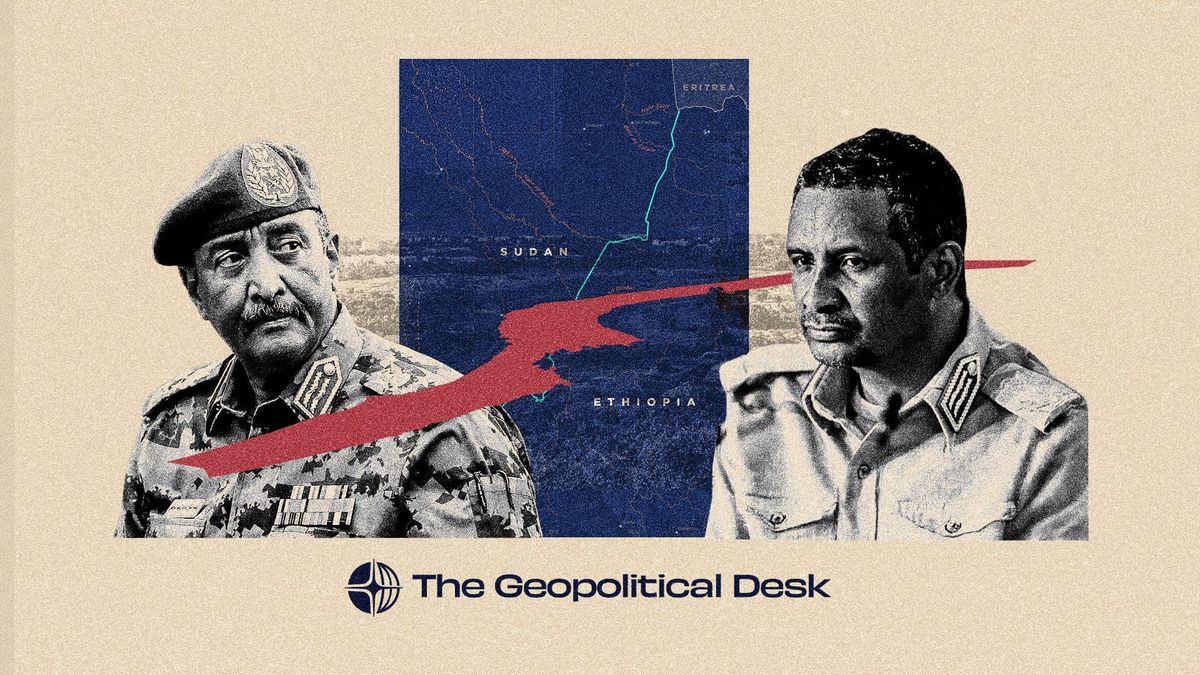
The Battle for Blue Nile: Ethiopia’s front in Sudan
For years, Sudan’s remote southeastern state of Blue Nile remained largely insulated from the civil war raging between the Sudanese Armed Forces (SAF) and the paramilitary Rapid Support Forces (RSF). Today, following an RSF alliance with local SPLM-N rebels and the establishment of Ethiopian cross-border staging grounds, the region has erupted into a critical flashpoint where Sudan’s internal conflict merges with broader Horn of Africa rivalries.
 The Geopolitical Desk
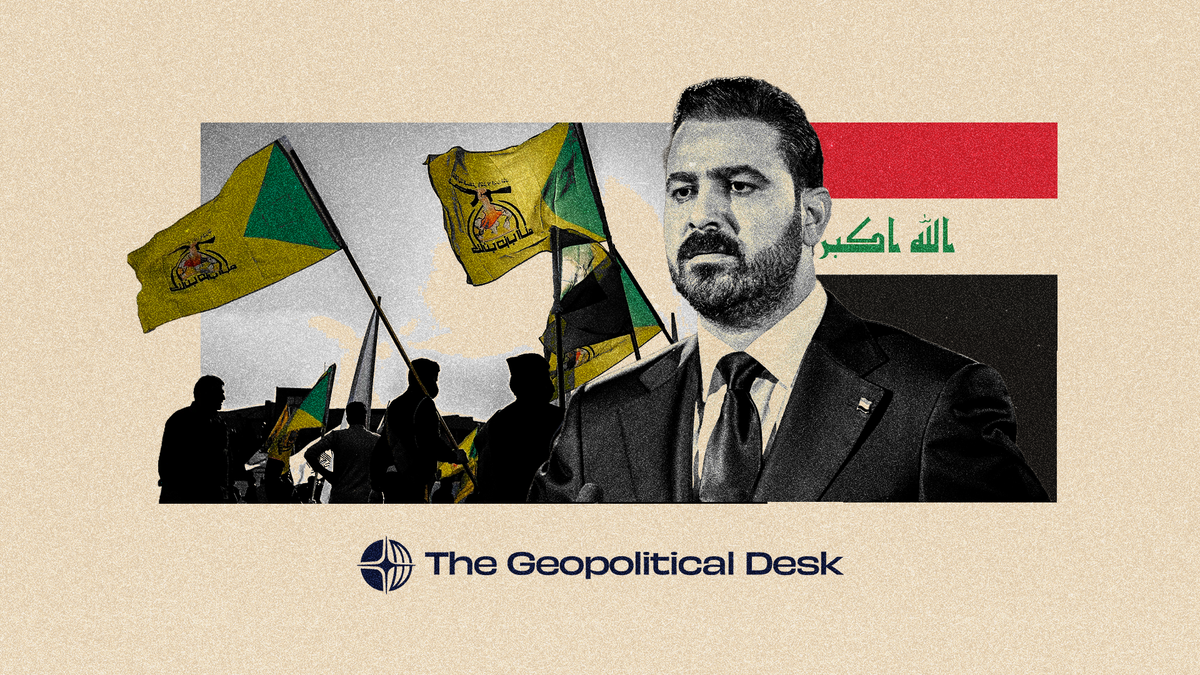
Iraq’s Prime Minister faces off against Kata'ib Hezbollah
This past week Iraqi Prime Minister Ali al-Zaidi was locked in a high-stakes standoff with the powerful Iran-backed faction Kata'ib Hezbollah over illicit oil smuggling in Jurf al-Sakhar, marking the most serious test yet of his push to reassert state authority. Government forces massed around the strategic sub-district ahead of a critical Friday deadline and Coordination Framework leaders scrambled to mediate. In the end a deal was reached.
 The Geopolitical Desk
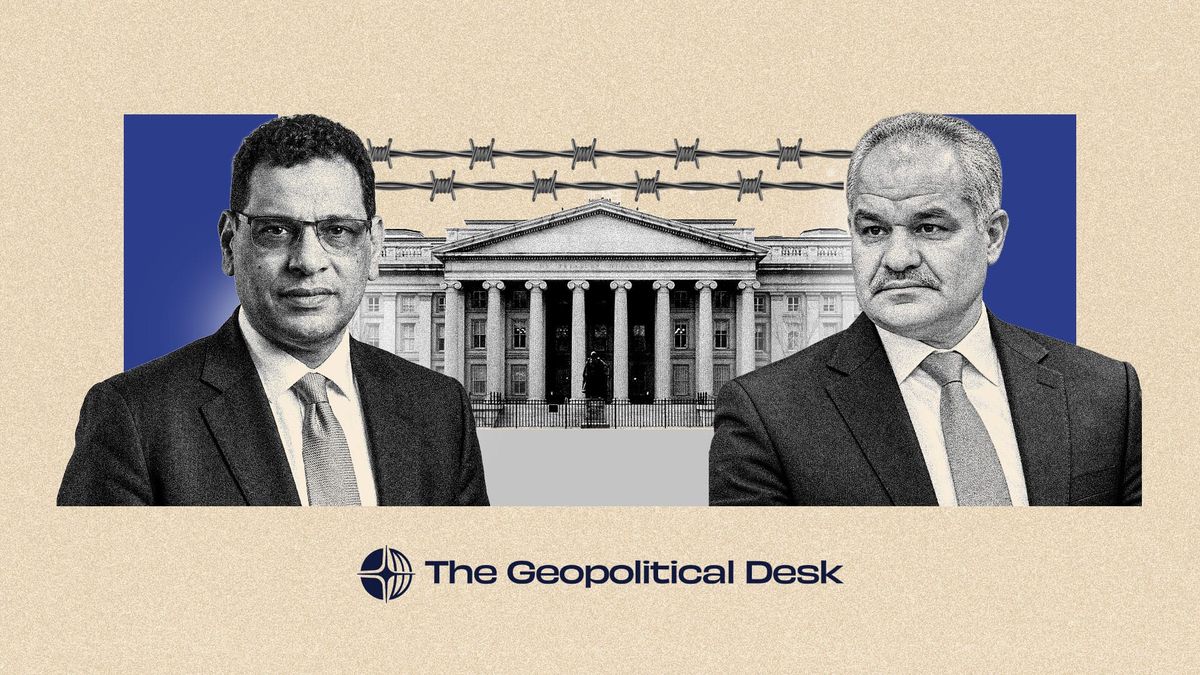
Libya’s Central Bank and economy in crisis
Libya’s economy continues to freefall, worsened by increased public spending and shrinking revenues from oil, despite record high global prices. As the dinar continues to devalue, the Central Bank of Libya and its new leadership are struggling to cement themselves, as the United States’ economic institutions continue to suspend cooperation until reforms are taken.
 The Geopolitical Desk
As always, thank you for reading and for your continued support.
Feel free to reply with feedback or suggestions.
See you next week,
The Geopolitical Desk team
P.S. Please forward this to anyone who might find it useful. If you’re reading this second-hand, you can sign up for our free newsletter here.
Half price on GPD Intelligence for 3 months
Professionals across energy markets, diplomacy, risk advisory and investment use GPD Intelligence to track geopolitical developments before they move markets.
£14.50/month for 3 months, then £29/month. Cancel anytime.


