

▸ 🇺🇦🇷🇺 US-mediated "energy ceasefire" already collapse
▸ 🇮🇷 Hormuz attacks by Iran spike
▸ 🇹🇳🇱🇾 North Africa social unrest brewing
Do you know those weeks that feel like a quiet before the storm? Well at GPD we feel like this might be one of those moments.
a U.S.-declared “energy ceasefire” between Russia and Ukraine already collapsed within 24 hours leading to a dangerous escalation in missile and drone attacks.
Meanwhile recent strikes in the Strait of Hormuz by Iran have hurt the recent U.S. narrative that shipping is recovering to normal levels.
And North Africa is reaching a breaking point. After weeks of persistent power cuts amid the heat of summer mass protests have been announced in Tunisia. There are genuine worries if the country erupts in fury, the fire will quickly spread to its neighbors.
Now,
Lets get into it
U.S.-declared “energy ceasefire” collapses before the ink is dry
What happened: Despite Trump’s claim of a unilateral “energy ceasefire”, which came with Washington’s unexpected decision to lift sanctions on Russian diesel exports, strikes on the Russian and Ukrainian energy grids only intensified. Russian missile and drone barrages continued hitting Ukrainian power plants and electrical transmission grids in Kyiv, Kharkiv, and southern regions ahead of winter. In response, Ukrainian President Volodymyr Zelenskyy clarified that Kyiv was never consulted on a formal energy truce, and Ukrainian long-range forces resumed deep-strike drone operations targeting Russian refineries, including the Ryazan facilities.
Why it matters: The unilateral U.S. move to ease Russian oil restrictions aimed to curb domestic fuel prices ahead of upcoming midterm elections, but it has come to represent the latest low-point in U.S.-Ukraine relations. Days later, an unannounced cap on Ukraine’s Starshield terminals, reportedly ordered from the White House, briefly grounded drone missions. The US initiative signaled a fracture in Western sanctions cohesion while doing little to stop active military targeting. Moscow capitalized on the situation by doubling down on winter grid strikes, while Kyiv demonstrated that its long-range strategic targeting of Russian fuel supplies remains active.
What it means: The "energy ceasefire", triumphantly announced by the U.S., has already collapsed on the ground. Both Russia and Ukraine appear to only be doubling down on strategic infrastructure strikes. Russia aims to cripple Ukraine's heating grid and economic stability before winter, and Ukraine is striking back against Russian refining capacity to squeeze Moscow's war revenue. The dispute also accelerates pressure on European allies to fill potential U.S. financing and defence supply gaps for Kyiv.
Risk metre (High): The failure of diplomatic signals to halt the grid war, combined with growing friction between Washington and Kyiv and sustained heavy strikes on power infrastructure, has sharply worsened Ukraine’s humanitarian outlook as winter approaches.
Hormuz sinkings puncture the recovery narrative
What happened: A container ship and a dry bulk carrier sank near the Strait of Hormuz this week, bringing the number of merchant vessels sunk since the war began to three. The bulk carrier had been hit on 23 September and stayed afloat for weeks before going down. The IRGC attributed the container ship’s sinking to a sea mine, saying the vessel had used an “unauthorised and hazardous route”, while other accounts point to a projectile strike. Both sinkings came after a senior IRGC official warned on 7 October that routes through the strait considered “illegal” by Tehran would soon be blocked.
Why it matters: Since Operation Economic Outcast began in August, Washington has argued that Iran has lost control of the strait. Regional crude exports topped pre-war levels on 14 days in September, according to Kpler, helped by U.S. naval cover for a route along Oman’s coast, Gulf tankers sailing dark, July U.S. strikes on Iran’s coastal surveillance, and Saudi and Emirati pipelines bypassing the strait. The recovery also partly reflected Iranian restraint, driven by concern over crew deaths and oil spills, reluctance to alienate Asian buyers, and the need to preserve munitions and fast-attack boats during a lull in U.S. strikes. That recovery was real but probably unsustainable, and October’s escalation in Iranian attacks has reversed it, with Hormuz crude flows averaging 8.5 million bpd in the week to 7 October, nearly 40% below pre-war levels.
What it means: Tehran wants to raise the cost of the current stalemate before it has to answer the U.S. response to its own diplomatic proposal. Washington’s position, an enhanced version of the June MoU, demands concrete nuclear steps Iran is unwilling to take, but turning it down flatly would invite strikes. Pressure at sea is a middle course. The IRGC navy now says ships using unauthorised passages will be pursued and punished anywhere in the region, and it has already repeatedly hit vessels in the Gulf of Oman. Extending attacks into the Arabian Sea or Indian Ocean would do far more damage to the U.S. narrative that it is keeping the lanes open. Iran lacks the capabilities to strike that far often. It may not need to, though: a few hits with newer anti-ship missiles, or with help from cyber attacks, could further unsettle shipping and put pressure on Trump ahead of the midterms.
Risk metre (High): Diplomatic deadlock, U.S. aircraft carriers moving back towards Iran, Trump declining to rule out a MOAB strike, possibly on Pickaxe Mountain, and Iranian forces staying on high alert all point to renewed escalation.
Tunisia sees new protests
What happened: Tunisia saw its largest protest in years, led by the influential trade union, the Tunisian General Labour Union (UGTT). They were joined by opposition groups, doctors, lawyers and other sectors demanding change in a national economy and political reality long seen as stagnant. Around 3,000 people reportedly took part, capping off a summer defined by immense heatwaves and prolonged power outages.
Why it matters: These protests mark growing national anger towards the government of Kais Saied, who came to power vowing to renew the nation both economically and politically. Yet, over the years, he has only further tightened his grip on power, while the economy has continued to struggle. The protests also mark a return to popular demonstrations, drawing comparisons to those in 2011 that would later spark the regional Arab Spring.
What it means: The protests in Tunisia are not an isolated event but reflect general social frustration across North Africa. In Morocco, the first woman-led government is attempting to solve a growing youth unemployment crisis, while in Algeria, the government of Abdelmadjid Tebboune is expanding the country's international footprint in the hope of preventing another Hirak movement. In Libya, as talks to form a new unity government draw closer, growing social frustration over the lack of government and social services is boiling to the surface. Meanwhile, in Egypt, there continues to be general public malaise towards the government of President al-Sisi.
Risk metre (Medium): While significant, these protests in Tunisia are unlikely to lead to Saied's downfall, at least not immediately. They are also unlikely to lead to another widespread movement like the one seen in 2011, as North African states have somewhat adapted and learned from the initial protests. However, they are clear indicators of growing public frustration across the region, especially as the hopes of the Arab Spring remain unrealised. For Saied, this means he will likely find less room to manoeuvre as public pressure continues to build against him.
Read more about recent tensions in Libya here:
 The Geopolitical Desk
🇪🇹🇪🇷 Ethiopia: Ethiopian government troops reached the Eritrean border in Tigray as the rebel TPLF continues to melt away from all the major cities. Reports continue to come in of Eritrean forces on Ethiopian territory although no major fighting between the two countries has erupted as of yet. Meanwhile Prime Minister Abiy Ahmed has appointed a new interim administration for Tigray, aiming to hold regional elections within six months.
🇾🇪 Yemen: Houthi forces continued their advance on the city of Taiz this past week after cutting off the last road into town, completing their siege. Taiz has been under Houthi assault since 2015, a battle which has taken a heavy toll on its civilian population. It is expected the city will fall in the coming time.
🇸🇩 Sudan: An Egyptian air strike killed between 72 and 200 Sudanese miners in the Egypt-Sudan border region on Sunday. It marks the second major Egyptian strike on a Sudanese mine in the past six months. Since the war started, an estimated 4 million Sudanese have started working in illicit gold mines, leading to an explosion of mining sites around the country. Egyptian border guards accuse Sudanese prospectors of crossing the unmarked frontier to mine near sites run by Egyptian firms.
🇨🇩 DR Congo: Former Congolese president Joseph Kabila joined hands with the Rwandan-backed M23 rebel movement. Kabila announced the news at a press conference flanked by several rebel leaders. They mean to set up a new rebel coalition which seeks to oust sitting president Felix Tshisekedi.
🇸🇴 Somalia: Militias and local security forces aligned with former South West State leader Abdiaziz Laftagareen mobilised and took control of the strategic town of Buur-Hakaba in the Bay region. Somali President Hassan Sheikh Mohamud publicly denied the country was sliding back into a political war, but developments in the south highlight growing armed opposition to Mogadishu's central authority.
Secretary or general? The stalled race to lead the UN
As António Guterres prepares to step down at the end of the year, the race to lead a financially constrained and geopolitically fractured United Nations has hit a turbulent deadlock. Months of closed-door straw polls have left frontrunner Rebeca Grynspan struggling against a rising tide of veto-threatening "discouraged" votes while the P5 remain deeply divided over whether the next chief should act as a strict bureaucrat or an autonomous mediator.
 The Geopolitical Desk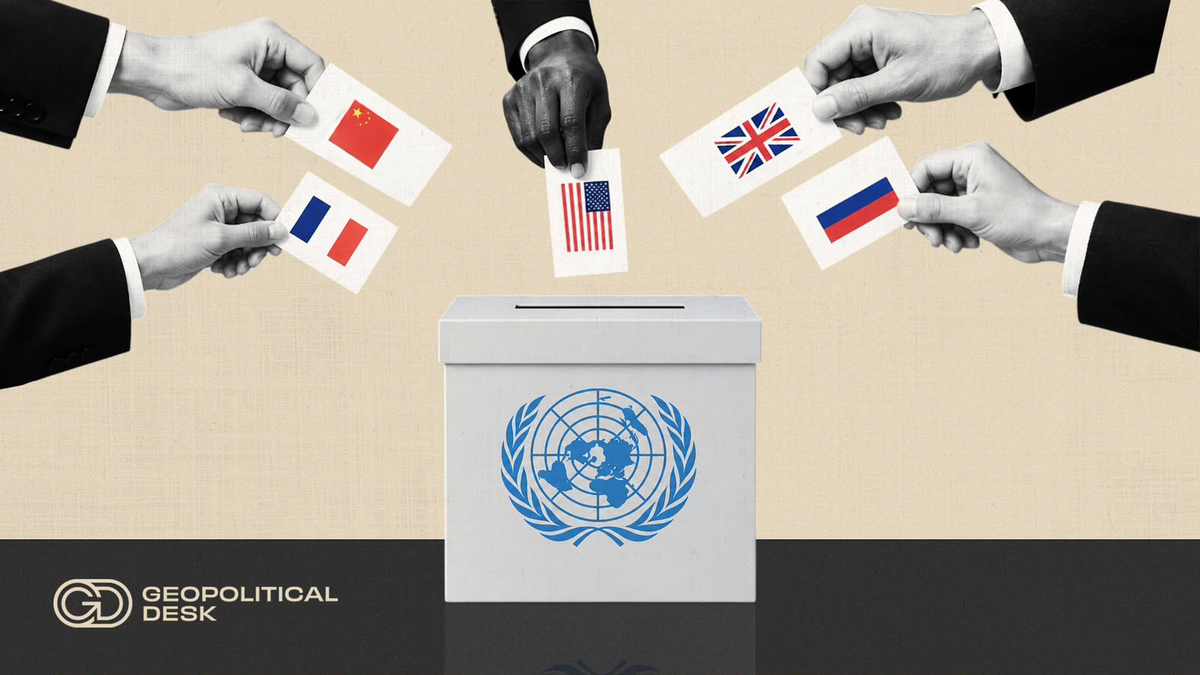
A president without a constituency
In the wake of Nicolás Maduro’s removal, interim president Delcy Rodríguez has successfully broken Venezuela's international isolation through high-stakes diplomacy in Washington and New York. However, by embracing a U.S.-backed oil deal and shifting away from traditional allies like Cuba, she has alienated hardline Chavistas and sparked domestic protests without securing the backing of dissidents within the opposition. Propped up almost entirely by White House endorsements, Delcy’s administration faces growing internal vulnerability as a government operating without a true domestic constituency
 The Geopolitical Desk
As always, thank you for reading and for your continued support.
Feel free to reply with feedback or suggestions.
See you next week,
The Geopolitical Desk team
P.S. Please forward this to anyone who might find it useful. If you’re reading this second-hand, you can sign up for our free newsletter here.
Professionals across energy markets, diplomacy, risk advisory and investment use GPD Intelligence to track geopolitical developments before they move markets.
If you find this coverage valuable, you can unlock the full Intelligence briefings and scenario analysis.


