
▸ 🇪🇹 A rebel coalition declares war in Ethiopia
▸ 🇱🇾 Libya moves closer to a deal
▸ 🇮🇷 Iran faces air blockade and fears renewed attack
The UN General Assembly is where the world's unresolved crises come to be aired, and this week's gathering in New York offered no shortage of them.
In Ethiopia, the worst-case scenario materialised as several armed opposition groups formed an alliance and declared open rebellion against the federal government.
In Libya, a deal is gradually coming into view, although internal rivalries are beginning to intensify.
Iran's diplomatic efforts in New York yielded no positive response from the U.S., and the regional situation points to renewed escalation as Tehran contends with a form of air blockade and believes Washington could launch another major strike.
In Venezuela, interim president Delcy Rodríguez scored diplomatic victories in New York while unrest spread at home amid recurring power cuts.
Now,
Lets get into it
A rebel coalition declares war on the government of Ethiopia
What happened: On Monday a coalition of seven armed opposition groups formally announced its formation. Bringing together several rival ethnic rebel groups including the Tigray People's Liberation Front (TPLF), the Amhara Fano National Movement (Fano) and the Oromo Liberation Army (OLA), the coalition called itself the Alliance for Survival, stating its intent to overthrow the Prosperity Party government led by Prime Minister Abiy Ahmed. By Wednesday the rebel coalition had launched a major coordinated offensive against federal forces across the northern regions, including Tigray, Amhara and neighbouring Afar. TPLF forces seized the regional airport in Mekelle, prompting flight suspensions and widespread internet disruptions. Heavy clashes and drone strikes were reported near strategic border towns and World Heritage sites such as the ancient church town of Lalibela, resulting in hundreds of reported casualties and fresh waves of displacement.
Why it matters: The escalation marks a near-total collapse of the 2022 Pretoria Peace Agreement, which brought an end to two years of brutal war in Tigray. The coalition aims to isolate Addis Ababa and choke off vital supply lines, ultimately toppling the state. Simultaneously, the renewed violence threatens to draw in both neighbouring Eritrea and Sudan, which have maintained close ties with the rebel coalition and reportedly played a role in its creation.
What it means: Ethiopia faces a grave risk of descending back into full-scale civil war, severely threatening stability across the entire Horn of Africa. Widespread disruption to humanitarian access, supply lines and domestic travel leaves civilian populations vulnerable to severe shortages and displacement. Combined with the wars in neighbouring Sudan and Somalia, and further away in Yemen, the current eruption of violence has the potential to plunge the region into its worst humanitarian catastrophe in decades.
Risk metre (High): The multi-front military escalation by a unified rebel coalition seriously threatens the survival of not just the current government but the Ethiopian state in its entirety. Some members of the coalition have made no secret of their ethno-nationalist and separatist ambitions. Even if the government fell tomorrow, these groups would very likely turn on each other for control of land and resources. This means an end to the violence is very unlikely for the foreseeable future.
Libya moves closer to a deal as internal power struggles intensify
What happened: Talks towards a unity agreement advanced this week under the American initiative led by Massad Boulos, while disputes on the ground escalated. A Waha Oil Company board reshuffle triggered protests at the Zawiya Refinery and the closure of a pipeline carrying Sharara crude, causing $75 million in losses, according to the National Oil Corporation. Meanwhile, around 100 parliamentarians attempted to hold a session aimed at removing Speaker Agila Saleh, only to be blocked from entering parliament by Libyan National Army forces.
Why it matters: According to Libya Desk's reporting, Prime Minister Abdulhamid Dabaiba's son, Mohamed, pushed through the Waha changes with LNA approval, sidelining Zintani interests and bypassing Ibrahim Dabaiba, who normally manages these arrangements. Ibrahim reportedly backed the guards' protests, while Zintani forces subsequently closed the pipeline. Negotiating salaries alone could not resolve a crisis rooted in appointments and influence. The episode exposed growing tensions within the ruling family and the consequences of disrupting the GNU's broader alliances.
What it means: This reinforces our earlier warning that the closer Libya gets to a deal, the more turbulent its politics will become. Factions are negotiating a settlement while demonstrating how much disruption they can cause if their interests are overlooked. Saleh secured LNA protection after pushing the 4+4 Agreement through parliament, but in doing so exposed his growing dependence on it. The High Council of State, meanwhile, has yet to ratify the agreement. Progress between the main powerbrokers is placing their own alliances under strain.
Risk metre (High): A unity agreement remains within reach, but the oil losses show how quickly political bargaining can inflict economic damage. Boulos this week acknowledged progress and the work still required, reaffirming American support for unifying institutions and establishing a credible path towards elections. Sustained engagement must now translate those assurances into implementation, contain disputes and protect the economy. More will be needed to ensure Libya does not stumble before the finish line.
Iran: "Buckle up, we're expecting a few bumps ahead"
What happened: After the Salalah regional meeting on the Iran-Oman Hormuz framework was postponed in mid-September, Iran used the UN General Assembly to re-up an offer for reopening the strait, reframing the messaging without changing the substance. Washington rejected it outright and kept tightening economic pressure, this week getting major regional airports such as DXB to stop servicing Iranian carriers and others such as IST to cut Iranian flights to a minimum. Tehran initially threatened regional airports but later dialled back its rhetoric, saying it would respond with unspecified countermeasures.
Why it matters: The UN offer looks like a half-hearted bid to preempt an attack Tehran considers likely, possibly with Israeli involvement, either within weeks or soon after the 3 November US midterms. Mossad and the CIA may have rebuilt networks inside Iran and located more of the generals on their kill list, which makes a new round of strikes on the capital a dangerous prospect for Tehran. Iraq, whose airports have also closed to Iranian aircraft, is particularly exposed as it prepares to start disarming non-state armed groups next week. Baghdad now faces domestic charges of subservience to Washington and threats from those groups to raid airports unless Iranian flights resume.
What it means: Renewed conflict would land just as Q4 brings European carriers back to Gulf airports and opens the tourism season, delaying the region's recovery and casting doubt on hopes that the war's fallout will have faded by late 2027. Europe would feel it in energy too, with Washington weighing a diesel export ban and the EU already urging member states to curb demand, particularly for gas.
Risk metre (High): Signals point to renewed escalation, with the Israeli and US elections likely the main brake in the coming weeks. In Tehran, hardliners pushing to go on the offensive to break the US siege have yet to win the debate, and the security establishment still favours harsher retaliation over an pre-emptive campaign.
Rodríguez meets Trump on the sidelines of UNGA
What happened: At the UN General Assembly in New York, Venezuela's acting president, Delcy Rodríguez, delivered her first address since taking power. She promised that elections would take place at the "right moment", without specifying when that would be. After her speech, Rodríguez held several high-profile meetings, the most prominent of which was with President Trump, who praised her leadership of the country following the capture of Maduro in January. With all eyes on New York, opposition leader María Corina Machado tried to return to Venezuela, having left the country late last year. Her plan, however, fell through when her plane was prevented from taking off from Panama following the intervention of an unspecified foreign government. Meanwhile, protests erupted in several states across Venezuela as regular power cuts continued to plague millions of people.
Why it matters: Rodríguez's appearance signals a further endorsement of her administration by Western and Latin American nations such as the US, Panama, Spain and the Netherlands. Economic and energy cooperation agreements with the US aim to boost oil production and revive Venezuela's strained economy. But for Venezuelan citizens, little has changed on the political front. There are no indications that Rodríguez's government will be any less authoritarian than Maduro's, as critics continue to be arrested and harassed.
What it means: Rodríguez is pursuing economic recovery for the country and global recognition for her presidency, yet deep structural and political problems persist. Without fixed dates for elections or reforms to protect civil society, political stability remains elusive. Venezuelans are growing impatient as promises of reform yield few results.
Risk metre (Medium): Diplomatic re-engagement and energy partnerships offer Rodríguez an economic lifeline, but the lack of an electoral timeline and continued repression leave political and social stability uncertain.
🇺🇦 Ukraine: Russian drones and missiles targeted the Ukrainian capital, Kyiv, on multiple occasions this past week, killing several people, including a 14-year-old boy. Ukraine, in turn, struck the Moscow oil refinery and later hit the Perm refinery in the Urals, forcing both facilities to halt operations.
🇸🇩 Sudan: The Sudanese Armed Forces (SAF) captured the town of Sodari in North Kordofan on Friday, pushing the Rapid Support Forces (RSF) out of one of the last urban centres it controlled in the state. In the preceding days, the SAF downed several large RSF drones that were targeting army positions and civilian infrastructure across the region. The drones were said to be Emirati-supplied CH-95 UCAV models.
🇲🇱 Mali: An attack by the jihadist group JNIM on an army camp in Dioura, in the Mopti region, reportedly killed 150 soldiers and led to the capture of 93 others. Video footage released by the jihadists showed dozens of Malian soldiers in their custody and hundreds of weapons seized in the attack.
🇲🇲 Myanmar: Junta forces reportedly suffered heavy casualties in Karen State, where a column of troops trying to reach the town of Hpapun met heavy resistance, leaving 150 soldiers dead. The state is dominated by the Karen National Liberation Army (KNLA), one of the country's main armed groups fighting the junta.
🇾🇪 Yemen: Following their capture of the Red Sea coastline, Houthi rebels have tried to tighten their siege on the city of Taiz. Government forces and tribal militiamen claimed to have repelled several Houthi attempts to cut off the main road, but heavy fighting continues.
Is Iraq becoming a Houthi front against Saudi Arabia?
Saudi Arabia's efforts to bypass the vulnerable Strait of Hormuz through its cross-country East-West Pipeline are facing a growing threat : the Houthi’s presence in Iraq, which is transitioning from political posturing to active operational coordination. By pairing strikes from Iraqi soil with rapid Houthi advances along Yemen’s Red Sea coast, Iran-aligned networks are exerting pressure on both sides of the Arabian Peninsula simultaneously.
 The Geopolitical Desk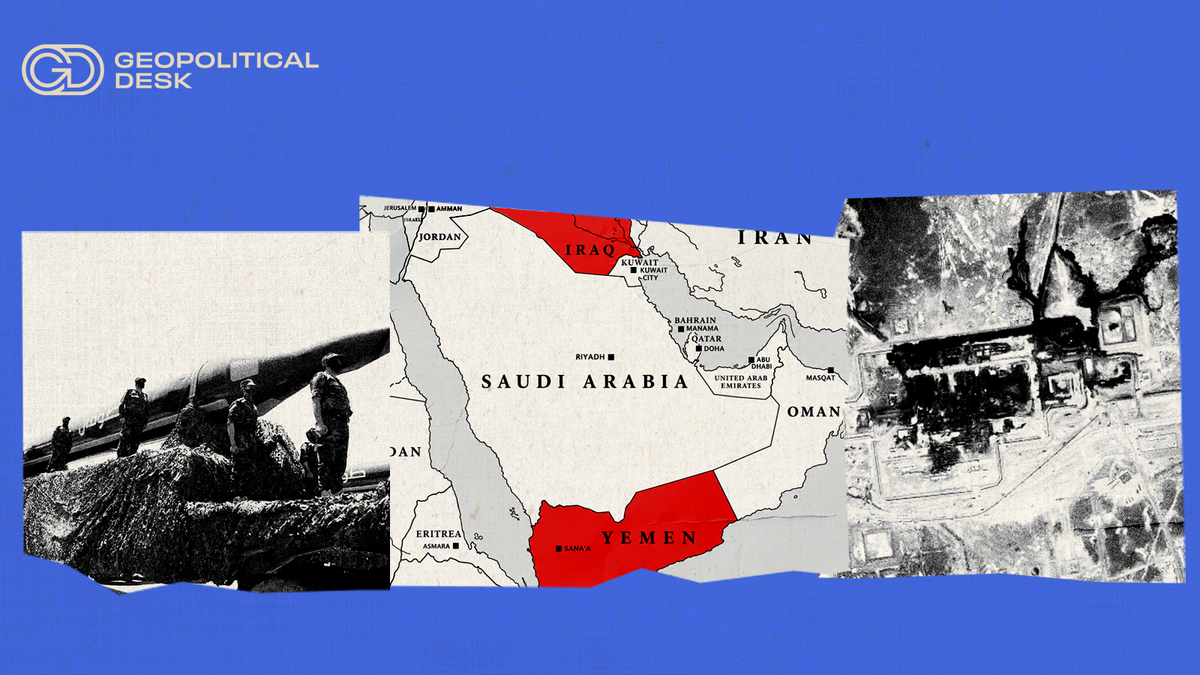
Ukraine's Libya launchpad
Rumours of Ukrainian military personnel in western Libya were once easy to dismiss, but GPD sources have now confirmed their presence, with Ukrainian trainers and technicians supporting GNU-aligned forces in drone warfare. As investigations allege that Libya is being used to target Russia's shadow fleet, Ukrainian expertise is contributing to a drone race among Tripoli's armed groups and raising questions over a possible confrontation with Russian forces in the LNA-controlled east.
 The Geopolitical Desk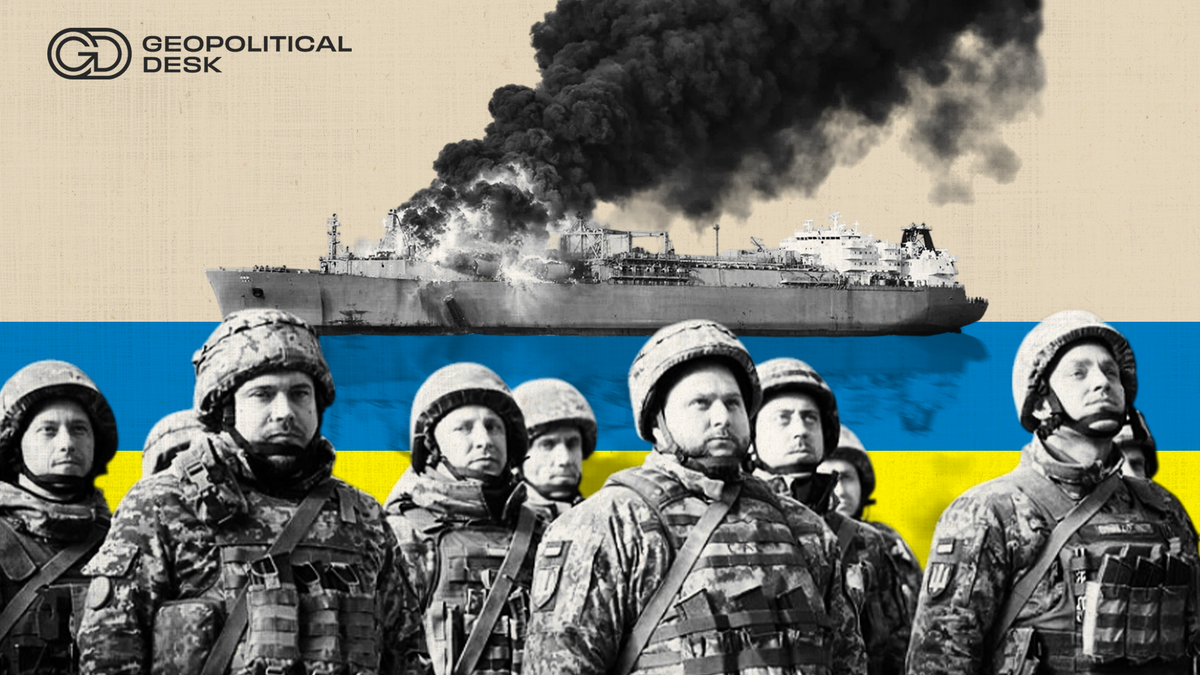
Algeria's small government reshuffle reveals bigger calculations
After record-low turnout in Algeria's legislative elections, President Abdelmadjid Tebboune opted for a limited government reshuffle rather than a full overhaul. Yet the handful of changes, concentrated in finance, industry and interior, suggest a president tightening his grip on key economic files while seeking to rein in increasingly influential ministers ahead of the 2029 presidential election.
 The Geopolitical Desk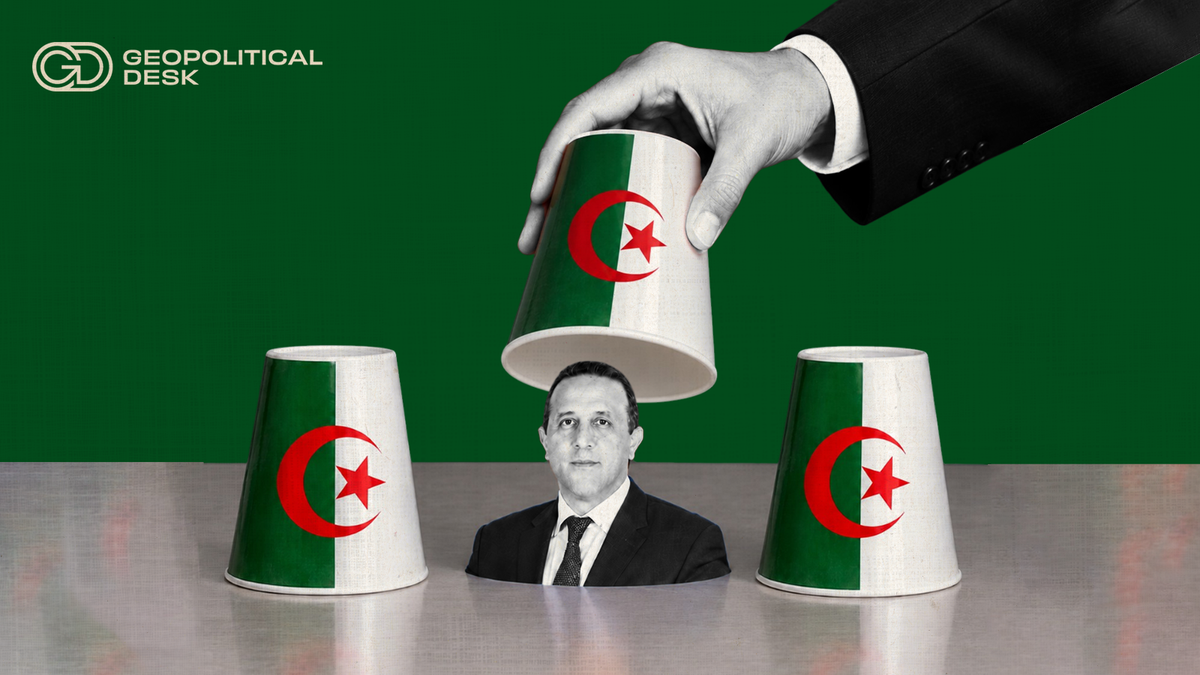
Julyana: putting Benghazi on the map
Benghazi's Julyana Free Zone Port, owned by a Haftar-family development agency, has seen shipping traffic surge since its 2021 redevelopment and is drawing projects ranging from a planned sugar plant to a direct COSCO line from China. Tied to a wider build-out in steel, cement and food processing, the port is central to eastern Libya's bid to turn Benghazi from an import gateway into an export platform with growing regional weight.
 The Geopolitical Desk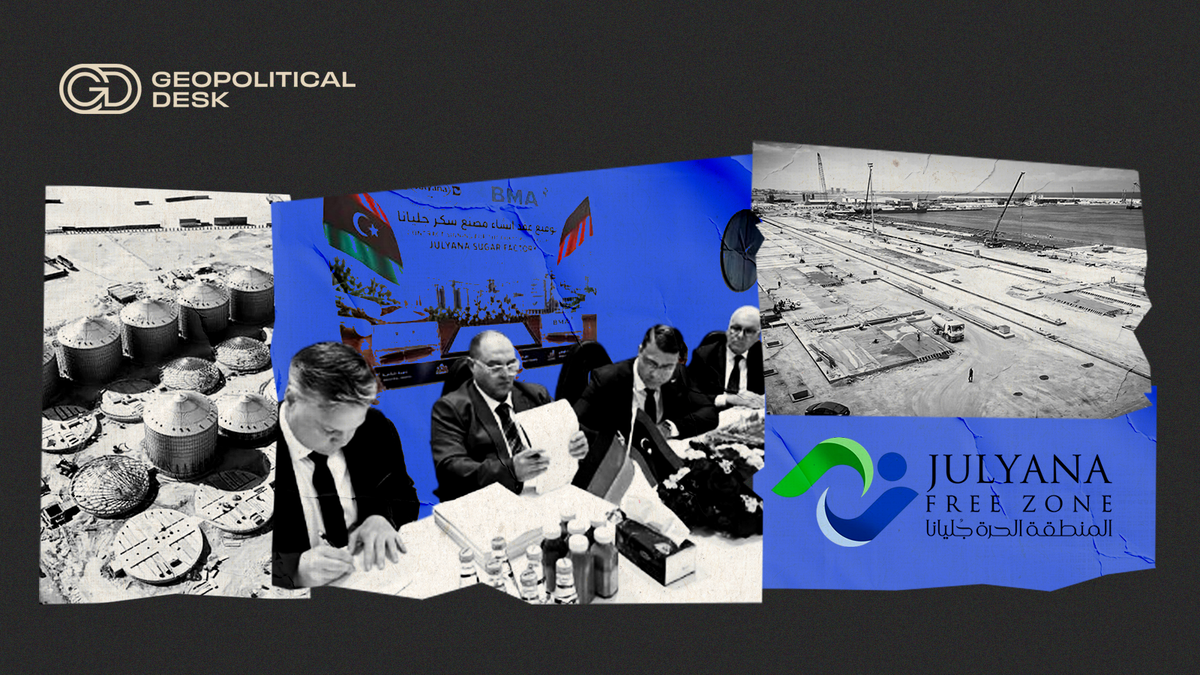
As always, thank you for reading and for your continued support.
Feel free to reply with feedback or suggestions.
See you next week,
The Geopolitical Desk team
P.S. Please forward this to anyone who might find it useful. If you’re reading this second-hand, you can sign up for our free newsletter here.
Professionals across energy markets, diplomacy, risk advisory and investment use GPD Intelligence to track geopolitical developments before they move markets.
If you find this coverage valuable, you can unlock the full Intelligence briefings and scenario analysis.


