
▸ 🇷🇸 Serbia get’s ready for decisive elections
▸ 🇱🇾 The east delivers, the west wavers
▸ 🇨🇦🇪🇺 Canada first to be offered associate membership to EU
We’re entering the astronomical fall this next week and the newsflow has been as busy as ever.
In Serbia major political coalitions have presented the candidate lists for the early parliamentary elections, kickstarting the electoral campaigns for October’s vote.
In Libya the House of Representatives has approved the agreement of the 4+4 negotiation teams.
In Europe, Canada became the first country to be offered a newly conceived ‘Associate Membership’ of the European Union.
Now,
Lets get into it
Serbia gets ready for decisive elections
What happened: Following the official dissolution of the Serbian parliament, political parties have rapidly mobilized. The ruling populist bloc (SNS) rallied around the "Aleksandar Vučić – United Serbia" ballot list, anchoring its campaign around president Vučić as its candidate for Prime Minister. In a parallel move, university students, opposition figures and anti-corruption activists formally submitted the "Student List – Students Win" candidate list to the electoral commission, accompanied by a public march through Belgrade. According to the polls the Student List has the best shot at challenging the SNS-led United Serbia coalition.
Why it matters: The rush to present electoral lists by both government and opposition forces demonstrates a dramatic shift from street mobilization to electoral competition. For over a year, anti-corruption protests were organised outside of traditional party structures; the formal submission of the student-backed list converts this widespread civic anger into a unified electoral campaign. Concurrently, the ruling party's unified list demonstrates Vučić’s strategy to consolidate his core base, counter the opposition's momentum, and secure a smooth transition from the presidency to the premiership.
What it means: Campaign dynamics will depend heavily on list structures and voter registration. The entrance of a distinct student list alongside traditional opposition parties presents voters with a clear choice between civil movement outsiders and established political figures. However, electoral watchdogs, including an international mission deployed by the OSCE warn that the ruling party has an unfair advantage as it plans to benefit from state resources, heavy media influence, and a compressed campaign period, making candidate visibility a central aspect of the campaign.
Risk metre (medium): Although all parties seem to have entered the race with a fair share of optimism, concerns about the fairness of the election process are well-founded. Previous parliamentary elections in 2023 were marred by allegations of fraud, sparking weeks of unrest. Should results be disputed once again we can expect the student protesters to return to the streets in full force.
The east delivers, the west wavers
What happened: Libya’s political process moved forward as the House of Representatives (HoR) approved the 4+4 Agreement, following days of confusion in which both legislative chambers appeared poised to do what they do best: obstruct. As we explain in “What’s behind Saleh’s 4+4 U-turn,” Agila Saleh’s attempt to revive the rival 6+6 negotiations ended abruptly after Saddam Haftar reportedly intervened. Saleh then rushed through approval with around 30 MPs present, despite objections over procedure and quorum. The UN Secretary-General’s welcome for the decision signalled international determination to press ahead, leaving the still-resistant High Council of State (HCS) increasingly isolated.
Why it matters: Saddam’s intervention demonstrated his growing status as parliament’s kingmaker, capable of bringing both Saleh and competing parliamentary currents into line when their maneuvering threatens the LNA’s commitments. The message was clear: eastern political rivalries would not be allowed to derail the agreement. The contrast with western Libya is increasingly stark. The Government of National Unity (GNU) has failed to bring HCS leader Mohammed Takala on board, while competition between Ibrahim Dabaiba and Prime Minister Abdulhamid Dabaiba and his son Mohamed is deepening fractures within the ruling family. As the LNA demonstrates its authority, the GNU risks unravelling before it can deliver its side of the bargain.
What it means: Successive hurdles are being overcome, bringing a broader political settlement and potentially a unified government closer. But Tripoli remains uneasy. Alongside the Dabaibas’ internal competition, Zawiya remains a flashpoint, with protesters partially shutting an oil pipeline this week, while armed mobilisation from Misrata adds to western tensions. Further meetings are expected next week under Massad Boulos’s auspices. As negotiations advance, actors fearing exclusion will have stronger incentives to obstruct or manufacture crises to secure their interests. Takala’s resistance could therefore accelerate efforts to bypass the HCS rather than win it greater influence.
Risk metre (medium-high): The risk of further chaos in western Libya remains medium, even as the national political process advances. Progress depends on Washington sustaining momentum and the Dabaibas containing their internal contest sufficiently to honour their commitments. Eastern cohesion has helped clear one obstacle, but western fragmentation could still undermine implementation. Western Libya is increasingly in a race between a political agreement that produces a unified government and another crisis that overtakes the negotiations.
Read the full analysis:
 The Geopolitical Desk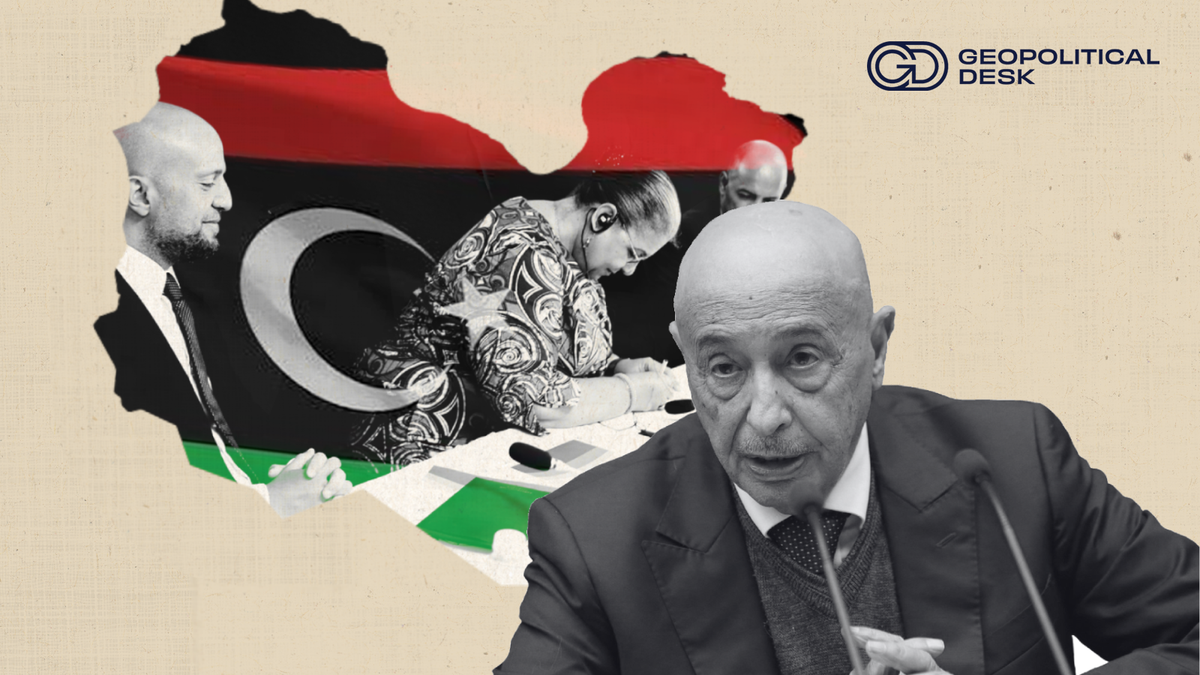
First to be offered associate membership to the EU
What happened: European Commission President Ursula von der Leyen announced that the EU would explore making Canada the EU's first "Associate Member". This came after Canadian and European leaders discussed the possibility of strengthening relations between Ottawa and the European bloc in the face of worsening Canadian-US relations.
Why it matters: Canada's shift away from the North American continent towards Europe would have been unthinkable a few years ago and demonstrates how far relations have worsened with the United States since President Trump began his second term. Threats from the President to annex Canada, combined with real economic damage from US tariffs, have forced Canada to seriously consider expanding its partnership with what Prime Minister Mark Carney would call other "middle powers".
What it means: There is no clear idea of what being an "Associate Member" would actually mean, as it is not a defined term and no other country has gone through such a process. The EU would have to establish its own systems first, which would likely require intra-bloc negotiations and consensus, meaning any such agreement with Canada would take time. The most realistic agreements would likely involve the removal of visa requirements between the two, as well as easing barriers surrounding international trade. Already, Canada and the EU have agreed to allow Ottawa to join a programme that will ease access to European defence procurement.
Risk metre (medium): Trump has already lashed out at the apparent plan, calling it "laughable" and threatening more sanctions on Canada. Ultimately, any integration between the EU and Canada would take time, even if both sides work on an accelerated timeline, and Trump might forget about it. Even if Trump implements more sanctions, it's unlikely to change much, as both Canada and the EU have already begun to look for ways to decrease their reliance on the US.
🇺🇦 Ukraine: The Ukrainian 3rd Army Corps announced a limited offensive around Lyman, in the north of the Donetsk oblast. Dubbed Operation Vivaldi, the offensive reported some small advances, including the capture of the villages of Serednie, Novoselivka, Yarova and Oleksandrivka.
🇮🇷 Iran: Iranian forces continue targeting commercial shipping in the Strait of Hormuz, stranding and striking foreign bulk carriers including a Togo-flagged vessel, trying to make the passage through the Strait. Iran’s Security Chief meanwhile, rejected any talks with the US, following remarks by President Trump he was willing to work out a deal.
🇸🇩 Sudan: The Sudanese Armed Forces (SAF) and their allied Joint Forces launched an offensive in the North Kordofan region, moving towards the RSF-held town of Sodari. The military reported the capture of at least 11 localities including the villages of Kagmar, Sharshar, Al-Kurayniyah, Al-Qaa, Ghabat Al-Laqad, Al-Kukaiti
🇲🇲 Myanmar: A junta offensive in Rakhine State called Operation 4926 has grinded to a halt under heavy resistance by the resistance Arakan Army. Junta troops have suffered heavy casualties outside of their enclaves in Sittwe and Kyaukphyu, with resistance sources reporting many of the casualties on the military’s side being poorly equipped and inexperienced recruits.
🇾🇪 Yemen: Houthi rebels reported the downing of the Saudi F-15 jet over the Marib Governorate a fighting continued to rage across the country. Saudi strikes targeted several positions in the Taiz governorate while Houthi missiles and drones were fired at military targets in Saudi Arabia, including King Khalid Air Base.
What’s behind the Algeria-UAE rupture?
Relations between Algeria and the United Arab Emirates have officially reached a breaking point following Algiers' decision to sever diplomatic ties and restrict its airspace to Emirati carriers. What was once a lucrative economic partnership anchored in strategic infrastructure and military cooperation has completely dissolved under the weight of conflicting regional ambitions in North Africa and the Sahel.
 The Geopolitical Desk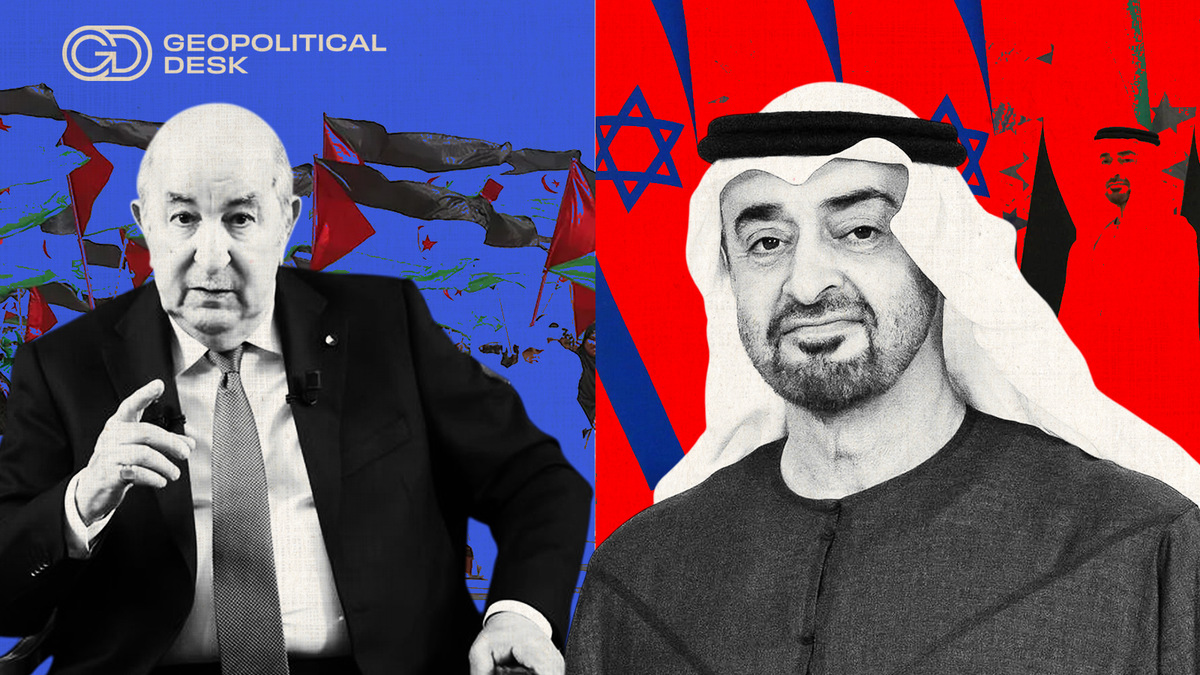
Russia's rebels in Ukraine are starting to cause problems
A shootout between Ukraine’s SBU and HUR intelligence agencies on the streets of Kyiv has exposed the high-stakes gamble behind Kyiv’s Russian volunteer units. While groups like the Russian Volunteer Corps (RVC) and Freedom of Russia Legion (FRL) offer valuable propaganda value, they also present a dangerous dilemma. Are they an asset, or a security risk?
 The Geopolitical Desk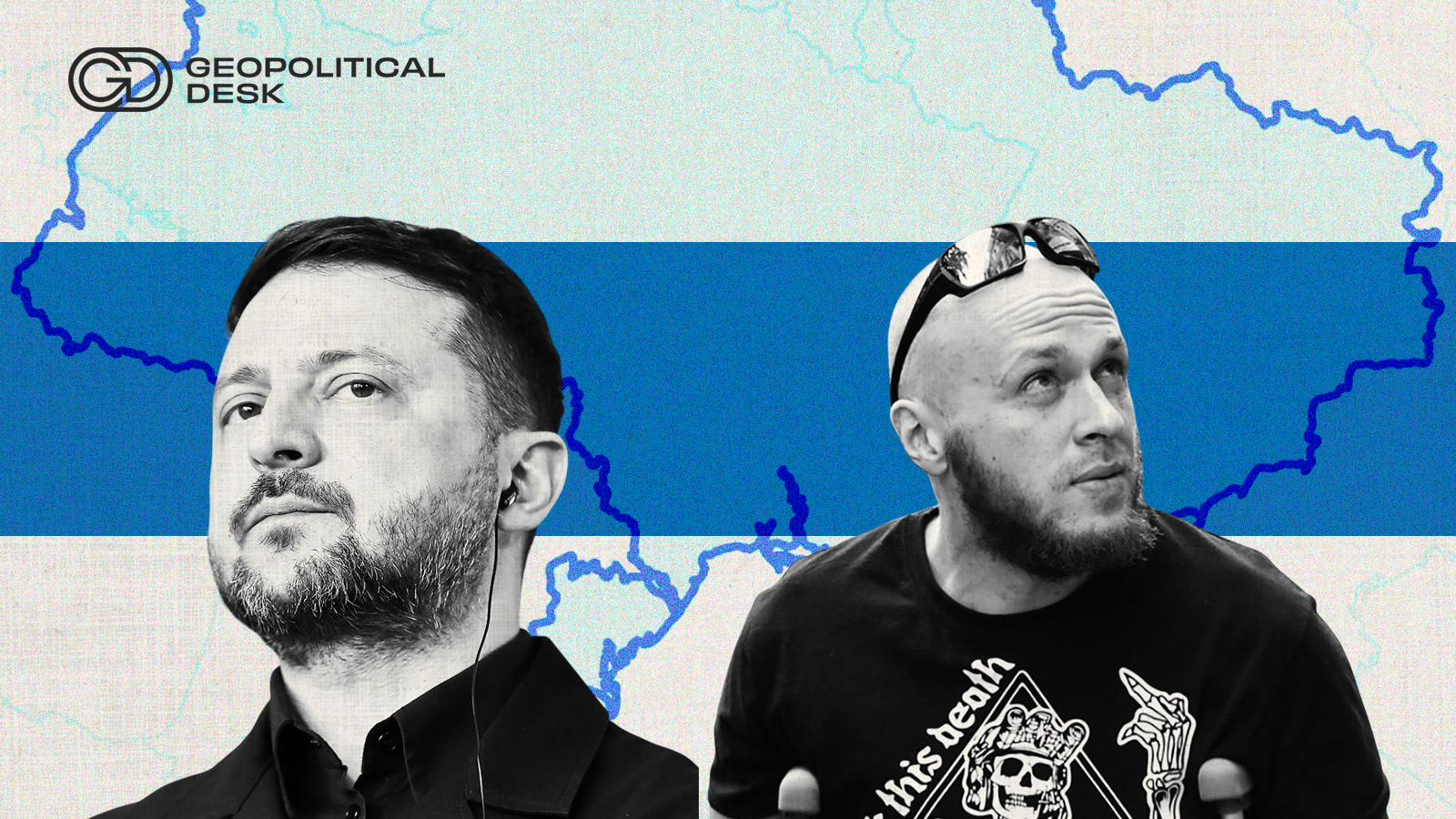
As always, thank you for reading and for your continued support.
Feel free to reply with feedback or suggestions.
See you next week,
The Geopolitical Desk team
P.S. Please forward this to anyone who might find it useful. If you’re reading this second-hand, you can sign up for our free newsletter here.
Professionals across energy markets, diplomacy, risk advisory and investment use GPD Intelligence to track geopolitical developments before they move markets.
If you find this coverage valuable, you can unlock the full Intelligence briefings and scenario analysis.


