






▸ 🇺🇸 Blue tsunami hits the United States in full force
▸ 🇱🇾 New CBL Governor looks to establish new administration amid pressure
▸ 🇭🇹🇸🇻Salvadoran intervention in Haiti gets off the ground
▸ 🇸🇴 Somali Supreme Court rules against President Hassan
After high-stake elections in Israel, Brazil and Serbia the previous weeks, there was one big vote still left to cover; the US midterms.
And it has been one for the history books. Across the country Democratic candidates swept the polls, turning states like Texas, South Carolina, and even Kansas blue, resulting in a strong majority for the Dems in both chambers of Congress.
But the United States was not the only country on our radar. In Libya, new Central Bank of Libya (CBL) governor Fawzi Abukhazam has come with pressure, as the U.S. Treasury Department suspends cooperation with the CBL over the change.
In the Caribbean, Bukele's El Salvador is evolving into a major regional player as the country is pouring thousands of troops into Haiti, aiming to finally take out the armed gangs which have terrorized that country for years.
And in Somalia, the Supreme Court shocked friend and foe when it ruled against sitting president Hassan Sheikh Mohamud, stating his term extension was unconstitutional, plunging the country only deeper into a political crisis.
Now,
Lets get into it
Blue tsunami hits across the country, sweeping many states.
What happened: The U.S. Democratic Party saw massive gains across the country, routing Republican candidates in traditionally Republican-leaning states. Americans went to the polls to vote in national midterm elections, which do not elect the President but do determine the composition of the House of Representatives and one-third of the Senate. At the national level, Democrats have taken control of both chambers of Congress, while at the state level, Democrats won governorships and statewide offices across the traditionally Republican South.
Why it matters: The swing from Republican to Democratic control is one of the largest political changes in the United States in decades, giving Democrats a congressional majority not seen since the 2008. It represents a drastic reversal of fortune for the party after its defeat to Trump and the Republicans in 2024. Control of Congress will allow Democrats to block future Trump appointees and launch investigations into the Trump administration, restoring Congress' intended oversight role over the executive branch, which Republican leadership had declined to exercise. However, while this will likely constrain Trump's domestic agenda, the President will retain significant control over foreign policy and may seek to take a more assertive stance abroad, particularly as he no longer faces the pressure of upcoming elections.
What it means: The vote signals that U.S. voters are frustrated with both Trump and the Republican Party. Many Americans have grown frustrated with slow economic growth and the war in Iran, and while Trump was not on the ballot, he encouraged voters to consider the election a referendum on his presidency. The scale of the victory also demonstrates that dissatisfaction with Trump likely extends beyond high petrol prices. Voters in traditionally Republican states such as Georgia, Texas, Iowa and Kansas brought in new Democratic state leadership after Republicans had dominated governance in those states for decades, indicating broader dissatisfaction with the Republican Party beyond Trump himself. While the new Democratic majority in Congress is substantial, the party will likely lose some of those seats in 2028, when Trump is no longer on the ballot. However, the widespread shift towards the Democrats indicates a deeper change in the U.S. electorate.
Risk metre (Medium): Initial fears that Trump would refuse to accept the results have proven unfounded, as the President told the New York Times that he would try to work with Democrats. The scale of the opposition victory was likely too significant to challenge, while Trump's age may mean he is more interested in completing his personal projects before his term ends. However, Trump still has considerable control over U.S. foreign policy, and with the election now over and his presidency entering its final phase, he may be more willing to pursue further aggressive foreign policy initiatives. Additionally, Trump recently appointed far-right nationalist Stephen Miller to be his new Chief of Staff, indicating he will likely look to clash with this new Congress.
New CBL Governor looks to establish new administration
What happened: Libya’s House of Representatives (HoR) voted to appoint Fawzi Abukhazam as the new Governor of the Central Bank of Libya (CBL). This came days after the HoR had approved Naji Issa’s resignation, submitted in August, and replaced him with Abukhazam as interim Governor. Sources informed GPD that the move had been coordinated between eastern and western Libyan factions. However, following his appointment, the U.S. Treasury Department said it was “disturbed” by the change and would suspend cooperation with the CBL.
Why it matters: This change in leadership comes at a critical time in Libyan politics, as unification talks continue and efforts to fully implement Libya’s Unified Budget Agreement intensify. Former Governor Naji Issa had sought to pressure Libya’s rival factions into adopting the spending agreement, and it remains unclear at this early stage how Abukhazam will approach its implementation. His rapid appointment also demonstrates how Libya’s rival factions are increasing coordination, but a lack of international support for these changes can still lead to blowback. The United States had a positive relationship with Issa and was likely not informed of the upcoming reshuffle, prompting the Treasury Department's suspension of cooperation.
What it means: While Abukhazam has gained control of the bank and the backing of Libya’s major factions, he will still need to secure U.S. support. The Libyan economy is highly reliant on U.S. dollars, and a prolonged disruption to USD liquidity could have a damaging effect on the economy. While the HoR has sought to formalise the process by promoting Abukhazam from interim to permanent Governor, the U.S. will likely want to secure commitments on reforms before resuming cooperation.
Risk metre (Low-Medium): Libyan factions are unlikely to reverse course and reinstate Issa, and will probably stick with Abukhazam. This means they will have to engage with the U.S. to try to secure whatever agreement is necessary to resume cooperation. Additionally, further damage to the Libyan economy would likely hinder the U.S.-backed unity talks, and Washington will likely not maintain the suspension in the long term.
Bukele projects regional ambitions by committing to Haiti intervention
What happened: Following a mid-October gang ambush near the Haitian capital Port-au-Prince, which resulted in the kidnapping of four Salvadoran technicians, El Salvador sharply escalated military operations in Haiti. President Nayib Bukele deployed over 2,000 special forces to the country to reinforce the UN-backed Gang Suppression Force (GSF). Over the past week, Salvadoran troops spearheaded offensive operations against armed gangs in the wider Port-au-Prince area. Haitian Prime Minister Alix Didier Fils-Aimé commended the Salvadorans, but concerns were raised by observers about the rogue modus operandi of the Salvadoran troops, who are operating independently of any international stabilisation effort.
Why it matters: The deployment marks a dramatic tactical shift from relatively passive peacekeeping support to direct counter-gang combat by a foreign military on Haitian soil. El Salvador has injected significant firepower into a severely under-resourced international mission, bringing international personnel up to roughly 4,000 troops. Human rights groups, however, have expressed concern that the aggressive urban tactics employed by Salvadoran troops show little regard for the civilian population and could lead to an increase in innocent casualties.
What it means: Through this operation El Salvador is asserting itself as a regional security exporter, testing whether its hardline domestic anti-gang framework, known as the “Bukele Model”, can be applied to foreign crises. It will undoubtedly please Bukele’s allies in Washington, where successive administrations have sought to stabilise Haiti by trying to convince other countries to commit troops to a peacekeeping force. The intensive urban combat, however, risks triggering new waves of displacement toward the neighbouring Dominican Republic or driving migration across the wider Caribbean.
Risk metre (High): The introduction of aggressive hostage rescue tactics into urban sectors controlled by heavily armed gang coalitions has resulted in a sharp increase in gun battles in the streets of Port-au-Prince, which in turn increases the risk of both civilian casualties and displacement. Neutralising the armed gangs in Haiti is also easier said than done, and Salvadoran military planners might be confronted with the possibility of losses on their side while major gang leaders continue to evade attempts at capture and remain at large.
The Somali Supreme Court rules against Hassan Sheikh Mohamud’s presidency
What happened: Somalia’s political crisis escalated rapidly this week into a constitutional showdown. President Hassan Sheikh Mohamud unilaterally tried to remove Chief Justice Bashe Yusuf Ahmed on November 4, replacing him with a more compliant judge. The Supreme Court formally struck down President Hassan’s attempt to fire the Chief Justice, declaring the executive removal "null and void" for lacking constitutional authority. The Court subsequently issued a landmark ruling, declaring that the mandates of both the Federal Parliament and President Hassan expired earlier in 2026. The court invalidated the term extension the president had granted himself as unconstitutional and ordered political leaders to form an inclusive consensus and conduct general elections within 90 days.
Why it matters: This decision strikes at the very core of state legitimacy in Mogadishu. By declaring the executive and legislative branches to be operating without a valid constitutional mandate, the highest court stripped President Hassan’s administration of legal authority to unilaterally reconfigure national electoral laws. The president’s attempt to pressure the judiciary by removing the Chief Justice and deploying security forces to his residence prior to the ruling exposes a direct attempt by him to circumvent judicial oversight, and intimidate those who stand against him.
What it means: The ruling effectively strips the current administration of any constitutional legitimacy, escalating the already severe full-scale political crisis, as the president is now operating in explicit defiance of the highest court. Regional leaders in Puntland and Jubaland, alongside federal opposition blocs, now hold binding legal justification to reject this government in its entirety, meaning opposition leaders will feel more freedom to rally armed actors loyal to them, while regional administrations will pursue more autonomy to manage their own affairs, independent of Mogadishu. Defying the court's order for elections within 90 days will leave these opposition actors convinced that the only solution to this crisis is a military one. If Somali government and opposition actors start fighting in the streets, an operational void could open up which jihadist groups like al-Shabaab can easily exploit.
Risk metre (High): If President Hassan rejects the court’s ruling for general elections, the country is almost certain to descend into armed conflict. Opposition figures have rallied the clans to them and violence between the president’s supporters and opponents has already resulted in street battles in the south of the country. The likelihood of Somalia experiencing another political civil war, on top of the current war against al-Shabaab, grows larger by the day.
🇮🇷 Iran: Kinetic action in the Gulf came back into view on Monday, when U.S. forces struck Qeshm Island after Iranian forces fired on an American aircraft over Hormuz. Iran doubled its attacks on shipping in October, which the IRGC attributes to tankers striking its mines, although maritime security authorities say the confirmed incidents were projectile and drone attacks. Since Tuesday’s midterms handed Democrats Congress on a promise to end the war, the IRGC has claimed nine more tankers hit, along with two U.S. drones downed and six smaller ones captured through electronic warfare. A Democratic Congress is unlikely to move Tehran off its strategy of attrition, particularly as Iran still expects Trump to back a fresh attack on it soon.
🇸🇩 Sudan: The SAF achieved some key battleground victories on the Kordofan front this past week. In North Kordofan the SAF advanced west and south of El Obeid, seizing a number of localities like Al Qu’ad an Kazgeil. The SAF also managed to return to West Kordofan after almost a year, capturing the village of Um Marahik. The RSF hit back by advancing on SAF positions in Blue Nile state, seizing the village of Sali And Kayli, These latest gains provide the RSF with full control over a large stretch of border with Ethiopia.
🇺🇦 Ukraine: At least 53 people were killed on Monday after a Russian air strike hit a humanitarian aid distribution centre in the town of Komyshuvakha in the southeastern Zaporizhzhia region. President Zelenskyy condemned the strike as a “vile terrorist attack”, adding it wasted an opportunity for more extensive ceasefire talks.
🇻🇪 Venezuela: In a significant shift of security operations the Venezuelan armed forces launched a major strike using helicopters and tactical drones against a camp of the Colombian guerrilla group ELN, in the Venezuelan border state of Apure. At least 19 ELN fighters were reported to have been killed in the raid. The attack marks the first frontal assault by Venezuelan authorities against Colombian armed groups in the border region after years of condoning their presence.
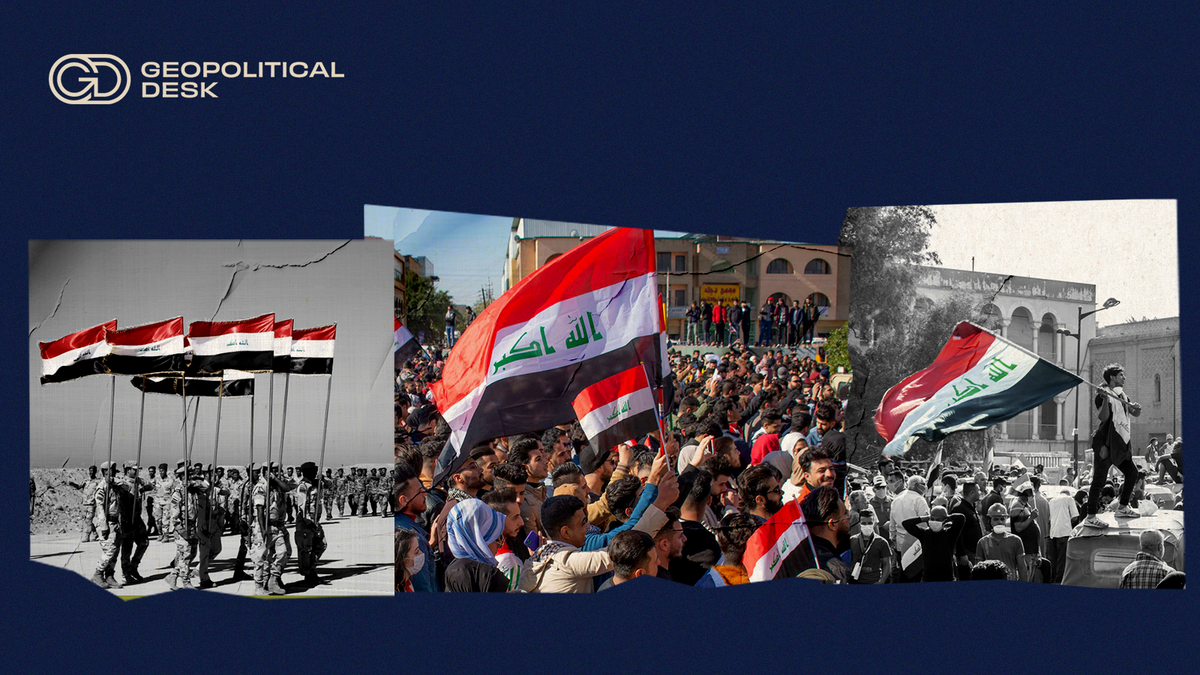
Iraq’s Tishreen has faded, but its anger awaits a new opening
Seven years after Iraq’s historic 2019 Tishreen uprising, protesters returned to Baghdad’s Tahrir Square to demand systemic reform, an end to sectarian quotas, and accountability for killed activists. Prime Minister Ali al-Zaidi has promised dialogue, but his room for maneuver is rapidly shrinking under the weight of an oil-driven economic crisis and mounting pressure from armed factions.
 The Geopolitical Desk
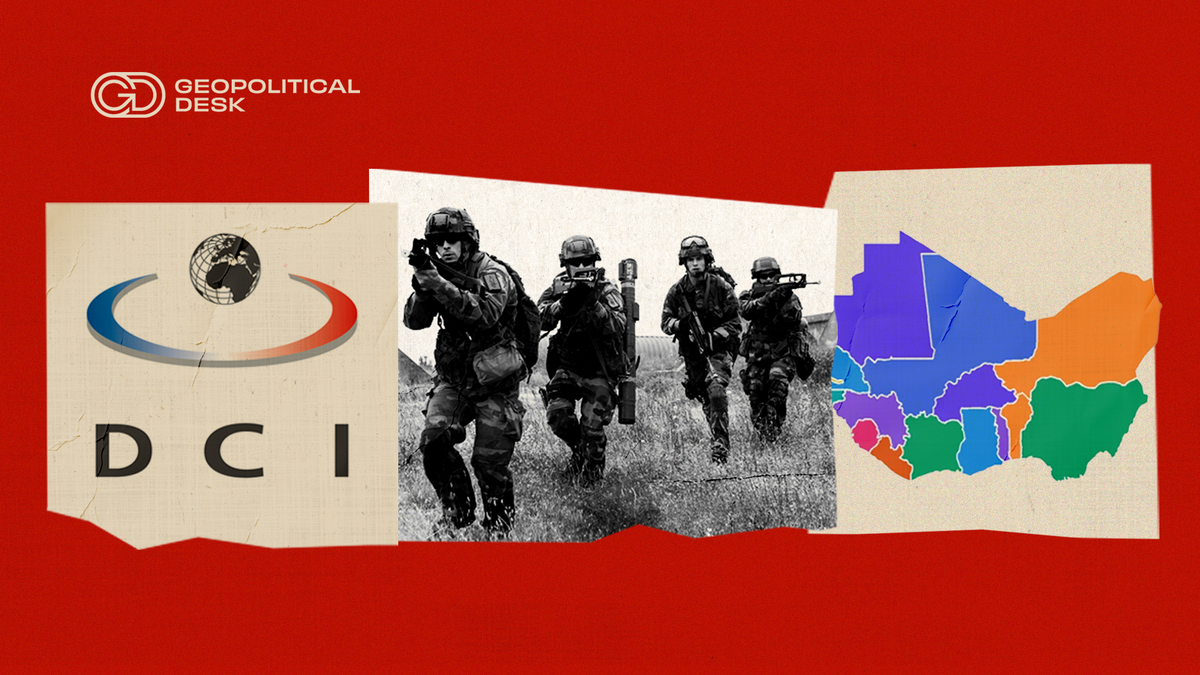
Pushed to the edge: France’s Africa strategy after the Sahel Coups
Following the collapse of its large-scale military footprint in Mali, Burkina Faso, and Niger, France has fundamentally overhauled its security posture in West Africa. Shifting away from visible, state-led ground operations like Operation Barkhane, Paris has opted for a more discreet, highly targeted strategy centered on elite special forces and semi-private defense firms. Expanding partnerships into non-Francophone states like Ghana and Nigeria, France is pivoting to the Gulf of Guinea to contain jihadist spillover from the Sahel and preserve coastal stability without triggering popular anti-colonial backlash.
 The Geopolitical Desk
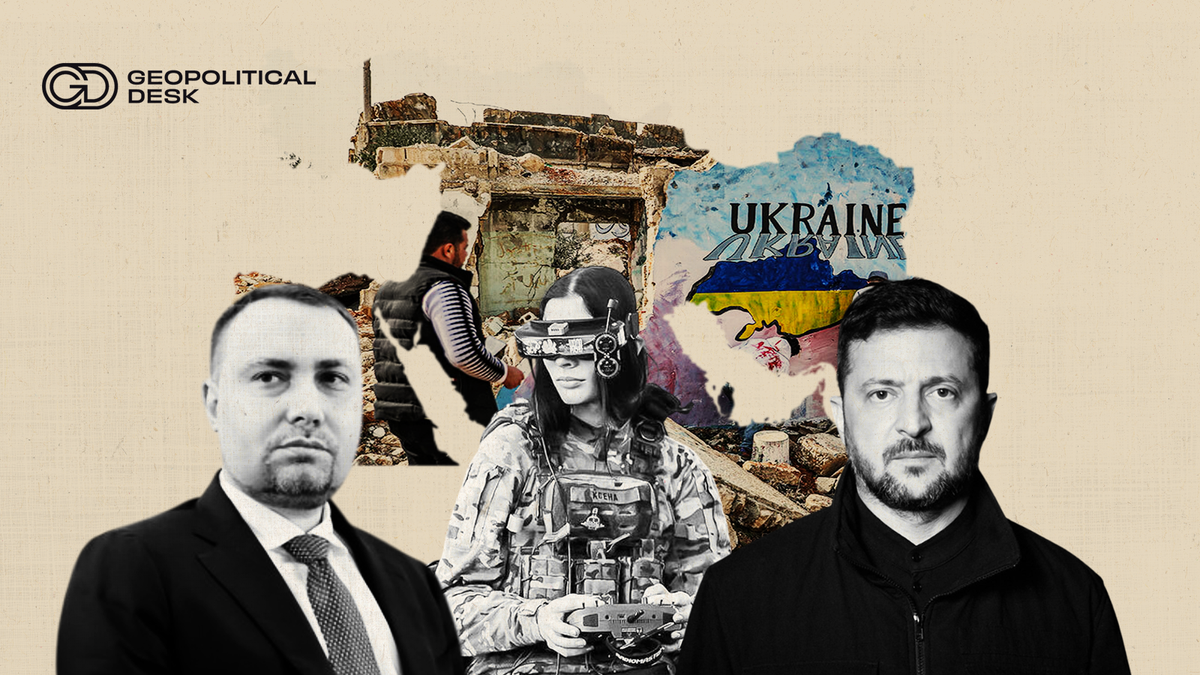
Ukraine’s global front across the Middle East and Africa
Following Russia’s 2022 invasion, Ukraine transformed its foreign policy into an aggressive global campaign to counter Moscow's proxy networks and resource flow. From covert special operations against Russian-aligned forces in Sudan and Syria to advising Tuareg rebels in the Sahel, Kyiv's military intelligence has systematically turned foreign battlefields into secondary fronts against the Kremlin. Beyond direct anti-Russian operations, Ukraine’s unmatched battlefield experience, particularly in counter-drone warfare and FPV tactics, has established its defense sector and military veterans as sought-after global commodities. As Kyiv leverages this expertise to secure strategic defense agreements with Gulf nations and position its defense industry for post-war export, Ukraine is steadily evolving into a formidable global player in international security.
 The Geopolitical Desk
As always, thank you for reading and for your continued support.
Feel free to reply with feedback or suggestions.
See you next week,
The Geopolitical Desk team
P.S. Please forward this to anyone who might find it useful. If you’re reading this second-hand, you can sign up for our free newsletter here.
Professionals across energy markets, diplomacy, risk advisory and investment use GPD Intelligence to track geopolitical developments before they move markets.
If you find this coverage valuable, you can unlock the full Intelligence briefings and scenario analysis.


