

▸ 🇮🇷 The U.S.-Iran ceasefire on the edge
▸ 🇱🇾 UN sanctions recommendations on Libyan individuals
▸ 🇺🇸 Rising political violence in America and what the data actually shows
▸ 🇮🇳 Modi's BJP consolidating state-level power after a national setback
The Iran ceasefire came to the edge of collapse this week after the U.S. Navy attempted to escort container ships through the Strait of Hormuz and Iran fired warning shots. Trump quickly announced he was calling off the operation.
He also said, again, that a deal is close.
In Libya, the picture is one of slow political progress and escalating pressure.
Sources indicate that at least five Libyan individuals have been recommended to the UN Security Council for possible international sanctions, with member states currently reviewing the information.
According to the information we have received, some of the names that have been allegedly included on this list are individuals that are currently active in various sectors of Libya’s economy, including prominent players in the energy sector.
And in India, Narendra Modi's BJP won 205 out of 294 seats in a state assembly that has traditionally been opposition territory, a signal that last year's national setback has not slowed the party's structural consolidation at the regional level.
GPD also published an analysis this week examining the data on rising political violence in America and what it reveals about a society that is increasingly normalising violent confrontation as a mode of political expression.
Let's get into it.
The U.S.-Iran ceasefire nearly collapsed, but Trump says a deal is close
What happened: The U.S. Navy this week attempted to escort container ships through the Strait of Hormuz, which remains effectively closed since the ceasefire. Iranian forces fired warning shots at U.S. vessels. Trump announced he was calling off the escort operation. He subsequently stated that a deal with Iran is close.
Why it matters: Warning shots between U.S. and Iranian naval forces in the Strait represent exactly the kind of incident that ceasefire agreements are supposed to prevent. The fact that it happened and that Washington chose de-escalation by withdrawing the operation rather than holding its position says something important about the current balance of leverage. The Strait remains closed. The U.S. has not reopened it by force. And every week that passes without resolution, the economic and political cost of the stalemate compounds.
What this means: Trump's assertion that a deal is close has become a recurring feature of this conflict, repeated at intervals that do not appear to correspond to actual diplomatic progress. The warning shots episode suggests that the operational situation in the Strait is less stable than the ceasefire language implies, and that the gap between a managed pause and a durable settlement remains considerable. Watch the next round of reported talks carefully for any sign that the two sides are actually narrowing their positions rather than managing the appearance of doing so.
Background reading from the archive:
 The Geopolitical Desk
The threat of sanctions on Libya's elite
What happened: Western Libya's political and military fragmentation continues to hamper both the U.S. and UN political tracks. UNSMIL is pressing ahead with its "mini-table" negotiations and has reportedly recommended personal sanctions to the Security Council. Both rival governments have committed to upholding the Unified Budget Agreement as the Central Bank begins direct distribution of foreign currency, a technical step with significant political implications.
Why it matters: The sanctions recommendation is one of the most significant developments in Libya's international diplomatic track in months. If approved by the Security Council, personal sanctions would represent the most direct external pressure applied to individual Libyan actors in years. The Unified Budget Agreement commitment, meanwhile, is a fragile signal of economic pragmatism that could lead to further progress on the political track.
Read the full analysis:
The Geopolitical DeskModi's BJP wins an opposition stronghold
What happened: Narendra Modi's BJP won 205 out of 294 seats in a state assembly election that has traditionally been opposition territory, a decisive result that continues the party's pattern of consolidating power at the state level even as it navigates the aftermath of a more difficult national election in 2024.
Why it matters: State-level dominance is how durable political power is built in India's federal system. The 2024 national setback created a narrative of BJP vulnerability that this result significantly complicates. A party that can win 205 seats in hostile territory is not a party in structural decline, it is a party with organisational depth and message discipline that transcends the national cycle.
What this means: The BJP's state-level consolidation suggests that Modi's political model remains robust. The question going into the next national cycle is whether the opposition can translate state-level resilience of its own into a coherent national alternative — and on the current evidence, that project remains incomplete.
Background reading from the GPD Archive:
The Geopolitical Desk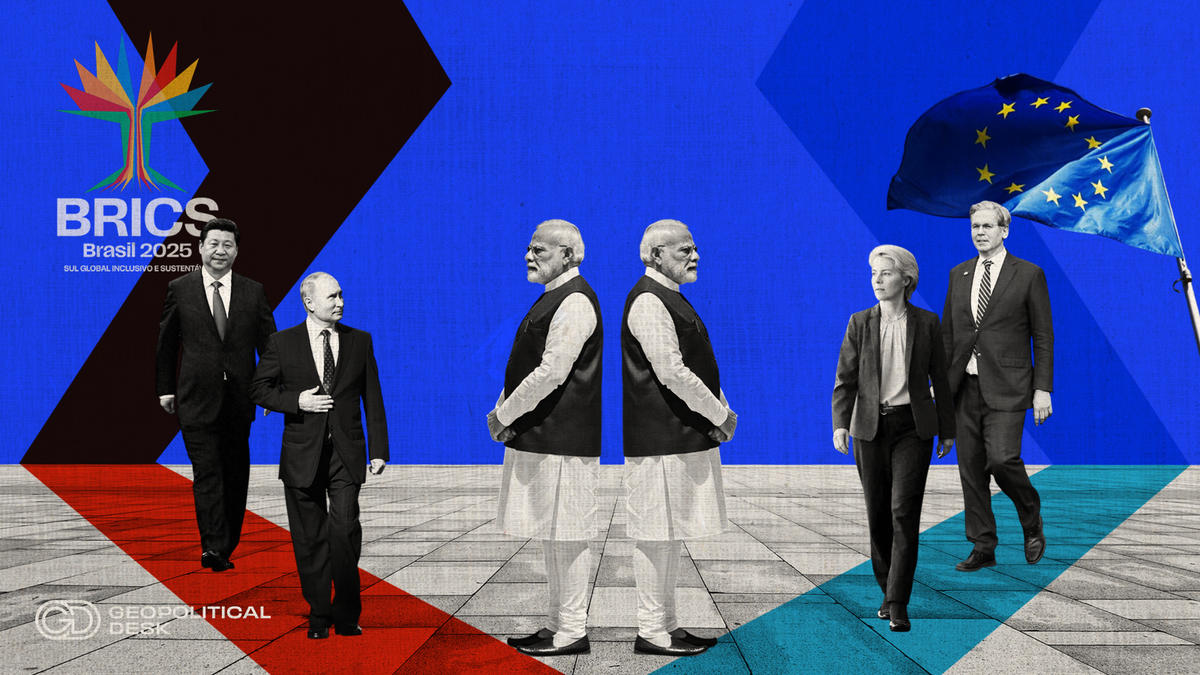
Are Americans normalising political violence at home?
What happened: Our analysis this week looks at the data behind rising political violence in the United States, moving beyond the headline incidents to look at what the underlying trends reveal about the country's political culture. The findings are not reassuring.
Why it matters: The two assassination attempts on Trump this term, the January 6th legacy, the accelerating rhetoric across the political spectrum reflect a broader normalisation of political violence as an acceptable mode of expression, and a media and political environment that has struggled to push back against that normalisation consistently. The data shows that Americans are not simply more polarised than they were a decade ago, they are more comfortable with the idea that political opponents represent an existential threat, which is the cognitive precondition for violence rather than disagreement.
What this means: The implications run well beyond the domestic political environment. A United States in which political violence is rising and being partially normalised is a less reliable partner, a less stable market and a less predictable actor in every crisis it is involved in.
As always, thank you for reading and for your continued support.
Feel free to reply with feedback or suggestions.
See you next week,
Oliver Crowley
Co-Founder, The Geopolitical Desk
P.S. Please forward this to anyone who might find it useful. If you’re reading this second-hand, you can sign up for our free newsletter here.
Professionals across energy markets, diplomacy, risk advisory and investment use GPD Intelligence to track geopolitical developments before they move markets.
If you find this coverage valuable, you can unlock the full Intelligence briefings and scenario analysis.
