
▸ 🇾🇪 War returns to Yemen
▸ 🇮🇷 Oman negotiations to the rescue
▸ 🇱🇾 Ukrainian actions in Libya
▸ 🇺🇸 Trumps hold “mid-term convention”
The frozen war in Yemen has thawed... quickly. Houthi forces have charged down the coast, routing the Saudi-backed Yemeni government and raising major questions about Riyadh’s ability to contain the situation.
In the Persian Gulf, Oman is preparing to host talks over its tentative agreement with Iran regarding the Strait of Hormuz, as tensions in the region continue to flare up.
An international report highlighting Ukrainian operations in Africa has made claims of Ukrainian soldiers working in Misrata.
Trump holds a “midterm convention” to distract from his sagging numbers, as fears grow that his party could face major losses in upcoming elections.
Now,
Lets get into it
Would you like some Mocha?
What happened: After a month of static fighting, an Ansarullah (Houthi) offensive on Taiz governorate early this month culminated with the capture of the Red Sea port of Mocha, representing a southward territory grab by the Iran-aligned group that now controls several strategic locations like Perim island and can reinforce its siege of Taiz, a major north-south logistical node and home to roughly a million inhabitants. Continuing Saudi Arabia's double squeezing, an armed group likely belonging to the Iran-aligned Iraqi Islamic Resistance launched strikes on the Kingdom's East-West pipeline, through which around 5% of global oil flows.
Why it matters: This represents a major strategic blow to Riyadh and Washington, with oil prices spiking above $100 and Tehran demonstrating its option of greater global economic disruption. However, the overall narrative of newly-gained Ansarullah control over Bab al-Mandeb bolsters a pro-Saudi doomsday narrative to encourage U.S. airstrikes as well as Chinese pressure on Tehran and Sanaa, rather than reflecting a real threat, since the Yemeni militants have for now reassured markets they won't fully blockade the strategic waterway. Mocha's capture only makes Bab al-Mandeb disruption cheaper and easier for Ansarullah, which already showed capability to hit ships 1000km away last month. Yemen's war, reignited over an Iranian Mahan Air flight from and to Sanaa in July, has given Ansarullah the opportunity to show its superior tactics and cohesiveness against the Saudi-aligned Presidential Leadership Council (PLC), which still reels from its dispute with the Emirati-aligned Southern Transitional Council (STC) last December and suffers from poor coordination between its various combating forces.
What it means: Saudi Arabia temporarily closed its East-West pipeline and finds itself strategically weakened, with neither the U.S. nor its newly-found Mecca Pact allies Turkey and Pakistan yet willing to get involved militarily. Ansarullah strikes on southern Saudi Arabia injured 73 civilians, bringing back pre-2023-deal trends of instability and fear in the country. For Ansarullah, which has both been directly encouraged by Iran to go on the offensive and helped by Iran's strikes on U.S. regional bases, the demands on Riyadh are set to increase, as is the desire to encroach on PLC territory further east and south.
Risk metre (medium): Ansarullah is unlikely to hold new ground long-term, but Saudi Arabia lacks the ground capacity to reverse the armed group's gains, and global appetite favours de-escalation over a prolonged Red Sea confrontation. Short of successful mediation, Yemen may be embroiled in deadly Ansarullah offensives and PLC counter-offensives, but the conflict is likely to remain domestic rather than a major chokehold on the global economy.
Oman comes to the diplomatic rescue
What happened: Rather than quietly strangling Iran's economy, Washington struck several Iranian tankers this week, prompting Tehran to retaliate against U.S. Navy vessels, Gulf maritime traffic and U.S. bases in Jordan, underlining its newfound preference for disproportionate rather than measured responses. The clashes, compounded by Ansarullah's advance on Mocha, have sharpened diplomatic urgency in the region. Oman is due to host Iranian, Iraqi and GCC officials on Monday, with Bahrain the sole notable absence, to discuss the bilateral Strait of Hormuz arrangement between Tehran and Muscat and broader regional de-escalation.
Why it matters: The bilateral deal has long been drafted but has faced U.S. opposition. Fresh Gulf momentum to see it signed and registered with the International Maritime Organisation next week would mark a meaningful step toward reviving the June interim deal between Tehran and Washington, should the latter accept regional diplomatic progress and halt its strikes and blockade on Iran. Further escalation remains possible, though, after the IAEA Board of Governors voted against Iran. Even rejected by China and Russia, that vote could give the U.S. grounds to justify strikes on Pickaxe Mountain, where Iran is believed to store many of its advanced centrifuges. Washington is also expected to sanction more financial institutions dealing with Iran, possibly including another large Iraqi bank.
What it means: The broader trend of squeezed Iranian oil flows is now offset by a reversal favouring Tehran, a reminder that this drawn-out conflict will keep swinging both ways even as Iran gradually pushes Washington toward a deal. GCC involvement in Hormuz and PLC-Ansarullah backchannels could lay the groundwork for a region-wide ceasefire. Yet Israeli Prime Minister Netanyahu's continued pressure on Hezbollah in Lebanon and Iraqi Prime Minister al-Zaidi's looming deadline to disarm Islamic Resistance groups both point to further regional instability, as each leader ties his political credibility to appearing tough.
Risk metre (medium-high): Heightened regional risk is, as usual, reviving de-escalation efforts, and both Tehran and Sanaa appear open to it. But many in both capitals also see de-escalating now as premature, given the leverage they currently hold. In Israel, in spite of the Lebanon ceasefire, the calculation leans toward further weakening Hezbollah and possibly provoking Tehran into a direct attack, letting Likud cast itself ahead of October elections as defender of the nation and destroying Iranian energy infrastructure to accelerate U.S. economic pressure.
Ukraine’s Libya launchpad
What happened: CNN reported that Ukrainian naval drone operators have been using the international military base in Misrata as a launchpad for attacks on Russia’s shadow fleet, in exchange for training local forces. The revelation is not entirely new. Years ago, Libya Desk Consulting’s Weekly Political Risk Report identified Ukrainian trainers entering Tripoli and subsequently tracked their presence across bases in Misrata and the capital. Russia has also previously accused Ukraine of operating from western Libya. The GNU has moved quickly to reject CNN’s latest reporting and deny that Libyan territory is being used to launch attacks against Russian interests.
Why it matters: The report adds an international dimension to an already deteriorating security environment in western Libya. On 3 March, a Russian LNG tanker was attacked in the Mediterranean, raising the prospect that the Russia-Ukraine conflict could spill into Mediterranean shipping lanes and create the risk of a major environmental incident. Inside Libya itself, drone attacks have become increasingly common, striking refineries, power stations and other critical infrastructure. Rivals of the GNU’s Deputy Defence Minister, who oversees the Ukrainian presence, have accused him of involvement in some of these attacks. Whether those accusations are substantiated or not, the growing use of drones is creating another layer of insecurity around infrastructure already struggling to function.
What it means: For the GNU, the most immediate danger is not necessarily Moscow’s response, but the domestic political fallout. Western Libyans are already enduring prolonged blackouts, fuel shortages, deteriorating public services and attacks on critical infrastructure. Evidence that Ukrainian personnel are operating from western Libya risks reinforcing the perception that GNU-aligned actors are allowing Libyan territory to become entangled in a foreign war while the state struggles to provide basic services. The GNU’s rapid denial reflects how politically sensitive the allegation is. Russia, meanwhile, now has another reason to increase pressure over the Ukrainian presence in western Libya, adding another fault line to an already crowded proxy environment.
Risk metre (medium): A direct Russia-Ukraine confrontation on Libyan soil remains unlikely, and Moscow has little incentive to turn Libya into another front. The greater risk is the cumulative pressure building on the GNU at home. The government is still dealing with persistent power outages, an economy in freefall and growing anger over deteriorating living conditions. It has also only just emerged from the scandal of Syrian mercenaries protesting openly in broad daylight, triggering public outrage over their continued presence. Now come allegations that western Libya is being used as a Ukrainian launchpad against Russian interests. The list of grievances against the GNU keeps piling up, and with each new controversy, the risk of renewed protests developing into a more serious challenge to the government grows higher.
Trump’s mid-term distraction party
What happened: The Republican Party held what it called a “Midterm Convention”, intended to rally support ahead of the November midterm elections. Party conventions are common in the U.S., but they are normally held during presidential election years, when parties nominate their candidates and write their new policy platforms. This two-day midterm convention was not intended to do either, but was instead largely focused on celebrating President Trump.
Why it matters: The convention was a glitzy affair, with multiple guest speakers and Trump speaking on both nights. The event allowed President Trump, whose approval rating is currently below 40%, to try to redirect media attention away from his party’s struggles. He notably said he would give every U.S. adult $5,000 if Republicans won the upcoming midterms, something that is highly unlikely to happen, but which almost all major media outlets covered anyway.
What it means: The convention means very little for Republicans’ chances of winning upcoming elections, but it demonstrates how closely attached the party has become to the President. The convention was mainly intended to praise Trump, showering him with support and allowing him to hold large rallies. However, due to Trump’s unpopularity, the event is unlikely to do much to change the minds of independent voters, and it shows how the party has been unable to separate itself from him. The only real way for Republicans to turn things around is to distance themselves from the President, but Trump has gained such a strong hold on the party that it simply cannot move away.
Libya’s oil expansion versus reality
The Libyan National Oil Corporation (NOC) is continuing to make real strides in increasing production through greater foreign investment and rehabilitation projects. The NOC is ultimately doing what it can, but despite its efforts, the real issue continues to be Libya’s political divide. The NOC has full control over its efforts to increase production capacity, but has little control over the country’s political and security situation.
 The Geopolitical Desk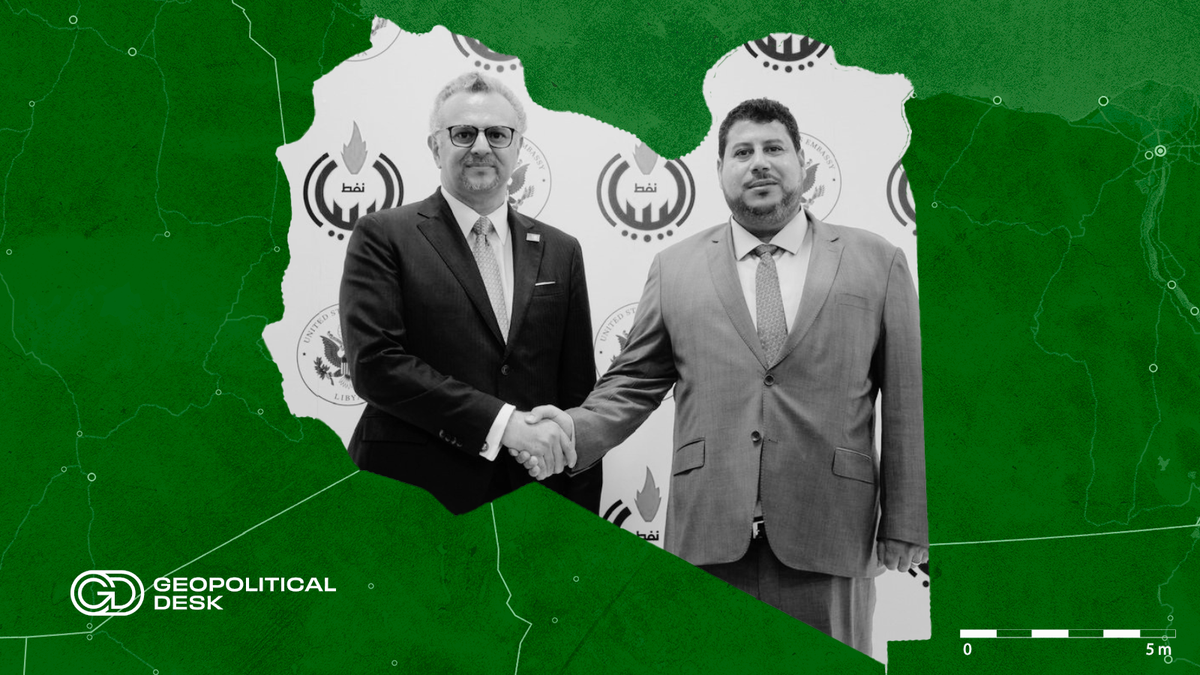
Algeria and Niger’s increased relations
After years of tension over military coups and the Sahel war, Algiers and Niamey are once again looking to strengthen their ties. Niger’s alliance with Mali meant that the country had to keep Algeria at arm’s length due to tensions between Bamako and Algiers, but the recent deployment of Algerian military assets in Niger following a failed coup shows that the relationship is once again returning to a baseline. However, while relations are improving, any issue or political crisis could force both countries back to square one.
 The Geopolitical Desk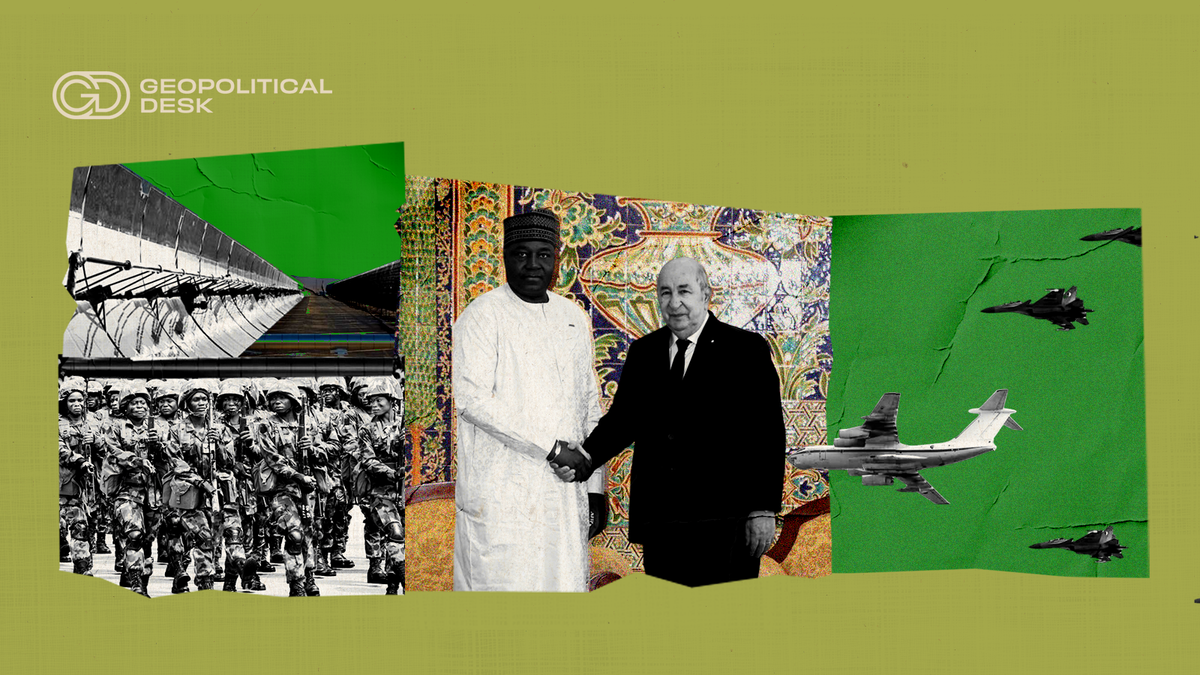
As always, thank you for reading and for your continued support.
Feel free to reply with feedback or suggestions.
See you next week,
The Geopolitical Desk team
P.S. Please forward this to anyone who might find it useful. If you’re reading this second-hand, you can sign up for our free newsletter here.
Professionals across energy markets, diplomacy, risk advisory and investment use GPD Intelligence to track geopolitical developments before they move markets.
If you find this coverage valuable, you can unlock the full Intelligence briefings and scenario analysis.


