


Sudan's third civil war is approaching its three-year anniversary.
What began as a personal conflict over power, between Rapid Support Forces (RSF) leader Hemedti and Sudanese Armed Forces (SAF) Commander Abdel Fattah al-Burhan, has devolved into an international crisis that is tearing apart the social fabric of the country and reopening decade-old wounds.
Hemedti and al-Burhan had both come to power together in 2021, after enacting a coup against Sudan’s young transitional government that had taken power in 2019.
The coalition government, made up of both military and civilian elements, struggled to govern due to internal disagreements about the future of the country.
However, after Hemedti and al-Burhan took total control of the government, they themselves continued to bicker over the division of power.
Plans for the RSF to be incorporated into the SAF raised tensions, culminating in the Hemedti ordering attacks on SAF army bases in the capital, Khartoum, and across the country.
The SAF saw a series of setbacks at the beginning of the war, losing control of much of the central region, including Khartoum, which forced them to relocate the government to Port Sudan.
The RSF expanded eastwards into places like Sennar State, while the SAF struggled to supply and reconnect various pockets of its forces.
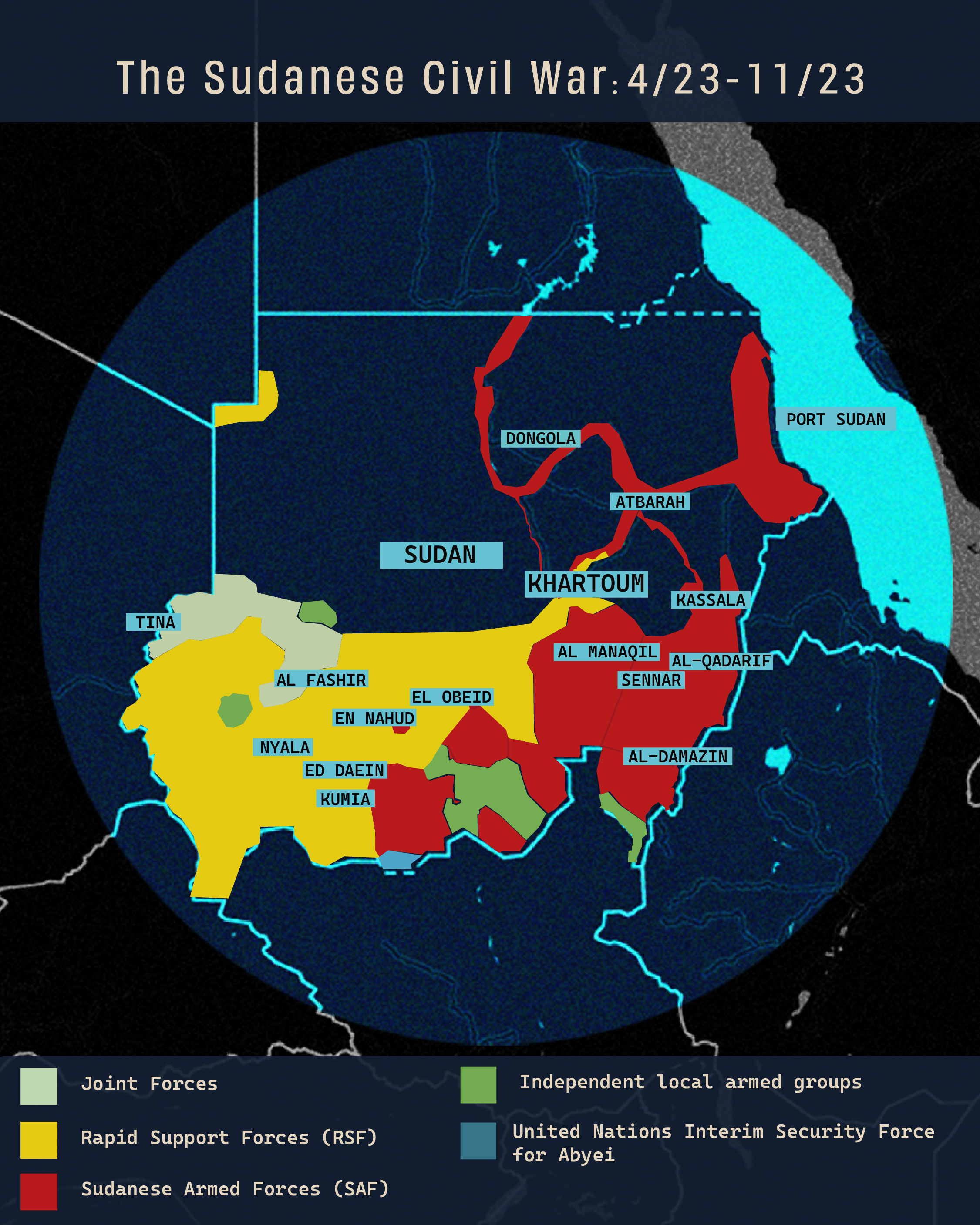
Hemedti and the RSF continued to gain momentum across the country, with the SAF continually on the back foot, as Hemedti continued to gain valuable military support from actors such as the United Arab Emirates.
