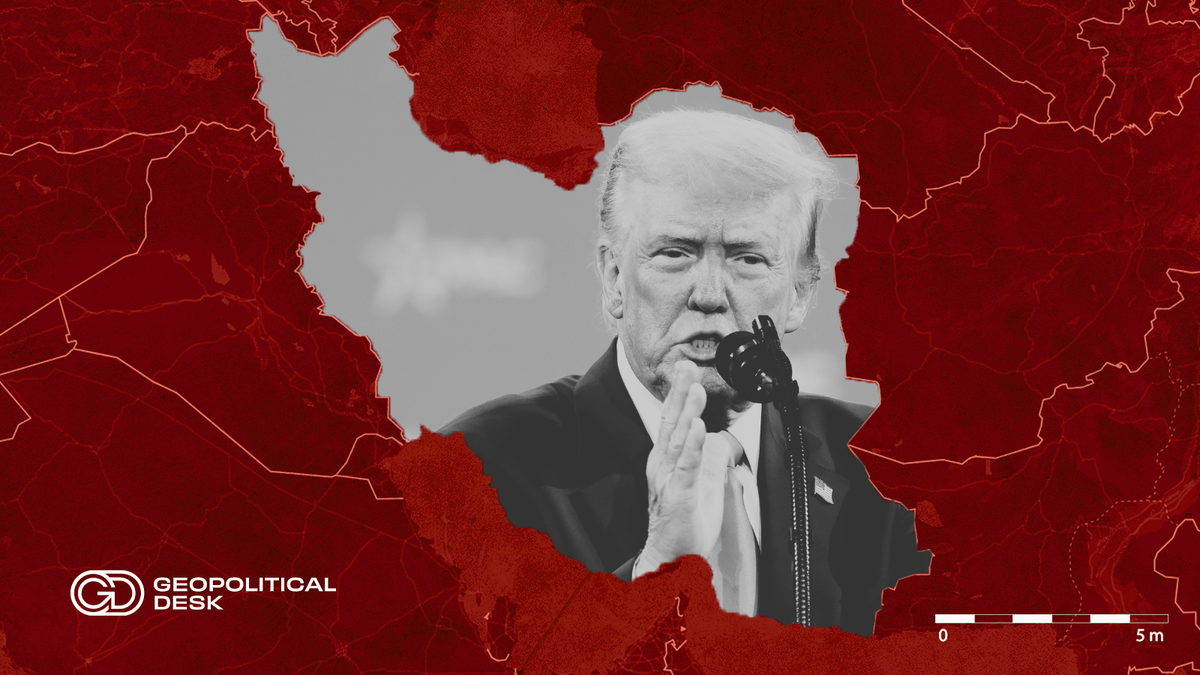
‣ 🇺🇸/🇮🇷 The multiple, increasingly murky paths of US-Iran tensions and why escalation risks are rising without a clear strategy.
‣ 🇸🇦/🇾🇪 Why Yemen became Saudi Arabia’s red line and how Riyadh is recalibrating its tolerance for instability.
‣ 🌍 The dangerous vindication of pro-sanctions voices and why “sanctions working” may be masking deeper strategic failure.
‣ 🇸🇦/🇦🇪 Whether the Saudi-UAE rift can be contained or risks hardening into a wider regional confrontation.
This week’s coverage circles a familiar but increasingly unstable reality in West Asia: escalation without strategy and policies that are being vindicated for the wrong reasons.
As the world watches Washington’s taskforce throttle towards Iran without a clear objective, the Saudis have succeeded in blunting Emirati influence in south Yemen (for now), even as the quiet risk that Gulf competition may harden into bloc rivalry and spread across the region.
The common thread in all these developments is not necessarily strategic calls but potential miscalculations. Power is being exercised, but without a clear sense of the second and third-order effects.
Below, I break down what shifted this week, why it matters and where the risks are quietly stacking up.
Now let's get into it.
The many paths to confrontation between the US and Iran
What happened: US–Iran tensions are not accelerating in a straight line but branching into multiple, overlapping pressure tracks.
Washington continues to apply sanctions, rhetorical deterrence and selective military signalling, without committing to either escalation or de-escalation.
Tehran, meanwhile, is responding asymmetrically; avoiding outright confrontation while expanding leverage through proxies, regional positioning and calibrated nuclear ambiguity.
Why it matters: As we explored in this week's article, there is no single “path” to conflict. There are several, and they are increasingly disconnected from any clear political objective.
This ambiguity is often mistaken for strategy. It isn’t. The absence of a defined U.S. endgame has created space for misreading on all sides.
Iran interprets Washington’s posture as risk-averse but unpredictable. Regional actors hedge accordingly. Israel plans for unilateral action. Gulf states quietly prepare for containment, not resolution.
The result is a crowded escalation ladder where no actor controls the pace.
What this means: The danger is not a deliberate war but an accidental one, triggered by an incident that no party originally intended to escalate. In this environment, deterrence is less stable, not more. Washington’s current approach buys time, but it also multiplies the number of ways things can go wrong.
Read the full analysis below:
 The Geopolitical Desk