

▸ 🇮🇶 US forces withdraw from Iraq
▸ 🇪🇹 Government troops turn tide in Ethiopia
▸ 🇦🇫 Pakistan strikes Afghanistan
What for years would have been considered as breaking news passed this week with little fanfare.
The U.S.-led coalition has left Iraq, but Washington's hold over Iraqi oil revenues and dollar access keeps its leverage intact, as Iran-aligned militias refuse to disarm and Erbil grows more dependent on Baghdad.
But where a chapter is closed in Iraq, another one in Ethiopia is wide open. Federal government troops are advancing on the Tigray capital of Mekelle as a rebel offensive seems to have collapsed.
And after a period of relative calm Pakistan has resorted back to launching strikes on Afghan territory, claiming it means to neutralize the threat of Pakistani insurgent groups across the border zone.
Now,
Lets get into it
U.S. troops leave, but Washington's leverage stays
What happened: The U.S.-led coalition completed its withdrawal from Iraq on September 30. Prime Minister Ali al-Zaidi hailed it as the start of an era in which Iraq would stay out of regional conflicts and take its decisions independently, while the IRGC congratulated Iraqis on what it framed as a victory over the U.S. The withdrawal had been tied to a deadline for disarming Iran-aligned militias, which al-Zaidi has now pushed back to June 2027. Groups within the Islamic Resistance in Iraq, including Kataib Hezbollah and Harakat al-Nujaba, had long made disarmament conditional on the departure of foreign troops. They now say they must keep their weapons to respond to any U.S. or Israeli violation of Iraqi sovereignty, and they demand an end to what they call American political and economic interference.
Why it matters: The factions' new demands point to where U.S. influence now lies, since Washington's leverage over Baghdad rests less on troops than on its control over Iraq's finances. Iraq's oil export revenues are held at the Federal Reserve Bank of New York, which gives Washington a hold over the country's access to dollars. These funds are protected from seizure by parties with legal claims against Iraq only as long as Washington keeps renewing an emergency order, which currently runs until May 2027. Baghdad secured short-term U.S. waivers allowing Iraqi Airways and Iranian carriers, except Mahan Air, to resume flights between religious city Najaf and Iran, though other Iraqi airports remain closed to Iranian airlines.
What it means: Al-Zaidi is caught between Iraq's financial dependence on Washington and Iran-aligned factions that reject his authority over their weapons. Postponing the deadline rather than abandoning it lets him appear serious to the U.S. while avoiding a confrontation. It also risks repeating the experience of Mustafa al-Kadhimi, whose pledges to rein in the militias stalled under Iranian and factional pressure. Iran may claim the withdrawal as a win, yet without U.S. troops as a foil, Iraqi frustration is more likely to turn towards Tehran and its allies. That frustration would centre on Iran's encroachment on Iraqi sovereignty, the corruption of the militias and the ideological framing they seek to impose on the state.
Risk metre (Elevated): The June 2027 deadline is likely to be missed as well, and a Kataib Hezbollah security official has warned al-Zaidi against pursuing the U.S.-backed disarmament drive, threatening that any government not serving its people would be overthrown by all means. The U.S. embassy in Baghdad and consulate in Erbil remain likely targets in any regional escalation. In Kurdistan, the end of U.S. funding for the Peshmerga leaves Erbil dependent on Baghdad for the pay of its forces, with the KRG seeking an extra 450 billion dinars in the 2027 budget to bring Peshmerga pay in line with federal forces. As Washington increasingly channels Kurdish security through the federal government, this dependence risks becoming a new source of friction in already fraught relations between Erbil and Baghdad.
To learn more, read Disarm or die trying, a shortened version of GIG's full report.
 The Geopolitical Desk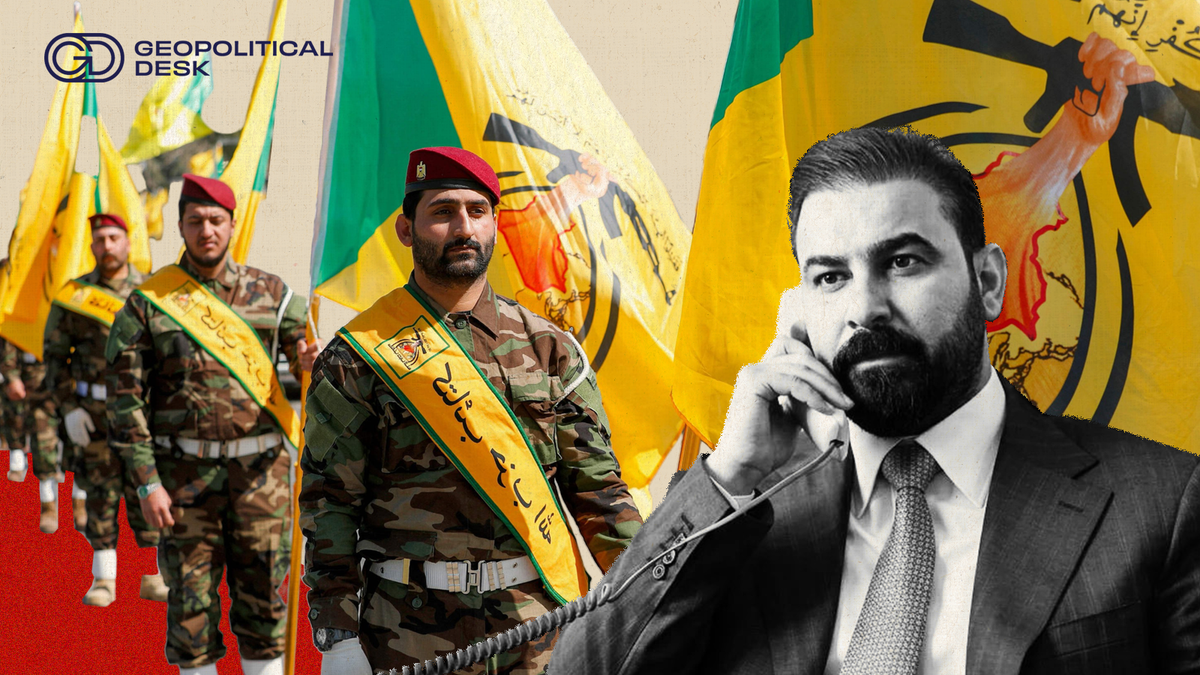
Week 2 of the war: government forces are advancing
What happened: Fighting raged across the north of Ethiopia for the second week. Ethiopian military forces (ENDF) managed to turn the tide on the rebels of the Tigrayan People’s Liberation Front (TPLF) and Fano, advancing in Amhara, southern Tigray and the Afar region. Among the most significant victories was the capture of the strategic city of Alamata. On the diplomatic front, Ethiopia ordered the closure of its embassy in Eritrea and expelled Eritrean diplomats. This triggered a full severance of diplomatic ties by Asmara. Simultaneously, Ethiopia expelled a senior Egyptian diplomat from Addis Ababa, prompting Cairo to respond with a tit-for-tat expulsion of an Ethiopian envoy.
Why it matters: The rapid breakdown of diplomatic bridges between Ethiopia and its neighbours increases the risk that the ongoing domestic civil war could escalate into a regional conflict. Addis Ababa accuses Asmara and Cairo of funding and arming internal insurgencies, primarily the Tigrayan TPLF, but also Fano rebels, amid longstanding friction over the Grand Ethiopian Renaissance Dam (GERD). Cutting ties with Eritrea means the deathblow of the already fragile 2018 peace deal between the two countries, while the spat with Egypt further isolates Ethiopia diplomatically across the wider region.
What it means: Ethiopia is now fighting a multi-front war internally while raising tensions with its neighbors. The 2022 Pretoria Peace Agreement has all but collapsed, and Ethiopia is seizing the advantage. It’s likely that Ethiopia will use the ongoing conflict to reassert its claim over Eritrea’s Red Sea coastline, accusing Asmara of being an existential threat. This raises the risk of interstate clashes between Ethiopia, Eritrea, which down the road might draw in other Egyptian-backed forces such as Sudan.
Risk metre (High): As Ethiopian government and military officials are already publicly accusing Eritrea of aiding the rebels, the stage is being set for a direct confrontation between the two. Addis Ababa might also see reason to double down on its support for the RSF in Sudan, meaning violence in that country is set to worsen as well.
Events in the Horn of Africa do not take place in isolation but are part of a larger struggle for influence in the region:
 The Geopolitical Desk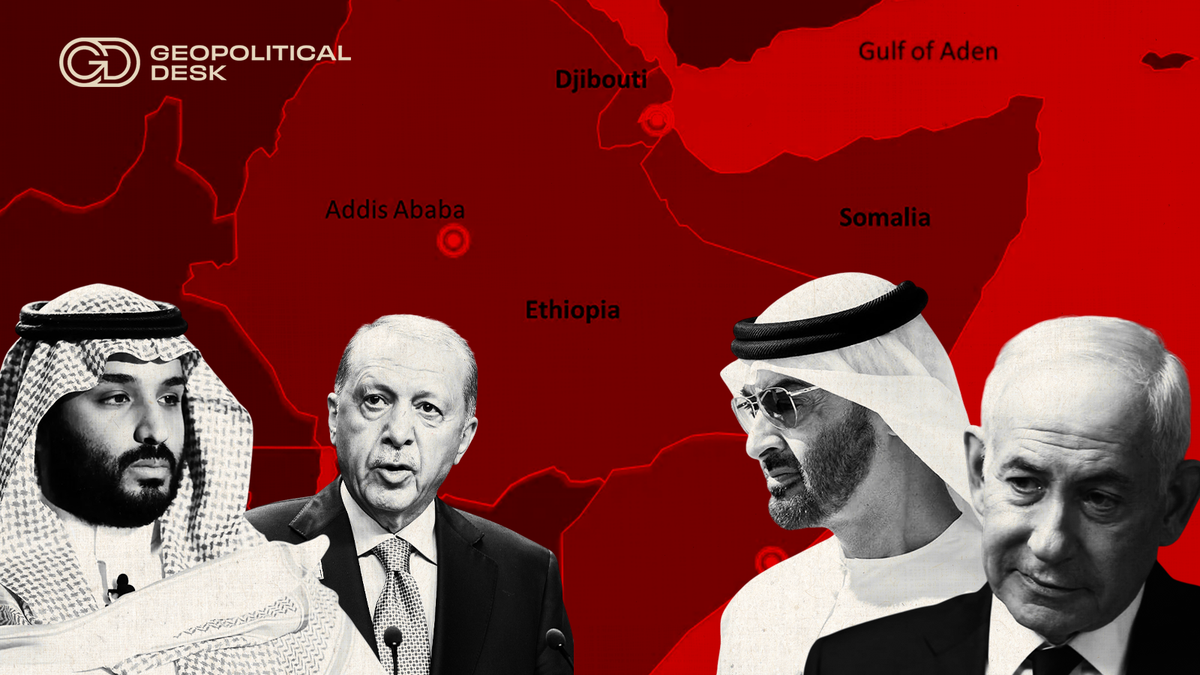
Pakistani strikes Insurgent groups across Afghan territory
What happened: Pakistan’s Ministry of Information announced that the military had launched airstrikes in Afghanistan, claiming to have killed 22 members of Tehreek-e-Taliban Pakistan (TTP) and the Balochistan Liberation Army (BLA) and destroyed weapons caches. Taliban spokesperson Zabihullah Mujahid denounced the strikes, stating that they had targeted Helmand and Kunar provinces, destroying three homes, killing nine people and wounding 11. The United Nations Assistance Mission in Afghanistan (UNAMA) separately stated that the strikes had killed at least 10 civilians, most of them children.
Why it matters: The strike is a reminder that Afghanistan and Pakistan continue to face severe tensions along the border. While neither side can sustain a prolonged period of border fighting, periods of calm can still easily give way to increased kinetic activity. It also shows that Pakistan remains willing to use force to target armed groups based in Afghanistan, despite the possibility that such strikes could lead to broader border skirmishes. It further demonstrates Pakistan’s continued willingness to conduct strikes in civilian areas, as many Pakistani airstrikes in Afghanistan have resulted in collateral damage.
What it means: The root cause of tensions between the two former allies is the continued presence of the TTP in Afghanistan and its ongoing attacks against Pakistani security forces in Khyber Pakhtunkhwa (KP) province, and with the issue nowhere close to being addressed, these tensions will continue for the medium to long term. The provinces targeted by Pakistan are also notable. While Kunar is a typical target for Pakistani airstrikes due to its border with KP, Helmand has not been targeted as frequently. This could indicate that the BLA is increasing its operations in the southern province, which borders Pakistan’s Balochistan province, with the Taliban potentially becoming more willing to host another antagonist to Islamabad.
Risk metre (low): Despite the severity of the attack, if it leads to another period of border fighting, it is unlikely to last very long. Neither Pakistan nor the Taliban has the capacity to engage in a prolonged military campaign, as both sides continue to deal with their own internal political and security challenges. Both sides are essentially stuck in a stalemate, unwilling to return to negotiations but militarily unable to achieve their objectives. However, recent tensions in Yemen could also mean that Pakistan puts the issue of Afghanistan on the back burner, with both of its Mecca Pact allies, Ankara and Riyadh, increasing efforts to mediate between Kabul and Islamabad over the past few months.
🇺🇦 Ukraine: The 3rd Army Corps announced the capture of 250 Russian soldiers, in what it described as the largest mass surrender of Russians since the spring of 2022. The POWs, which were taken captive on the front, north of Lyman, were shown on video spread by the Ukrainian military. Many looked exhausted and malnurished.
🇸🇩 Sudan: The Sudanese Armed Forces (SAF) continued their advance across the North Kordofan region, as on Friday they announced the capture of the town of Al-Mazroub from the RSF. The announcement comes at a time when groups of RSF fighters are once again defecting towards the SAF in the dozens.
🇲🇱 Mali: JNIM jihadists reported on Tuesday to have ambushed a Malian/Russian convoy in the Ségou region in central Mali. At least seven Russian mercenaries, belonging to the Africa Corps were reported to have been among the casualties. Footage released by the jihadists showed large quantities of weaponry having been seized in the assault.
🇲🇲 Myanmar: A deadly junta bombardment in Rakhine state resulted in the death of over 50 people on Monday. Two bombs hit both the main market and a busy overpass in the town of Kyauktaw in AA-territory, during peak hours of the day. The strike was condemned internationally by the UN, US, and human rights organisations.
🇾🇪 Yemen: Government forces claimed to have inflicted heavy losses on the Houthis as attempts by the Iranian-backed rebel groups to complete its encirclement of the city of Taiz have been averted. Saudi Arabia meanwhile accused the Houthis of being behind a drone attack on an electricity facility in the holy city of Medina on Thursday
The NDA is turning Sirte into Libya’s administrative centre
Under the direction of Saddam Haftar, Libya’s National Development Agency (NDA) is driving a rapid transformation in Sirte to establish the central coastal city as the nation's new administrative capital. By restoring vital transport hubs, building government complexes, and expanding development projects into the southern city of Sebha, the NDA is using economic reconstruction to secure regional stability. With this project Saddam not only hopes to bridge the long-standing divide between eastern and western factions, but also positions the NDA as a prime conduit for foreign investment in Libya.
 The Geopolitical Desk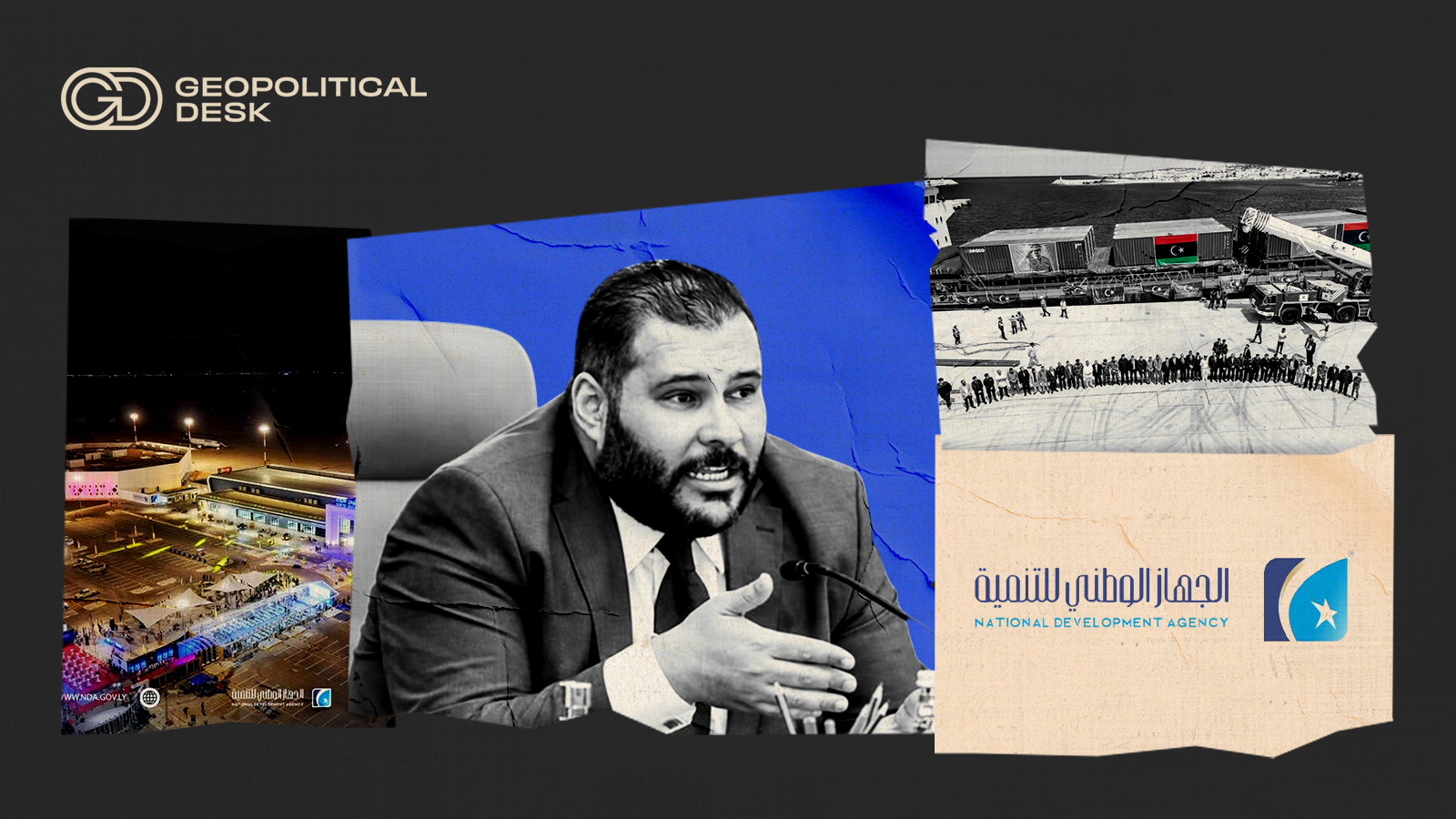
Al-Trabelsi goes to Washington
Government of National Unity (GNU) Interior Minister Emad al-Trabelsi has once again put himself at the forefront of Western Libya's security architecture, taking advantage of recent delays in the security track. Al-Trabelsi is still trying to recover from last year's fighting in Tripoli, which saw him sidelined within the GNU and largely disregarded by the international community.
 The Geopolitical Desk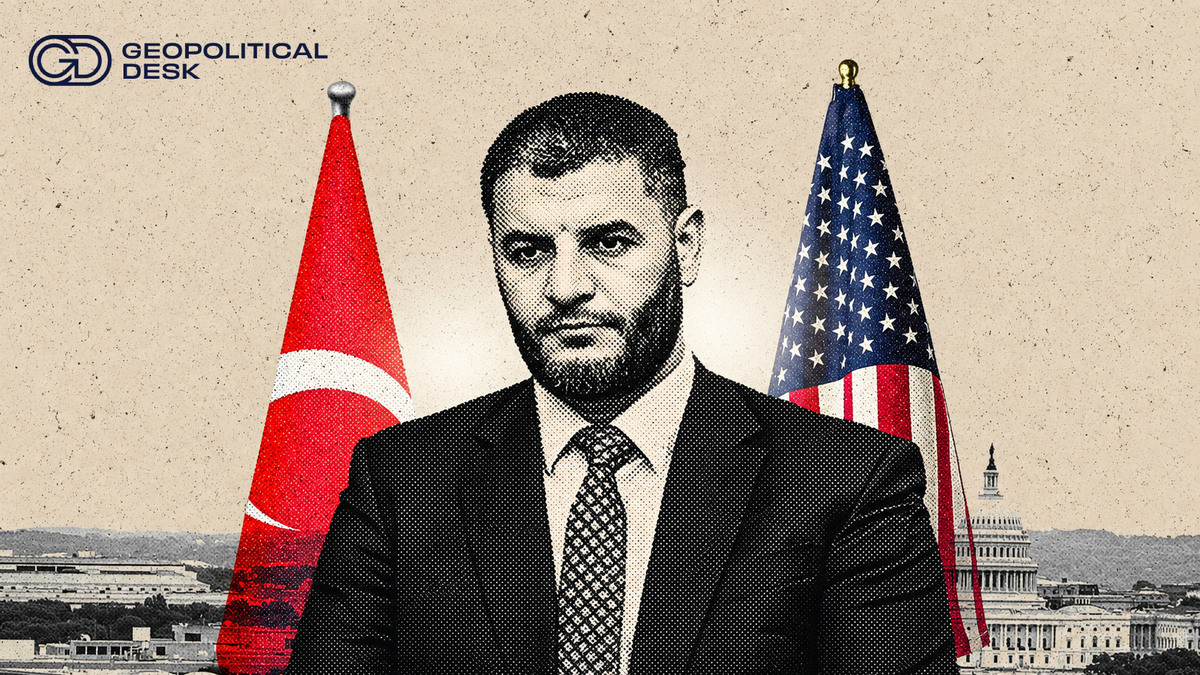
As always, thank you for reading and for your continued support.
Feel free to reply with feedback or suggestions.
See you next week,
The Geopolitical Desk team
P.S. Please forward this to anyone who might find it useful. If you’re reading this second-hand, you can sign up for our free newsletter here.
Professionals across energy markets, diplomacy, risk advisory and investment use GPD Intelligence to track geopolitical developments before they move markets.
If you find this coverage valuable, you can unlock the full Intelligence briefings and scenario analysis.


