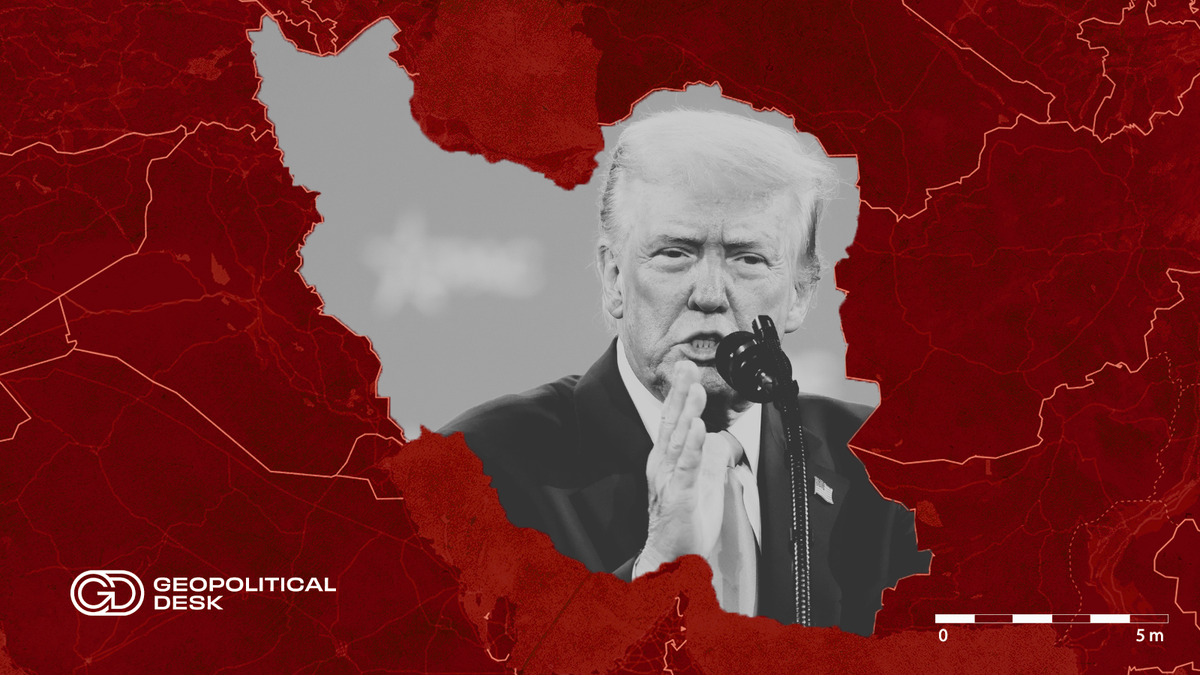
Assessing public sentiment is always tricky in Iran, especially now that the internet is down and segments of society stand on opposite sides.
This is why Iran coverage is so polarised. State and semi-official news outlets focus on pro-government rallies or what are often scripted interviews.
On the other side, networks that were central in relaying January protest footage and have access to Starlink or top-of-the-line VPNs push out footage showing people quietly but passionately supporting the air campaign against their rulers, echoing calls by the IDF to amplify opposition voices in Iran.
In the middle of this political show, the overall sentiment is more mixed.
People oscillate between shock and anger toward what they see as an illegal attack, concern over their immediate security and long-term future in Iran, or anxious trepidation toward the possibility of a better tomorrow without the Islamic Republic.
The future is murky. For those desiring change, the mood depends largely on which geopolitical outlook they hold.
Some adopt a uniquely Iranian perspective that carries excessive reverence toward the United States and high hopes for Israel’s motives in seeking an Iranian ally.
Others take a more grounded geopolitical outlook, looking at the U.S. regional imprint since 2001.
Now that the war enters its second week and more civilian infrastructure is struck inside Iran, the population is bound to feel growing fright, anger, and patriotic awakening.
This is exactly the kind of signal that often disappears in the noise of wartime reporting. GPD Intelligence subscribers get insight on these early shifts before they become market-moving headlines.
Try GPD Intelligence free for 7 days or Lock in 50% off annual access through March 15th →
The debate beyond Iran
Outside Iran, there is no serious platform defending the Islamic Republic, which has burnt through much of its soft power since its faulty stance during the Arab Spring, its consecutive repression of domestic protests, and its attachment to an Islamism that is reviled in the West and losing ground in the region.
Although laughed at in right-wing circles and misused by parts of the Left, anti-imperialism remains a central movement shaping Middle Eastern conflicts and motivating hearts and minds.
However, Tehran’s foreign policy missteps have severely weakened its ability to rally such support.
Even when rallies occur, such as in Pakistan, they cannot translate into any geopolitically salient force.
As a result, the Iran debate abroad is split between those who see a golden opportunity to reshape the Middle East, return from exile, or remove an ideological adversary, and those who rightly point to the illegality and heedlessness of the war but struggle to identify a credible short-term path away from the Islamic Republic.
The problem with speaking for “the Iranian People”
Now that another foreign intervention has taken shape, political entrepreneurs increasingly style themselves as the voice of the “Iranian people”.
They draw attention and support despite peddling disinformation, hidden agendas, and a lack of planning.
Revolutionary periods inevitably compress individual voices into sweeping narratives about “the people”.
But Iran, like any society, is deeply diverse.
Reducing it to a binary struggle risks falling into the same Manichean logic that has shaped so much Western interpretation of the region. Ironically, that worldview may be Ancient Iran’s most enduring export.
Here are some recent Intelligence-only articles:
 The Geopolitical Desk
 The Geopolitical Desk
 The Geopolitical Desk
 The Geopolitical Desk
 The Geopolitical Desk