
Barely a week has passed since the start of the New Year and 2026 is already setting up to be turbulent.
As a colleague said to me just a few days ago:
"What a year this week has been!"
Even in the first days of the year, several pressure points are already flashing red:
- Iran is facing renewed public unrest under deepening economic strain.
- Libya is drifting toward a decisive 2026 shaped by four competing visions.
- Syria flared again with little notice, lost amid Trump's power politics, inter-Gulf rivalries, Iran's protests, Somaliland and the ouster of Venezuelan President Nicolas Maduro.
- Across North Africa, early Gen Z protest dynamics are becoming harder to ignore.
We’ve been tracking each of these in depth over the past months.
Given all that's happened, a quick recap of what’s been unfolding across the world feels warranted.
By January 3, 2026, the U.S. Department of Justice was supposed to explain why it failed to release all remaining Jeffrey Epstein files by the original congressional deadline (December 19, 2025).
Instead, on January 3, the United States carried out an operation that felt like it had been taken from an episode of Jack Ryan: a sitting president was apprehended, removed from his country and taken to the United States to be tried under U.S. law.

Although the stated pretext for "Operation Absolute Resolve" was the enforcement of an arrest warrant against Venezuelan President Nicolás Maduro on drug trafficking charges, the tactic felt unmistakably familiar: when there is a crisis, international law becomes elastic and multilateral treaties can be bent, questioned or ignored entirely.
We have seen this reasoning applied before by Benjamin Netanyahu to justify Israel's war in Gaza and by Vladimir Putin to justify Russia's war in Ukraine (which, incidentally, the Kremlin also dubbed a "Special Military Operation").
So, how did the world react?
Unsurprisingly, China and Russia openly objected to the unilateral move.
Europe, however, largely stayed quiet. With the notable exception of France, European leaders avoided clear condemnation, seemingly unwilling to provoke U.S. President Donald Trump.
Instead of using this as an opportunity to project unity and uphold the values that underpin the Union, European leaders chose to look away and have set a new precedent in the process.
The response from much of the mainstream media to events in Venezuela was perhaps just as troubling.
Rather than challenging the operation, large parts of the press softened their language and avoided hard questions. The so-called “fourth estate” acted less as a watchdog and more as cover.
That is precisely why independent media matters now more than ever. Not to claim moral authority, but because double standards have become normalised.
Because let us be very clear about what happened in the first week of 2026.
A U.S. president asserted that U.S. law applies beyond its borders, and that the Americas are effectively its domain.
The short-term political gains for Trump are obvious. The long-term damage is not.
As many have already pointed out, if this logic is now acceptable, then we have to ask:
- What stops China from applying it to Taiwan?
- What stops Russia from extending it in Ukraine?
- What stops regional powers in the Middle East or Africa from justifying abductions, targeted killings or enforced removals of their ideological rivals?
We are already seeing early indicators of what 2026 might look like, with the same fault lines that existed in 2025 flaring up once again.
Only this time, the world is different to what it was just two weeks ago.
For one, Iran’s streets have erupted across dozens of cities over economic hardship, just as U.S. military movements toward the Middle East raise the risk of a new escalation.
 The Geopolitical Desk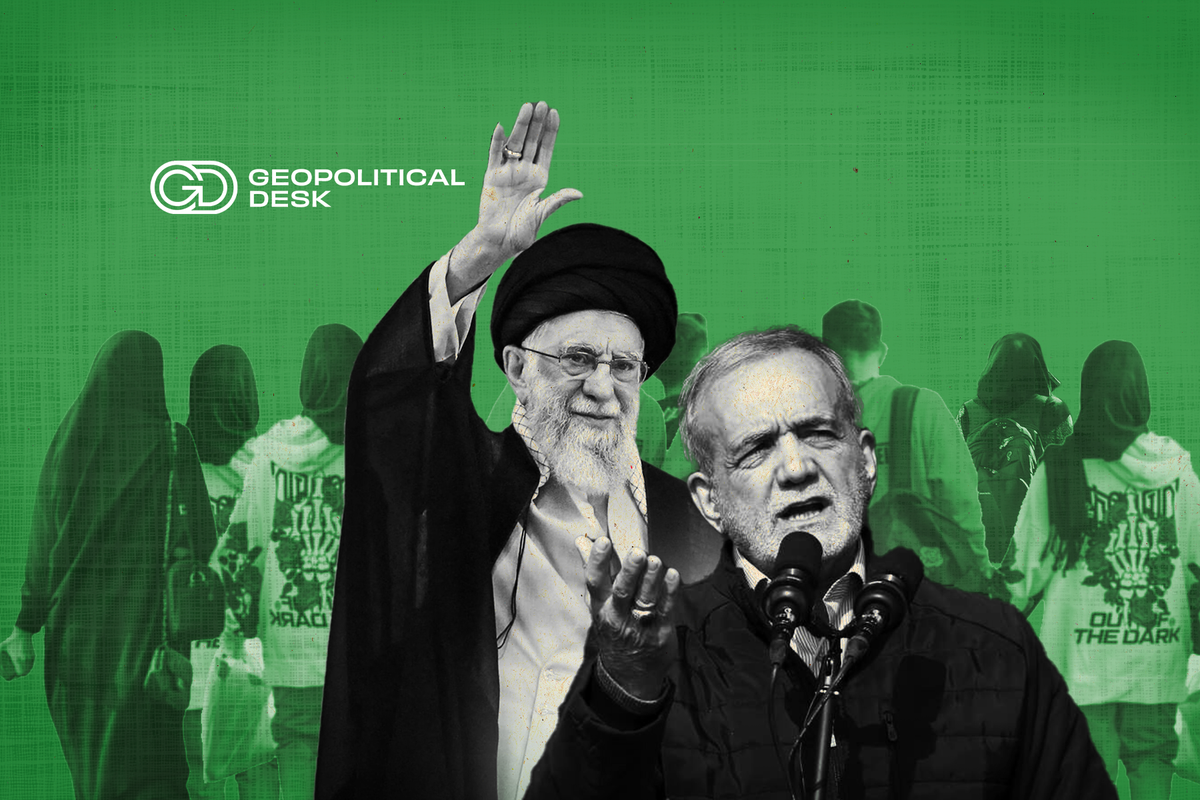
Our previous Iran piece sets the context, with ramped-up coverage ahead to help you plan accordingly.
Similarly, Libya is heading into a make-or-break 2026. With low oil prices, the barrels that sustained years of mismanagement are losing their cushioning effect all while four competing visions are accelerating the unravelling of the status quo.
 The Geopolitical Desk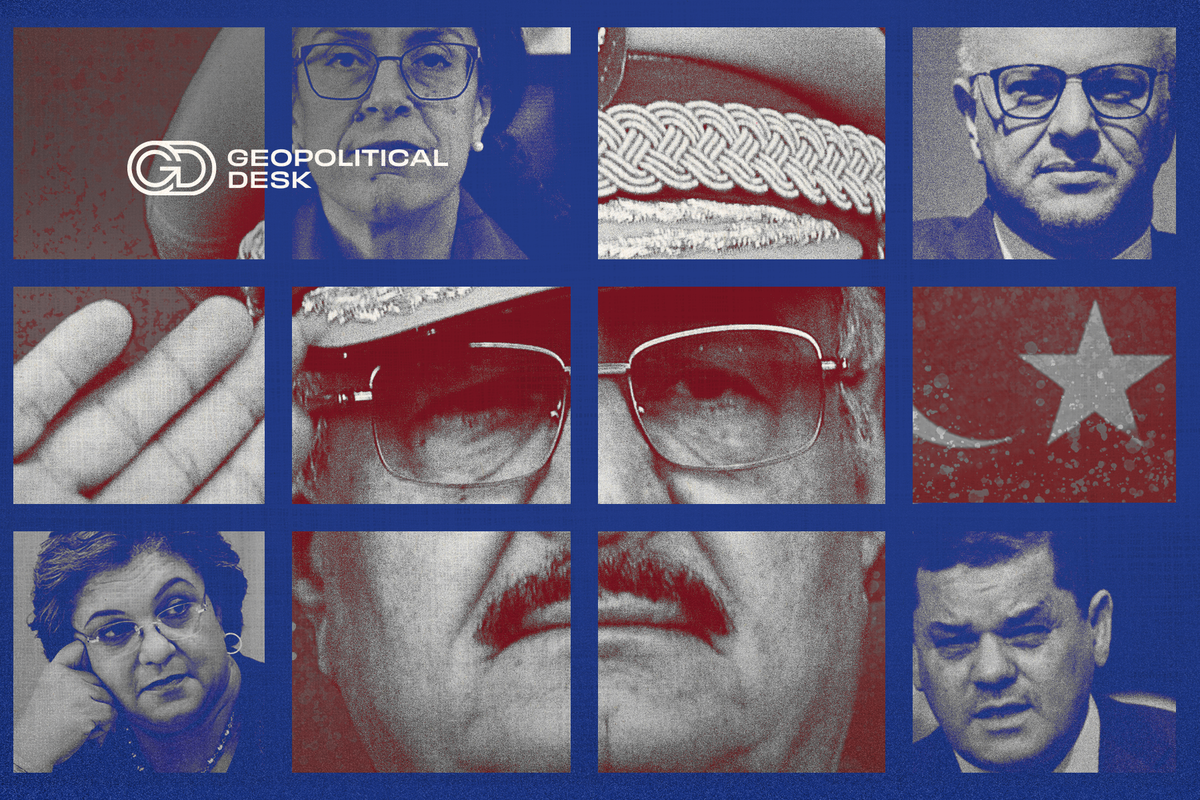
Libya's political paralysis masks a tinderbox that is ready to flare at any moment, a dynamic that increasingly mirrors wider North African trends.
Meanwhile, the Syria-Israel agreement quietly clears the geopolitical board, allowing Damascus to focus less on external pressure and more on consolidating full control at home.
 The Geopolitical Desk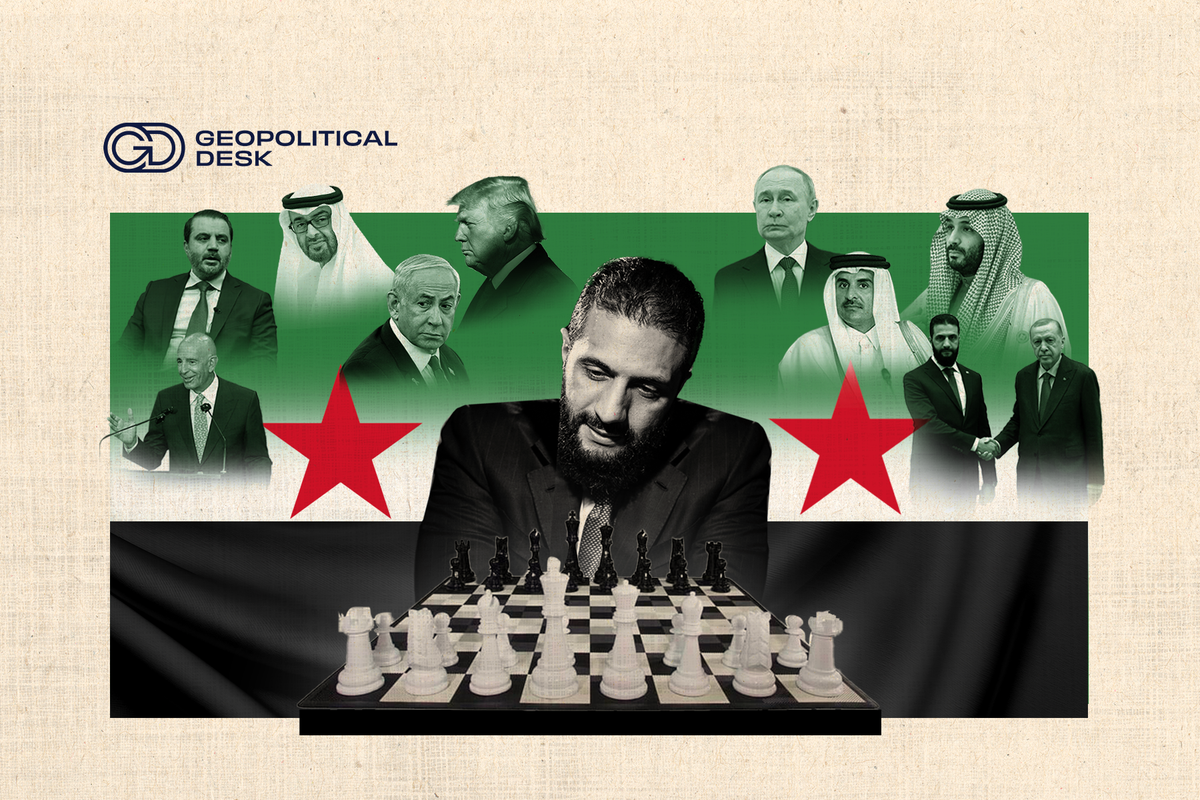
This piece from our archive looks at how Ahmed al-Sharaa's odds are stacked as his country enters the New Year, worth the read for anybody monitoring Syria in 2026.
 The Geopolitical Desk
This piece from our archive examines how in Suwayda, a ten-day clash spiralled from a local dispute into a national tribal conflict, another warning sign worth revisiting.
Understanding these events and maintaining an awareness of early warning signals has become harder not because there is less information, but because too much of it is filtered, diluted or deliberately vague.
In a world overflowing with information, we paradoxically know less.
So with that: welcome back to a new year of GPD.
Next week, we will be publishing a series of articles that dive deeper into some of the fault lines mentioned above.
If what we do matters to you, please consider supporting us as we work to become your go-to source for clear, honest geopolitical insight.
You can support us by sharing this email to your colleagues, following us on social media, subscribing to one of our paid plans, or simply contacting us to give us your honest feedback on our reporting.
Oliver Crowley
Co-Founder, The Geopolitical Desk
P.S. Please forward this to anyone who might find it useful. If you’re reading this second-hand, you can sign up for our free newsletter here.
What you secure if you subscribe today:
- Full access to strategic reporting: Independent, on-the-ground insight across politics, energy, security and market exposure.
- Consistent, decision-ready analysis: Structured briefs based on primary research designed for decision-makers who need clarity in complex markets.
- A tailored user experience: Monitor full regional coverage or narrow in on specific markets.
- Budget efficiency: An annual subscription at only a fraction of the standard rate.
