
I’m Oliver Crowley. I co-founded The Geopolitical Desk after years working across North Africa and the Middle East, mostly as a consultant, often behind the scenes.
Over time, one thing became impossible to ignore: how wide the gap can be between what is actually happening on the ground and the information that filters through to decision-makers.
And how costly that gap can be, not just for organisations or governments, but for the communities that end up living with the consequences of bad planning.
What struck me wasn’t that reliable information didn’t exist. It was that it was fragmented, siloed and exhausting to piece together.
Everyone serious I worked with (diplomats, journalists, political officers, analysts) was (and probably still is) running on fumes, juggling dozens of conversations across WhatsApp, Signal, Telegram, email, and whatever else they’d picked up along the way, trying to build context in real time.
That was the starting point for GPD.
This year, our focus has been on building a space for reporting that is nuanced, grounded in local realities and actually useful.
We still have a A LOT to do. But we're taking big strides.
In the past twelve months, our small team has walked the streets of London, Dubai, Moscow, Damascus, Cairo, Paris, Tripoli, Rome, Benghazi, Tunis, and Washington, D.C.
We moved between boardrooms, embassies, airports, oilfields, desert waystations and political hubs to speak with executives, diplomats, engineers, military officials and local stakeholders whose perspectives rarely make it into mainstream coverage but whose actions shape the headlines of tomorrow.
More than anything, 2025 has underscored just how far the world has drifted from the post-Cold War idea of a “rules-based international order.”
The 12-day war between Israel and Iran showed how quickly deterrence can erode and how limited the appetite now is among major powers to enforce hard constraints once escalation begins.
 The Geopolitical Desk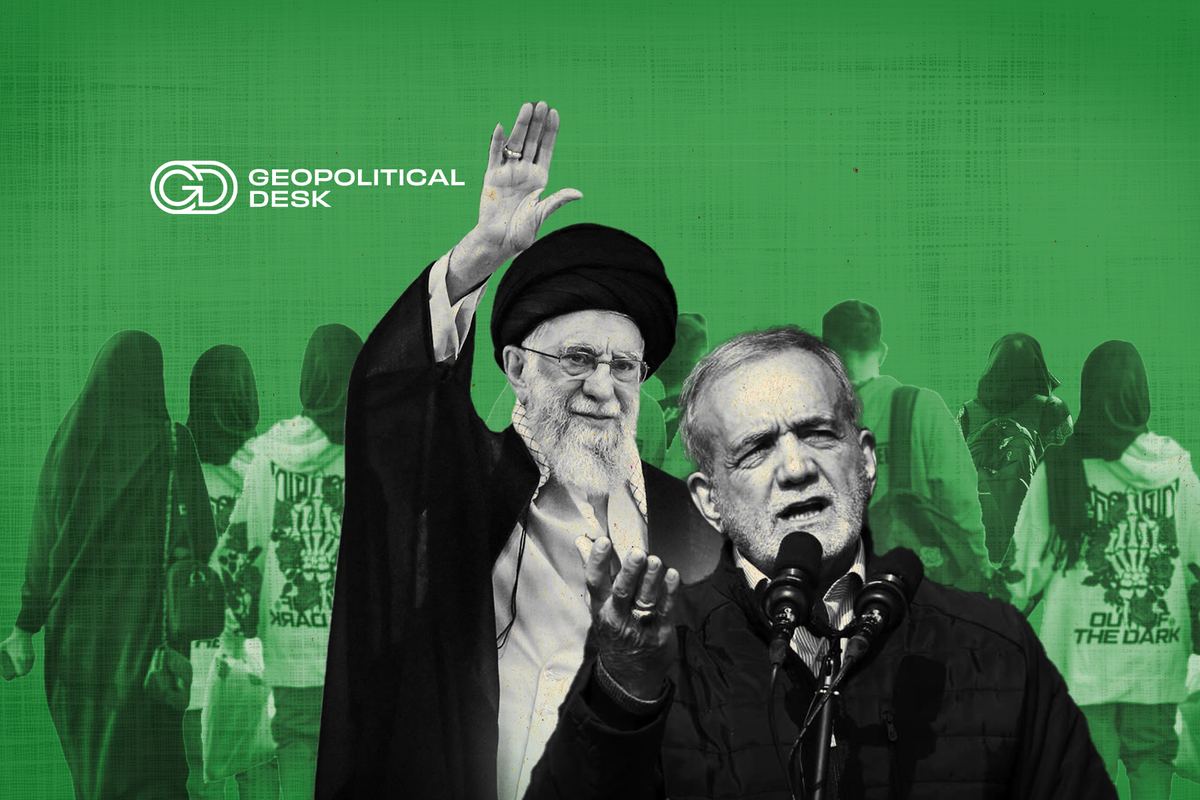
Our latest article looks at how Iran is navigating a prolonged period of structural strain in which economic fragility, energy imbalances and deep social change increasingly intersect.
The war in Gaza has become a prolonged stress test not only for the region, but for Western cohesion itself, exposing deep political fault lines inside the United States and across Europe.
 The Geopolitical Desk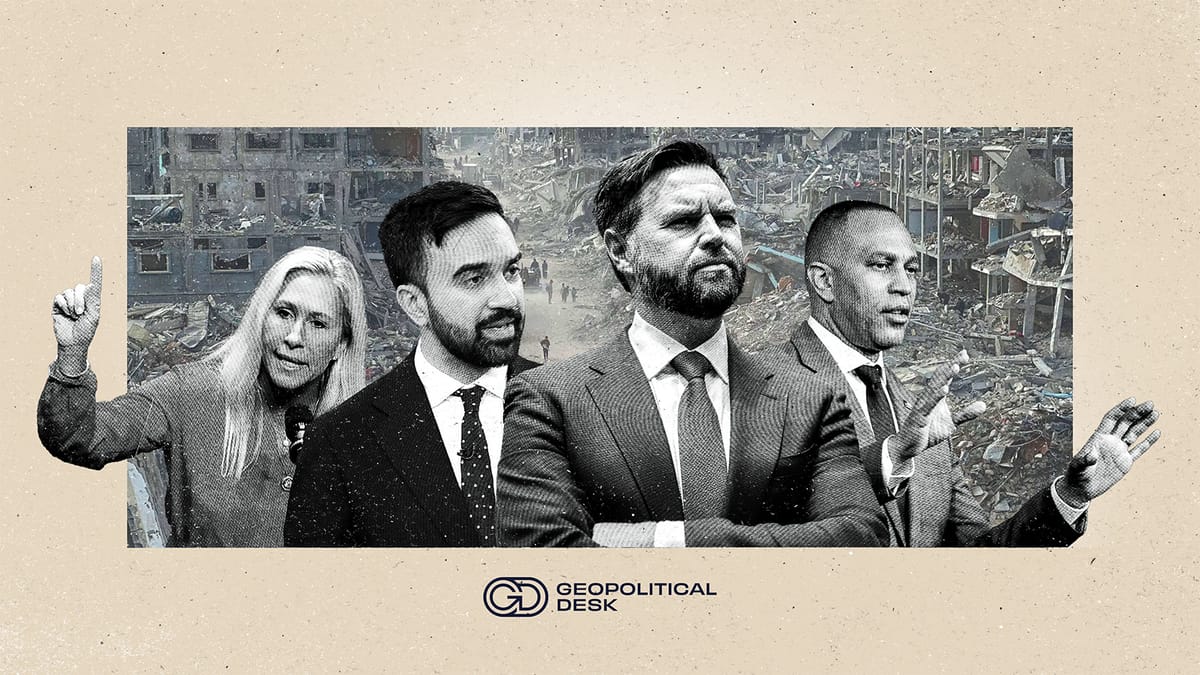
This widely shared article looked at how shifting public attitude to the war in Gaza combined with existing frustrations around America’s political system, forcing both major parties to adapt.
In the Gulf, we're seeing the redrawing of economic and geopolitical interests based on a new hard-power world where Trumpian dealmaking, competition over AI and access to critical minerals are dictating the rules of the game.
 The Geopolitical Desk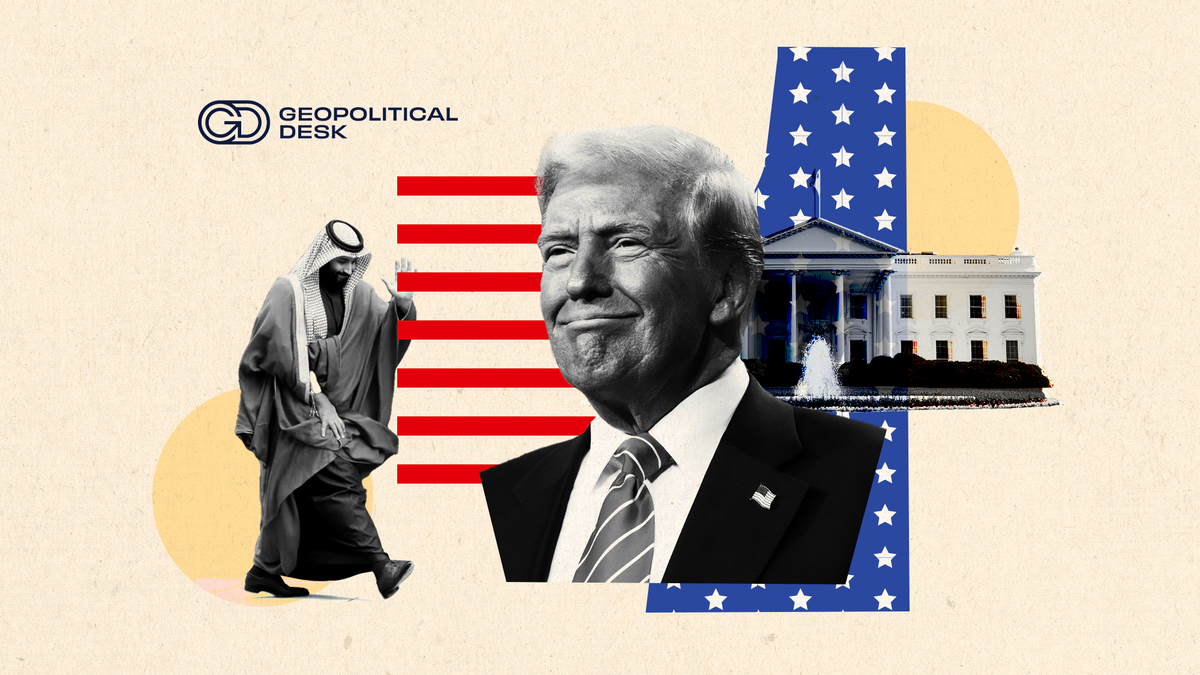
In this article, we examined how the U.S.-Saudi partnership is increasingly anchored in shared tech priorities, deeper defence integration and large-scale capital alignment with U.S. strategic industries.
Beyond the Middle East, Russia’s ability to continue prosecuting its war in Ukraine despite unprecedented sanctions has highlighted the diminishing coercive power of economic tools in an increasingly fragmented global economy.
 The Geopolitical Desk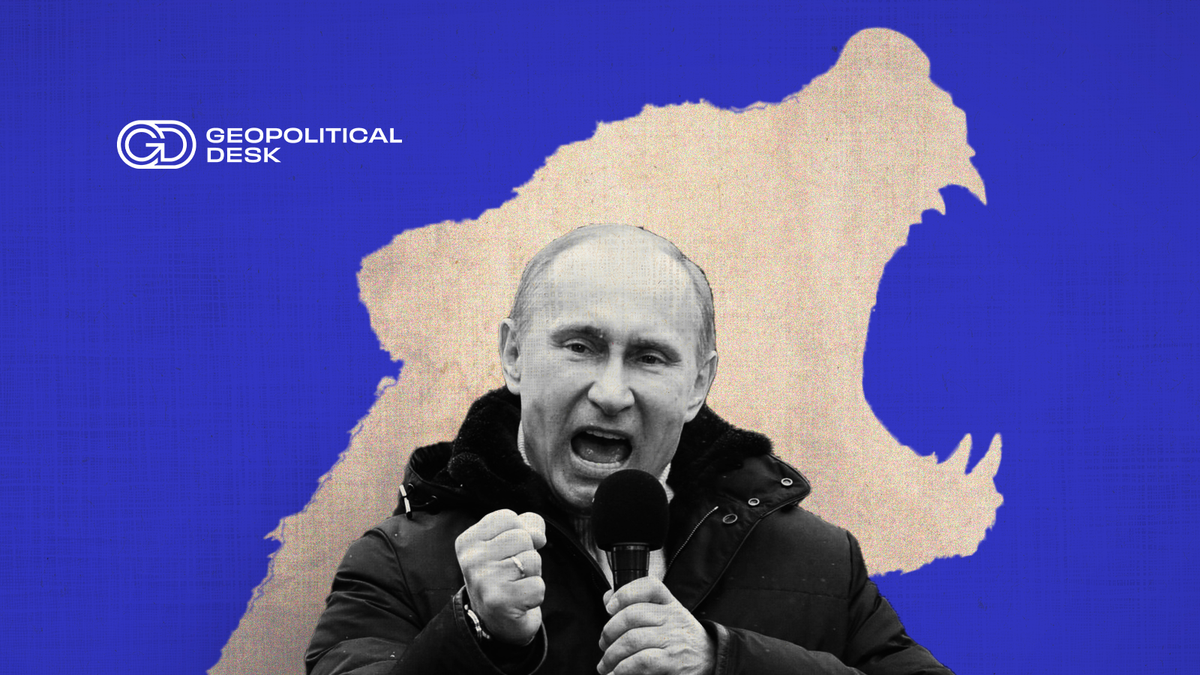
Last week's article also made the rounds in policy circles, looking at how Russia has been able to maintain both arms and nuclear energy exports in an effort to sustain its economy.
Across these theatres, a common pattern has emerged.
There is no longer a central enforcer, and the incentives that underpin the delicate balance between status quo and momentous change are no longer the same as even a few years ago.
In some arenas, like Syria, change has moved quickly as the country's new leadership has turned it from a pariah state into a promising regional player.
 The Geopolitical Desk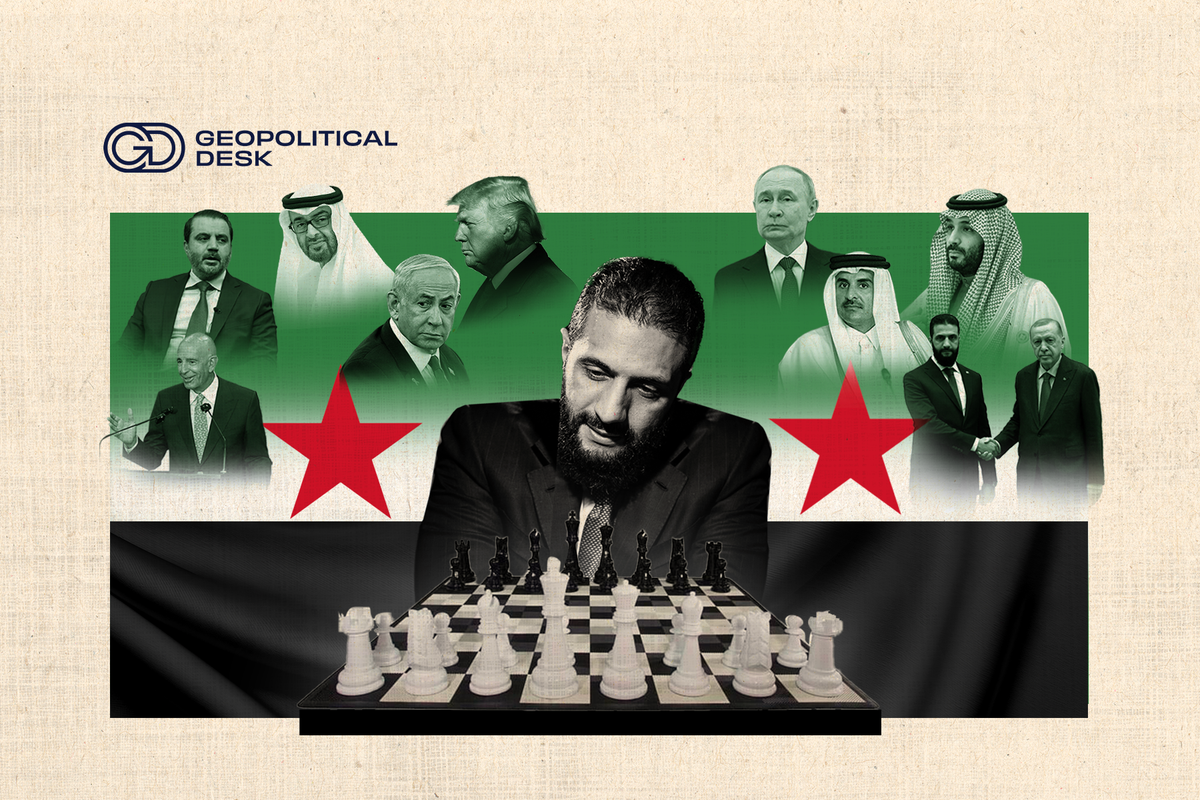
This article provides a recap of Syria's first year following the collapse of the Assad regime, and how Ahmed al-Sharaa has been able to turn a bad hand into a successful pitch.
In others, like Libya, it remains stubbornly slow, constrained by entrenched elites, foreign patrons and the absence of viable alternatives.
 The Geopolitical Desk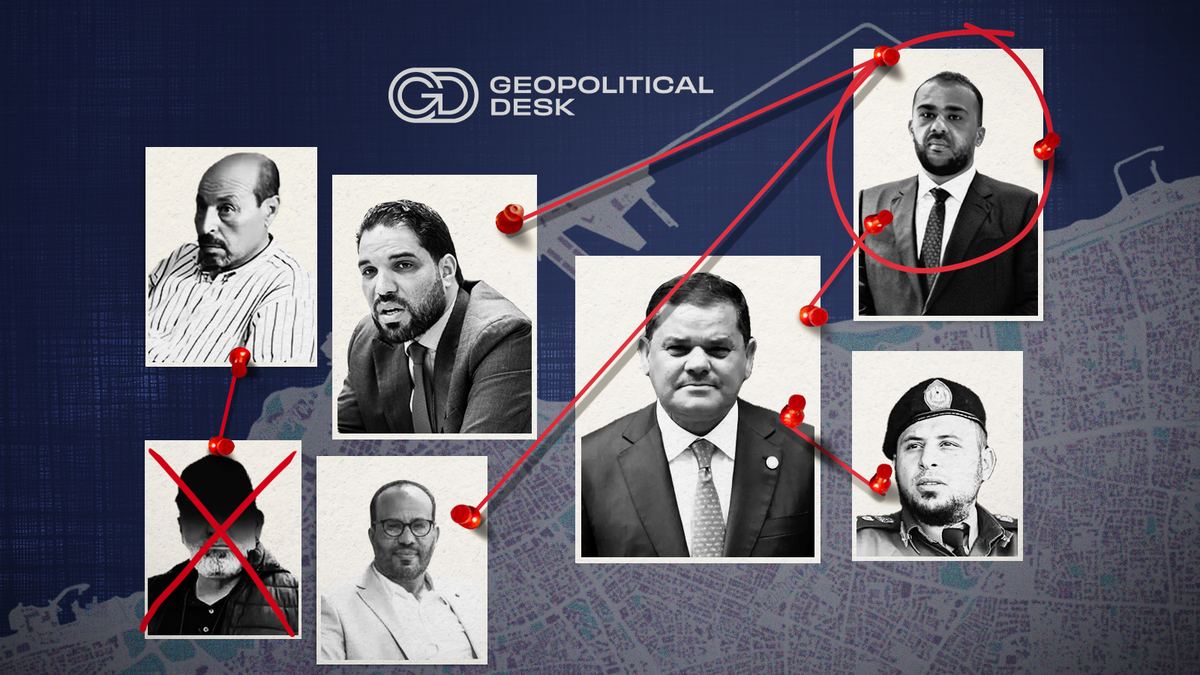
This article was one of our most popular reads in 2025, looking at how Libya's criminal networks and its political elite cooperate to sustain a broken status quo.
But such trends could very well flip in 2026.
The sudden emergence of “Gen Z protests” across the world has demonstrated just how quickly the tides can turn when the assumptions propping up outdated systems collide with the aspirations of a new generation of voters.
 The Geopolitical Desk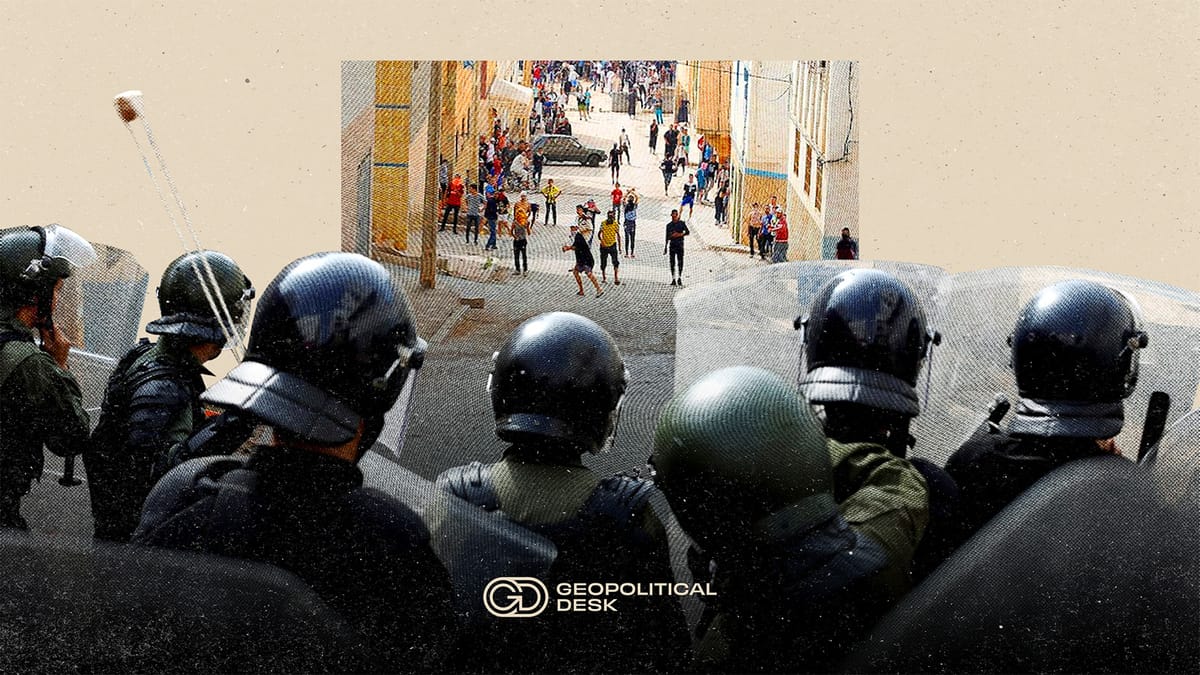
 The Geopolitical Desk
 The Geopolitical Desk
In the year ahead, knowing when that balance may shift is where both risk and opportunity sit.
That is the space we are trying to fill with The Geopolitical Desk.
We provide a blend of geopolitical intelligence and independent reporting, rooted in local insight, designed to help readers understand not just what is happening, but why it is unfolding the way it is.
Your readership — and, for many of you, your subscription — allows us to invest where it matters most: following files over months rather than ebbing and flowing with the news cycles; going deep in countries where access is limited; building cross-regional source networks; and most importantly paying our writers, editors, designers and contributors fairly.
As we look to 2026, the operating environment across MENA and other frontier markets will remain volatile.
The task (for us, at least) will be to separate structural shifts from passing turbulence, and to understand where interests are converging quietly, before they do so publicly.
Thank you for reading, engaging and trusting our work so far. We hope you continue following us in 2026.
From all of us here at GPD, happy holidays and best wishes for the year ahead,
Oliver Crowley
Founder, The Geopolitical Desk
P.S. Please forward this to anyone who might find it useful. If you’re reading this second-hand, you can sign up for our free newsletter here.
What you secure if you subscribe today:
- Full access to strategic reporting: Independent, on-the-ground insight across politics, energy, security and market exposure.
- Consistent, decision-ready analysis: Structured briefs based on primary research designed for decision-makers who need clarity in complex markets.
- A tailored user experience: Monitor full regional coverage or narrow in on specific markets.
- Budget efficiency: An annual subscription at only a fraction of the standard rate.
