
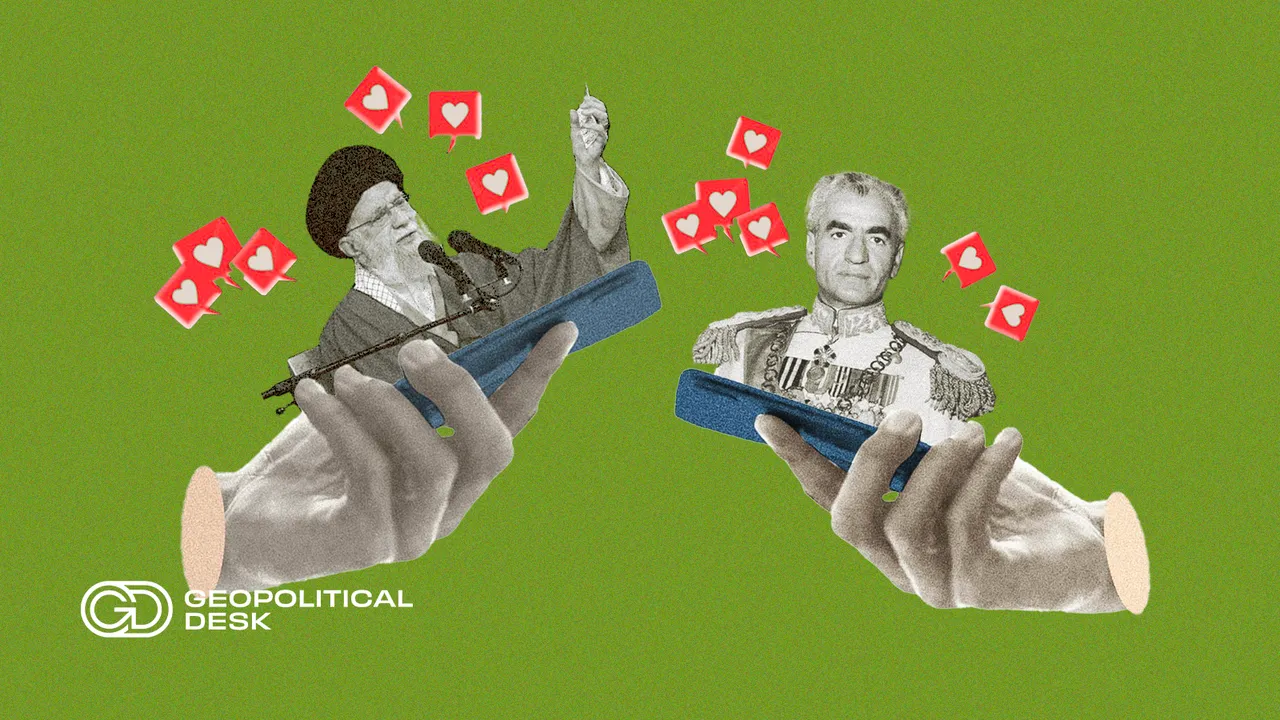
The 2026 protests in Iran have produced a strange revival: the sudden visibility of pro-Pahlavi sentiment, carried less by seasoned royalists than by the social media-savvy youth.
What looks like a monarchist comeback is, in fact, something newer and more slippery: a politics of images, memes, and manufactured nostalgia, amplified by AI-driven narrative warfare.
It says less about a genuine desire to restore the crown than about a vacuum in leadership, a hunger for coherence, and a Gen-Z imagination searching for symbols that not only feel national but also make them escape their reality.
The appeal begins with absence. The last major protest wave in 2022-23 collapsed under the weight of opposition infighting and the lack of a recognizable figurehead.
In 2026, rallying around the most famous name in exile - even one with glaring limitations - has given protests a face and a focal point. Reza Pahlavi, by virtue of lineage alone, offers form where there was only fragmentation.
That, more than conviction, explains the sudden boost in his visibility.
But most of those brandishing lion-and-sun flags on the streets are not monarchists in any traditional sense.
They never lived under a Shah. Their relationship to monarchy is mediated through stories told by parents and grandparents, and through a steady diet of nostalgia content produced abroad.
Channels like Manoto and Iran International have spent years aestheticizing late-Pahlavi Iran: economic development, modern women, national pride.
Even more sober BBC Persian documentaries on contemporary Iranian history have inadvertently offered young viewers an alternative timeline, a glimpse of “what could have been,” inviting the question that animates so much Gen-Z anger: why did people revolt in 1979 only to make things worse?
Media power matters here, and so does geopolitics. Iran International’s editorial line shifted sharply after 2023, when Saudi Arabia stepped back from funding the channel following its rapprochement with Tehran.
Behind the scenes, Israeli backing filled the gap. Initially, the channel supported a broad opposition spectrum, but after Pahlavi’s highly publicized April 2023 visit to Jerusalem, its tone narrowed.
The message became unmistakably pro-monarchist. Pahlavi gained not only favorable coverage but access to Israel’s formidable cyber and narrative capabilities.
None of this negates his real and growing support inside Iran, but it helps explain the scale and coordination of his online presence.
