
▸ 🇮🇷 The gap between Trump's Iran deal narrative and Tehran's reality
▸ 🇺🇦 Ukraine's energy war against Russia's export infrastructure
▸ 🇱🇾 The full story behind Arkenu's "termination"
▸ 🇺🇸 The U.S. economic squeeze from the Iran war
▸🌍 Is this the end of the "Middle East"?
Trump is publicly asserting that a deal with Iran is close, while Iranian officials say they have only received written notes and accuse Washington of using the war narrative to manipulate oil markets.
The gap between the two positions is not merely rhetorical, but reflects a fundamental divergence in how each side is managing domestic audiences, and what they each stand to gain from ambiguity.
That ambiguity has a price. Average U.S. gas prices hit $3.98 this week — the highest since 2022 — driven directly by the conflict.
The economic pressure is beginning to compound political pressure on the Trump administration, even as Washington projects confidence in its negotiating position.
On the energy front, Ukraine continued its campaign against Russian export infrastructure, with drone strikes heavily damaging Russia's largest oil export facility and a refinery in Ufa.
These strikes are part of a deliberate Ukrainian effort to stifle Russian revenues at a moment when Moscow is seeking to benefit from elevated oil prices caused by the Iran disruption.
Separately, Ukrainian soldiers have reportedly established a presence in western Libya. Although unconfirmed, Ukraine has allegedly been targeting Russian assets in the southern Mediterranean, with some reports even suggesting they were behind the sinking of the Russian LNG tanker Arctic Metagaz.
As we covered in our latest Libya Energy Insights report, although the expansion of the “energy wars” to North Africa remains elusive, the longstanding influence of Russian PMCs in eastern Libya in addition to the growing presence of Ukrainian military advisors in western Libya point to the possibility of geopolitically-driven sabotage operations against energy facilities in the region.
Elsewhere, the U.S. Senate confirmed Markwayne Mullin as the new DHS head after Kristi Noem was fired, in a 54–45 vote that exposed the narrowing margins of Trump's domestic coalition.
In the UK, a political controversy is deepening around the McSweeny phone case, raising questions about transparency inside the Labour government at a time when public trust in political institutions is already strained.
And this week at GPD, we sat down with Mohammed Soliman, one of the most consequential strategic thinkers working on West Asia today, for a conversation that reframes how the entire region should be understood in the current moment.
Let's get into it.
Trump says a deal is close. Iran says not quite
What happened: President Trump has continued to assert publicly that the U.S. and Iran are close to a diplomatic agreement. Iran's parliament speaker contradicted this directly, stating that Tehran has only received written communications — not entered negotiations — and accused Trump of using the conflict narrative to drive up oil prices.
Why it matters: This reflects an active gap in how each party is using the appearance of diplomacy as a tool to further their wartime objectives. Both are trying to sway markets and domestic audiences, particularly in the United States. For markets, the ambiguity itself is a variable: any sudden convergence or breakdown could move energy prices sharply.
What this means: The risk is that public expectations get ahead of actual diplomatic progress, or that one side is managing a de-escalation narrative that the other has not agreed to. Either scenario creates volatility. The Iran parliament speaker's suggestion that this is market manipulation signals Tehran is not prepared to play along with Trump's timeline.
Go deeper: A special report from our Iran Desk argued that the Iran conflict has shifted from an episodic risk to a structural baseline and that markets must now price instability continuously, not periodically. It outlined three major scenarios for the conflict, one of which appears to be unfolding.
 The Geopolitical Desk
Ukraine strikes at the heart of Russia's oil export capacity
What happened: Ukrainian drones heavily damaged the Primorsk, Russia's largest export terminal, and an oil refinery in Ufa. The strikes are part of a sustained campaign to degrade Russia's ability to capitalise on elevated global oil prices during the Iran war.
Why it matters: With oil prices elevated by the U.S.-Iran conflict, Russia stands to benefit significantly from export revenues. Ukraine is attempting to eliminate that windfall before it can be converted into war funding. Primorsk handles a substantial portion of Russia's crude exports to global buyers, making this one of the most strategically significant infrastructure strikes of the war.
What this means: Market observers should note that simultaneous supply-side pressure from both the Iran war and the Ukraine campaign creates a compounding dynamic in global oil markets. The Ufa refinery strike also has domestic implications inside Russia as it affects fuel supply chains in a major industrial region, adding internal economic pressure to an already strained wartime economy.
Go deeper: This week, an attack on the Russian LNG tanker Arctic Metagas in the central Mediterranean and its subsequent drift toward Libya’s coastline has caused significant concern, both for its potential environmental impact and for its geopolitical implications.
Gas prices hit a three-year high as the Iran war squeezes the U.S. economy
What happened: Average U.S. gas prices reached $3.98 this week — the highest level since 2022 — driven primarily by the ongoing conflict with Iran and its impact on regional energy flows.
Why it matters: The Iran war is no longer an abstraction for American consumers. At $3.98, pump prices are a live political issue, and one that will only intensify if the conflict drags on or escalates further. This creates a domestic pressure dynamic that complicates Trump's war posture.
What this means: The political arithmetic is shifting. An administration that entered the conflict with already strained public support may find its room to manoeuvre narrowing as economic costs accumulate. The longer the conflict continues without resolution, the more it erodes the economic case for sustained military engagement.
"The Middle East as we knew it is over"
What happened: GPD sat down with Mohammed Soliman — the director of the Strategic Technologies and Cyber Security Program at the Middle East Institute in Washington, and one of the most closely read strategic analysts on the region — for a wide-ranging conversation on his new book West Asia, the region's realignment, the role of AI infrastructure, and what the current moment means for the world.
Why it matters: Soliman's framework doesn't treat the current upheaval as a crisis, but as a structural transition. The end of a post-Cold War regional order and the emergence of something qualitatively different, shaped by technology, sovereignty anxieties and the collapse of old alignments. That's a more consequential claim than most analysts are willing to make, and it has significant implications for how institutions, investors and policymakers should be positioning.
What this means: The interview covers AI infrastructure competition, the Gulf's evolving strategic calculus, and why the realist framework is back as the dominant lens for understanding what's happening.
Read the full interview:
The Geopolitical Desk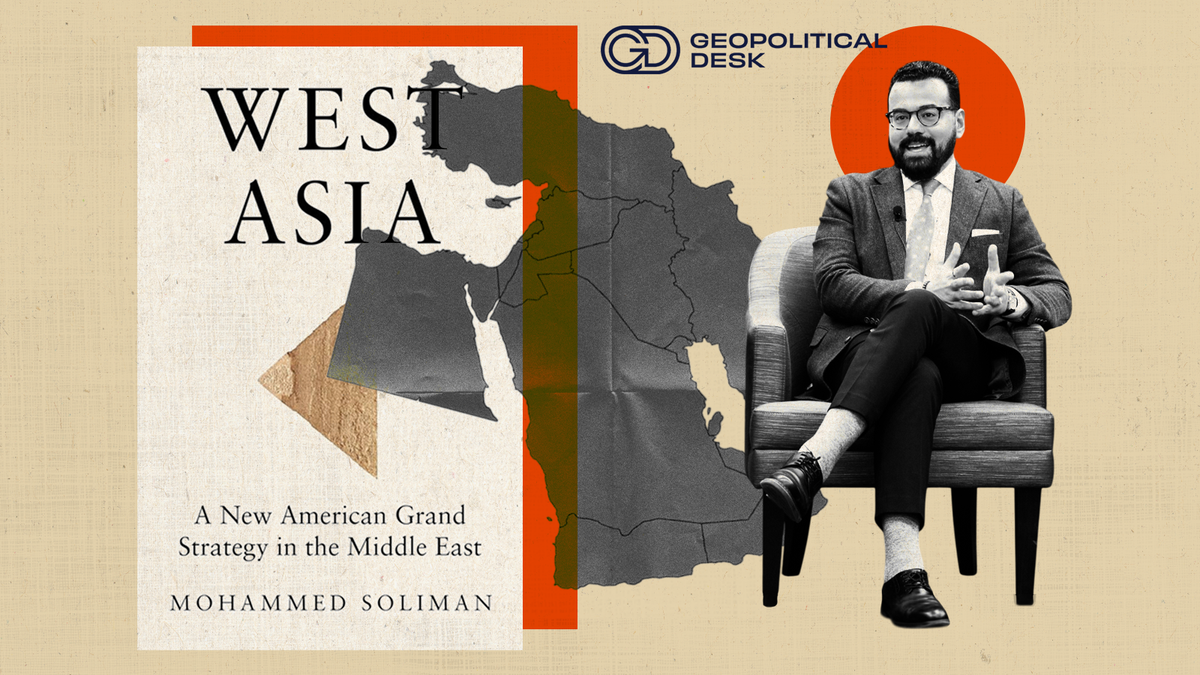
Special Report: Libya Energy Insights - March 2026
This week our Libya Desk published the latest Libya Energy Insights report, analysing production dynamics, infrastructure risk and the commercial environment for operators and investors in Libya's energy sector.
The big story that most are watching closely involves the private Libyan oil company Arkenu.
Explore the report:
The Geopolitical DeskThis report covers production trends, field-level risk, and what the current political environment means for energy sector exposure in Libya. This is the level of analysis we provide to Enterprise subscribers. If you would like to set up a free 30-day trial for your organisation, get in touch.
The Geopolitical Desk
As always, thank you for reading and for your continued support.
Feel free to reply with feedback or suggestions.
See you next week,
Oliver Crowley
Co-Founder, The Geopolitical Desk
P.S. Please forward this to anyone who might find it useful. If you’re reading this second-hand, you can sign up for our free newsletter here.
Professionals across energy markets, diplomacy, risk advisory and investment use GPD Intelligence to track geopolitical developments before they move markets.
If you find this coverage valuable, you can unlock the full Intelligence briefings and scenario analysis.
