

▸ 🇾🇪 Yemeni government launches counteroffensive
▸ 🇪🇹🇪🇷 Eritrea and Ethiopia meet on the battlefield
▸ 🇺🇸 US Republicans fret as midterm draws closer
▸🇺🇦🇰🇷 Ukraine and South Korea at odds.
There are times where it feels like the entire world is descending into war, and unfortunately this past week felt like one of those moments.
In Yemen, the Yemeni government and its allies launched a new offensive on the Houthis, hoping to reclaim the Red Sea coastline it had lost to the rebels only weeks ago.
Meanwhile the Horn of Africa grows closer to a regional war by the minute as Eritrean troops have entered the battlefield in northern Tigray
And from the battlefield to the electoral arena as in the United States the midterms are drawing near, and Republicans are getting nervous.
Now,
Lets get into it
Riyadh caught between a debilitating war and a costly peace
What happened: Yemen’s Presidential Leadership Council launched Operation Dawn of Yemen on 5 October, with the Giants Brigades and Homeland Shield forces leading the ground push under heavy Saudi air cover. Government forces took ground around Dhubab but turned the offensive into a battle of narratives by prematurely declaring Mocha and the Bab al-Mandab coast retaken, before fighting for both resumed two days later. The Houthis, who deny losing Mocha, have tightened their siege of Taiz by cutting its last main road to Aden. They have also struck at the core of the Saudi economy, hitting energy sites where officials are likely downplaying the damage. The strikes have carried a war once felt mainly in Yemen’s southwest to Riyadh, where attacks on the airport killed three people on 8 October and reportedly killed 12 more on 10 October, injuring hundreds and forcing flight cancellations.
Why it matters: Despite high oil prices, Riyadh is under financial strain, with flows through Hormuz volatile, Yanbu its main export route now threatened by the Houthis, and deficits funded by borrowing. Having already cut back its megaprojects this year, the leadership may see the war as part of the same house cleaning, putting its finances in order and removing the Houthi threat on its border once and for all. The bet looks ill-advised, as its allies remain lukewarm. The Mecca Pact offers defence rather than offence, as Pakistan frees Saudi units but will not cross into Yemen and Turkey rules out offensive operations. Elsewhere, Washington has so far refused strikes, France has yet to deploy at Yanbu and the UAE stays out, while Oman urges de-escalation and Tehran offers help only through a return to the 2023 roadmap, which largely mirrors Houthi demands.
What it means: Riyadh faces two bad choices, a debilitating war or a costly peace that would have it fund salaries in Houthi areas, lift restrictions on their ports and airport, and face demands for billions in war reparations. The PLC’s promise to liberate Sanaa looks, for now, far-fetched, and gains on the coast are unlikely to bring a breakthrough inland. Pragmatic behind their anti-al-Saud rhetoric, the Houthis are escalating to push Riyadh towards peace on their terms, but this could instead harden Saudi resolve and lock both sides into a war of spectacular strikes inside the kingdom and gains and reversals in Yemen that settle into stalemate.
Risk metre (High): Should the US-Iran war resume, Iran-aligned Iraqi militias could strike energy facilities across the Eastern Province, the heart of Saudi oil production, leaving the kingdom’s exports under fire on both its Gulf and Red Sea coasts. If reports that Riyadh is seeking Syrian troops prove true, it would also show how desperate the kingdom has become.
Week 3 of the war: Ethiopia and Eritrea meet in the battlefield
What happened: Eritrean military forces moved into northern Ethiopia's Tigray region, carrying heavy weaponry. Dozens of trucks were sighted passing through the town of Adigrat, on their way to the front further south. In response, the Ethiopian National Defense Force (ENDF) launched drone strikes targeting Eritrean troop formations and positions within Ethiopian territory. Ethiopia formally notified the UN Security Council that it faces an "all-out invasion" and must defend itself, demanding an immediate Eritrean withdrawal. Meanwhile, Asmara rejected the accusations, claiming Addis Ababa is inventing pretexts to launch an offensive to seize Red Sea port access.
Why it matters: This direct military clash marks the transition from an indirect proxy conflict to open state-on-state war. The Eritrean incursions into northern Tigray is the last nail in the coffin of the 2018 peace agreement. By engaging Eritrean forces directly with air assets and appealing to international bodies, Ethiopia is attempting to strike the first blow, not waiting for the Eritreans to attack.
What it means: The conflict is expanding into a sovereign cross-border war. With Ethiopian drone strikes actively targeting Eritrean personnel, reciprocal strikes or counter-offensives by Asmara are likely. The fighting risks locking both nations into sustained border battles across the rugged terrain of northern Tigray, and potentially Afar state as well, worsening regional escalation, and giving casus belli to Ethiopian Prime Minister Abiy Ahmed to pursue his expansionist ambitions and launch an invasion of Eritrea’s Red Sea coastline.
Risk metre (High): Active clashes between the two national armies are a matter of time if they haven’t taken place already. This will irreversibly draw Eritrea into Ethiopia’s internal conflict. The repercussions of this war will be felt across the region, especially in Sudan and Somalia, already gripped by brutal conflict and instability.
Republicans fret as midterm draws closer
What happened: The U.S. midterm elections are now less than a month away, with voting scheduled to take place on 3 November, and political campaigns are making their final pitches to voters. Polling, as well as results from previous special elections, has revealed deep unpopularity towards U.S. President Donald Trump and his Republican Party, with growing internal fears that the party will suffer a major defeat. In response, the party has sought to withdraw funding from campaigns it considers unlikely to win, in an effort to shore up support in other closely contested elections.
Why it matters: Since the 2024 general election, the Republican Party has held what is known in U.S. politics as a ‘trifecta’, meaning control of the presidency, the House of Representatives and the Senate. This control has not resulted in Congress passing many laws, largely due to the Republicans’ slim majorities in both chambers. However, it has allowed President Trump to avoid significant legislative scrutiny of his executive actions, as Congress is designed to hold the presidency accountable. While Trump will remain president until 2028, if the Democrats are able to take control of at least one chamber of Congress, they will likely be able to create multiple legal obstacles and launch investigations into the Trump presidency.
What it means: Recent polling in the United States has revealed that many Americans are unhappy with Trump and feel that he has failed to deliver on his campaign promises, including improving the economy, ending foreign wars and deporting only ‘criminal immigrants’. Trump has also increasingly tied the Republican Party’s identity to his own, meaning that his unpopularity has begun to weigh on Republicans in key stronghold states such as Kansas, Texas, and Iowa. However, this also means that, even if the Democrats secure major victories in the upcoming midterms, these gains are less likely to represent a permanent political shift. Once Trump is no longer president, these Republican-leaning states will likely return to their political median.
Risk metre (low): It is important to highlight that polling does not directly translate into election results. Although current predictions suggest that the Democrats could win multiple gubernatorial races and gain control of both chambers of Congress, there is also a very real chance that their victories will be more limited. If the Democrats do achieve major victories, however, there is a small risk that Trump could attempt to disrupt the election process. He has already begun to discredit elections publicly, but it remains unclear whether he will take further action, such as deploying the National Guard to polling stations or preventing newly elected lawmakers from taking office. While the likelihood remains low, the risk is unusually high for the United States, highlighting the extent to which its political institutions have weakened under Trump.
In 2025, GPD highlighted how the midterms would become a major moment in his turbulent presidency. Read the article here:
 The Geopolitical Desk
An unexpected diplomatic fallout between two friends
What happened: South Korea announced it will recall its ambassador to Ukraine, its first such recall of an envoy since 2008. The dispute erupted after Ukrainian President Volodymyr Zelensky revealed during his speech at the UN General Assembly that Kyiv had transferred two captured North Korean POWs to Seoul. South Korea strongly protested the public disclosure, arguing that revealing this sensitive information put the soldiers' families in North Korea at severe risk of retaliation. Ukraine hit back by voicing its displeasement over recent allegations regarding South Korean fuel shipments which allegedly reached Russian ports.
Why it matters: The fallout undermines a delicate geopolitical relation. South Korea has provided humanitarian and financial assistance to Kyiv but has resisted direct arms transfers to preserve regional stability and manage relations with Moscow. Kyiv's public disclosure compromised Seoul’s quiet intelligence channels regarding North Korean military personnel deployed in the conflict. In response, Kyiv urged calm, stating diplomacy must prevail over emotional overreactions while remaining open to restoring diplomatic channels.
What it means: The recall marks a significant rupture in bilateral trust. It stalls prospects for expanded defense cooperation between Kyiv and Seoul, including potential South Korean artillery or air defense support. The public exposure of the POW transfer made South Korea’s president Lee Jae-myung look weak in safeguarding the safety of North Korean transferees or their families. Not reacting forcefully would have invited intense political backlash from human rights organisations and conservative opposition lawmakers. Kyiv miscalculated on this matter and risks alienating a vital non-NATO partner capable of providing high-tier defense manufacturing support just as North Korea deepens its combat integration with Russian forces.
Risk metre (low): Recalling the Korean ambassador will likely prove sufficient in South Korea to satisfy domestic critics of president Lee. In the coming months, relations will therefore gradually be restored again behind the scenes. But what this entails for the future transfer of North Korean POWs to South Korea is hard to say.
🇺🇦 Ukraine: More than 30 people were killed in the city of Kramatorsk in the Donbas region when Russian glider bombs hits two passenger buses on Thursday. Russian drone and missile attacks have steadily increased over the recent days, leading to numerous civilian casualties, sometimes dozens at a time.
🇸🇩 Sudan: Forces belonging to the Tasis coalition (RSF and SPLM-N) launched a cross-border incursion from Ethiopia into Sudan’s Blue Nile state, establishing a foothold in the district of Wad al-Mahi. This latest push places the rebels within 60 kilometers of the regional capital of Ed Damazin.
🇲🇱 Mali: On Tuesday Malian government troops and Russian mercenaries returned to the city of Kidal in the far north of the country. Kidal had been lost to the FLA/JNIM coalition in April and had functioned as theb Tuareg’s defacto capital ever since. This time however the FLA withdrew from the city without a fight, leaving it abandoned before the Malian military even arrived.
🇲🇲 Myanmar: Having failed to defeat the Arakan Army in a direct confrontation, junta troops stationed in the regional capital Sittwe have tried on several times to outflank the rebel group. An attempt on Friday to land troops on the nearby island of Ngapyi ended in disaster with junta soldiers forced to withdraw under heavy enemy fire.
Who is Libya’s new parliament speaker?
In a dramatic shift for eastern Libya's political landscape, the House of Representatives ousted its 12-year leader Agila Saleh, replacing him with low-profile parliamentarian; al-Saleheen Abdul Nabi al-Abidi. The tactical selection by the Libyan National Army (LNA) brings the legislature into direct alignment with military leadership while carefully preserving regional interests as well as Obeidat tribal allegiances.
 The Geopolitical Desk
Morocco's new premier faces a tough house and tired public
Following the Authenticity and Modernity Party’s (PAM) victory in Morocco's September 2026 legislative elections, Fatima Zahra el-Mansouri was appointed as the nation’s first female head of government. Taking office amid record-low voter turnout, el-Mansouri faces the immediate challenge of forming a working coalition without her party’s former key ally, the RNI. Beyond navigating complex social and religious protocols, her incoming government must address widespread public frustration driven by rising fuel costs, persistent youth unemployment, and high living costs.
 The Geopolitical Desk
Iran's Caspian Issue
Iran’s northern partnerships have grown increasingly important amid wartime disruptions and pressure on its southern trade routes. However, despite improved relations with its Caspian neighbours, Tehran has made limited progress on longstanding disputes over maritime boundaries, energy infrastructure and regional security. As the prospect of new transport and gas corridors threatens to further sideline Iran, the country faces difficult choices over whether to ratify the Caspian Sea’s legal framework and how to protect its strategic interests.
 The Geopolitical Desk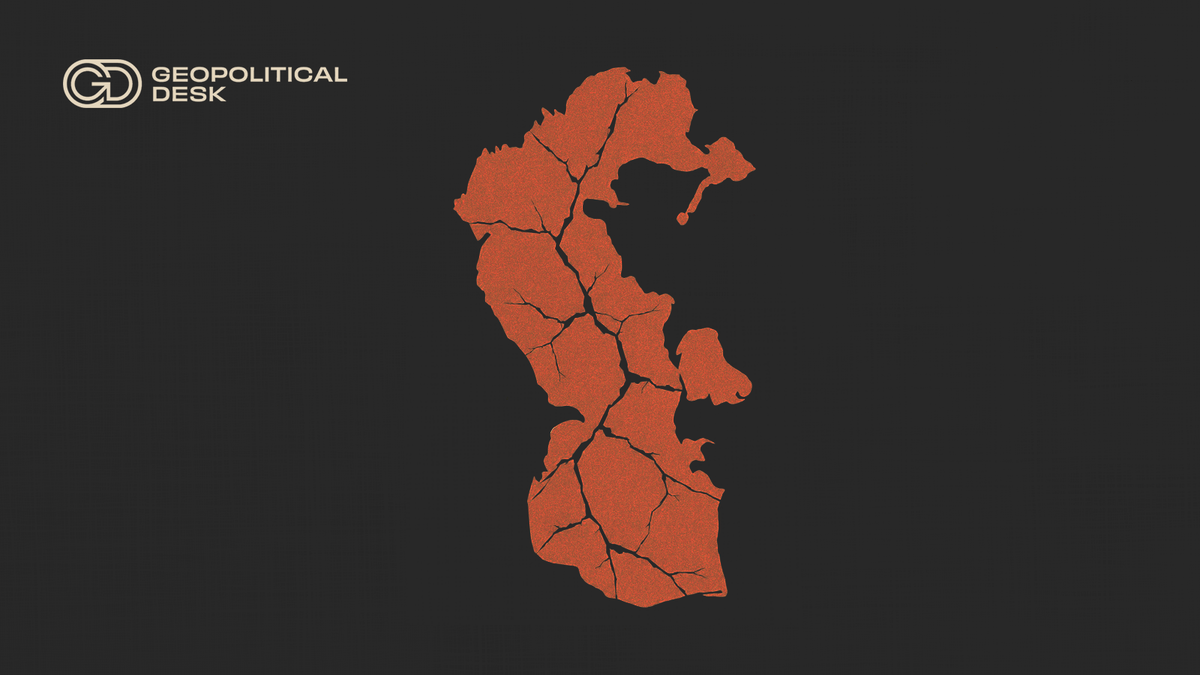
As always, thank you for reading and for your continued support.
Feel free to reply with feedback or suggestions.
See you next week,
The Geopolitical Desk team
P.S. Please forward this to anyone who might find it useful. If you’re reading this second-hand, you can sign up for our free newsletter here.
Professionals across energy markets, diplomacy, risk advisory and investment use GPD Intelligence to track geopolitical developments before they move markets.
If you find this coverage valuable, you can unlock the full Intelligence briefings and scenario analysis.


