

▸ 🇮🇷 U.S. and Iran locked in a war of interpretations
▸ 🇲🇱 Russian mercenaries continue to struggle in northern Mali
▸ 🇺🇸 Influential Senator Lindsey Graham dies at 71
Whoever told you that the summer is usually a slow season when it comes to the news was obviously not talking about the summer of 2026.
After several months of cautious optimism, the Memorandum of Understanding between the United States and Iran has shown signs of immense stress.
Additionally, in northern Mali, Tuareg and jihadist forces launched their second major offensive this year, putting the Malian military and Russian mercenaries on the defensive
And the U.S. Senator from South Carolina, Lindsey Graham, had died from a "brief and sudden illness". Graham had been influential in guiding U.S. foreign policy for years.
Now,
Lets get into it
U.S. and Iran locked in a war of interpretations
What happened: Viewing Oman's southern route in the Strait of Hormuz as a violation of the MoU, Iran targeted several vessels transiting the route this week. The United States responded by cancelling Iran's oil waivers and launching its largest strikes on Iran in weeks, with Trump saying he believes the MoU is now over. Iran retaliated with strikes on U.S. logistical and military assets in Bahrain, Kuwait, Qatar, Oman and Jordan.
Why it matters: Markets prematurely priced in a swift return to pre-war Gulf transit levels once the MoU was announced. Iran and the U.S. read Article 5 in conflicting ways, a gap likely to produce further clashes, traffic disruption, and potentially a renewed U.S. blockade on Iran.
What it means: The MoU reflects months of diplomatic effort and is unlikely to collapse outright. Its implementation, however, is regressing, with differences piling up faster than they're resolved. That trajectory won't shift unless Tehran, Muscat and Doha find a compromise between Iran's need for nominal control over the Strait, the world's need for full transit, and U.S.-GCC resistance to Iranian dominance.
In this week's article, GPD examines how last month's Iranian bank disruptions exposed long-standing vulnerabilities in the country's aging IT infrastructure amid mounting external pressure.
Read the article here:
 The Geopolitical Desk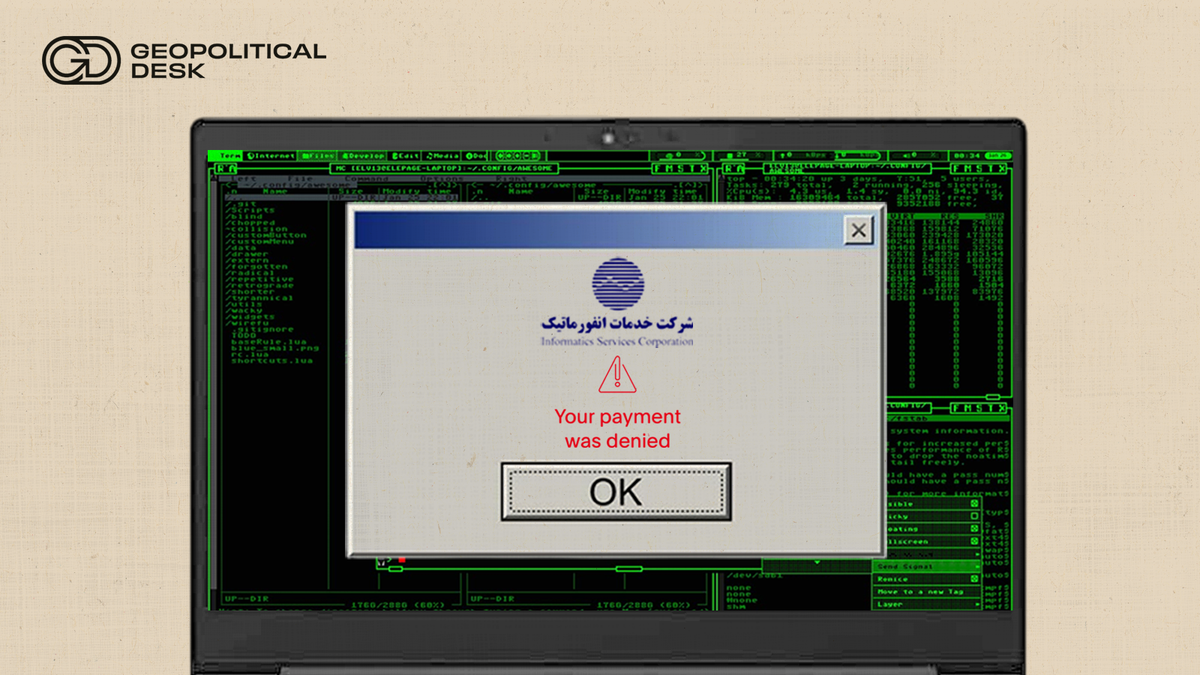
A second Tuareg/jihadist offensive in northern Mali catches the Russians off guard
What happened: This week Tuareg separatists of the FLA and JNIM jihadists launched their second major offensive of the year in northern Mali. The target, the strategic desert town of Anefis and its local garrison, were quickly assaulted. Malian security forces and Russia’s paramilitary Africa Corps were pushed out of town, and were only able to break the rebel blockade and retake Anefis after a week of fighting.
Why it matters: The relatively successful insurgent offensive on Anefis has once again demonstrated the weakness of the Malian military and laid bare the Russians’ limited ability to halt the advancing jihadists and sustain Malian state control over the wide expanses of the north.
What it means: The wider Sahel region faces a dangerous, cascading security crisis as borders blur under insurgent expansion. With Western forces expelled, the fragile Alliance of Sahel States must increasingly pool resources to fight common threats, as seen by Niger and Burkina Faso assisting Mali. As al-Qaeda affiliates capture massive swaths of territory and coordinate with ethnic separatists, the entire region is becoming increasingly vulnerable to state collapse, threatening coastal West Africa.
Influential Senator Lindsey Graham dies at 71
What happened: Graham reportedly passed away from “a brief and sudden illness" at the age of 71. His death has come as a surprise, as the late senator recently returned from a trip to Ukraine, and was preparing to run for reelection for his senate seat in November.
Why it matters: Having been a presence in U.S. politics since his election to the House of Representatives in 1994 and his election to the Senate in 2002, Graham has had a significant impact on both U.S. domestic and foreign policy. A prominent interventionist, Graham was a vocal supporter of the United States' 2003 invasion of Iraq and has remained a staunch supporter of both Ukraine and Israel. Although he was previously an opponent of U.S. President Donald Trump, he has since become a close ally and has been instrumental in securing approval for Trump's judicial nominations.
What it means: Graham's passing will likely place additional pressure on the Republican majority in the Senate, with senior Republican Senator Mitch McConnell still absent due to an undisclosed illness. While South Carolina's Republican governor will be able to appoint an interim senator immediately, the appointee is unlikely to match the influence Graham had built within the institution. This could also potentially affect Trump's current support for Ukraine and the U.S. war with Iran, two theatres in which Graham had been a strong advocate.
In this week's America coverage, GDP takes a closer look at Trump's influence within the capital city of Washington, D.C., and how his increasing control over city affairs reveals his vision for the rest of the country.
Read the article here:
 The Geopolitical Desk
As always, thank you for reading and for your continued support.
Feel free to reply with feedback or suggestions.
See you next week,
The Geopolitical Desk team
P.S. Please forward this to anyone who might find it useful. If you’re reading this second-hand, you can sign up for our free newsletter here.
Professionals across energy markets, diplomacy, risk advisory and investment use GPD Intelligence to track geopolitical developments before they move markets.
If you find this coverage valuable, you can unlock the full Intelligence briefings and scenario analysis.


