
‣ 🇸🇾 One year on, Ahmed al-Sharaa has turned a surprise military victory into a multi-vector diplomatic campaign.
‣ 🇲🇦 Rabat converts 50 years of lobbying into a landmark UN resolution.
‣ 🇵🇰 Washington and Gulf investors eye Pakistan as a new node in the critical-minerals value chain.
Time is a strange thing, even so when it comes to geopolitics. Should leaders focus on short- or long-term strategy to resolve the issues of their day? And should they act fast or wait for time to take its course?
Syria is the case of speed: a political landscape reshaped in less than a year, with Sharaa quickly converting military gains into diplomatic legitimacy by calming neighbours and courting great powers.
Morocco is the case of slowness: decades of steady lobbying culminating in a UN resolution that effectively tilts the institutional field in Rabat’s favour.
And Pakistan sits somewhere in the middle, as the Trump administration tests its “diplomacy by deal” model in yet another arena, this time using critical minerals as the anchor.
We hope you enjoy this week's issue, and as always, if there’s a thread you want us to follow up on next, reply and tell us.
Now let's dive into it.
— Oliver, Co-Founder of GPD
If this email was forwarded to you, welcome! Be sure to sign up for free here to get our updates directly in your inbox.
And as always, tell us what you think and give us a follow on Instagram, LinkedIn and X to stay plugged in.
🇸🇾 Sharaa diplomacy: Syria’s new game on the board
What happened: Syrian President Ahmed al-Sharaa emerged from “Operation Deter Aggression” with an unexpected victory over Bashar al-Assad, inheriting a fragmented, sanctioned and war-damaged Syria. Rather than consolidating quietly, he moved fast: signalling restraint to neighbours, reassuring Russia and Iraq via backchannels and even sending overtures to Israel.
Why it matters: Sharaa is trying to convert a rebel movement once branded as terrorist into a recognised state partner without going through the usual transitional playbook. His approach leans heavily on:
- Prioritising stability signals to neighbours (Egypt, Gulf, Israel) instead of revolutionary zeal.
- Riyadh's support, which in turn sees a chance to cut Iran’s land corridor, weaken Hezbollah’s logistics and end Syria’s role as a Captagon hub.
- Washington’s involvement, which is framed around sanctions relief, investment consortia and potential business deals.
What this means: In less than a year, al-Sharaa has transformed Syria from a pariah state into a promising regional player. The latest UN Security Council visit on 6 December reflects this shift. The question now remains whether Syrian diplomacy can translate political recognition into investment, regional integration and industrial recovery.
Read the full analysis:
 The Geopolitical Desk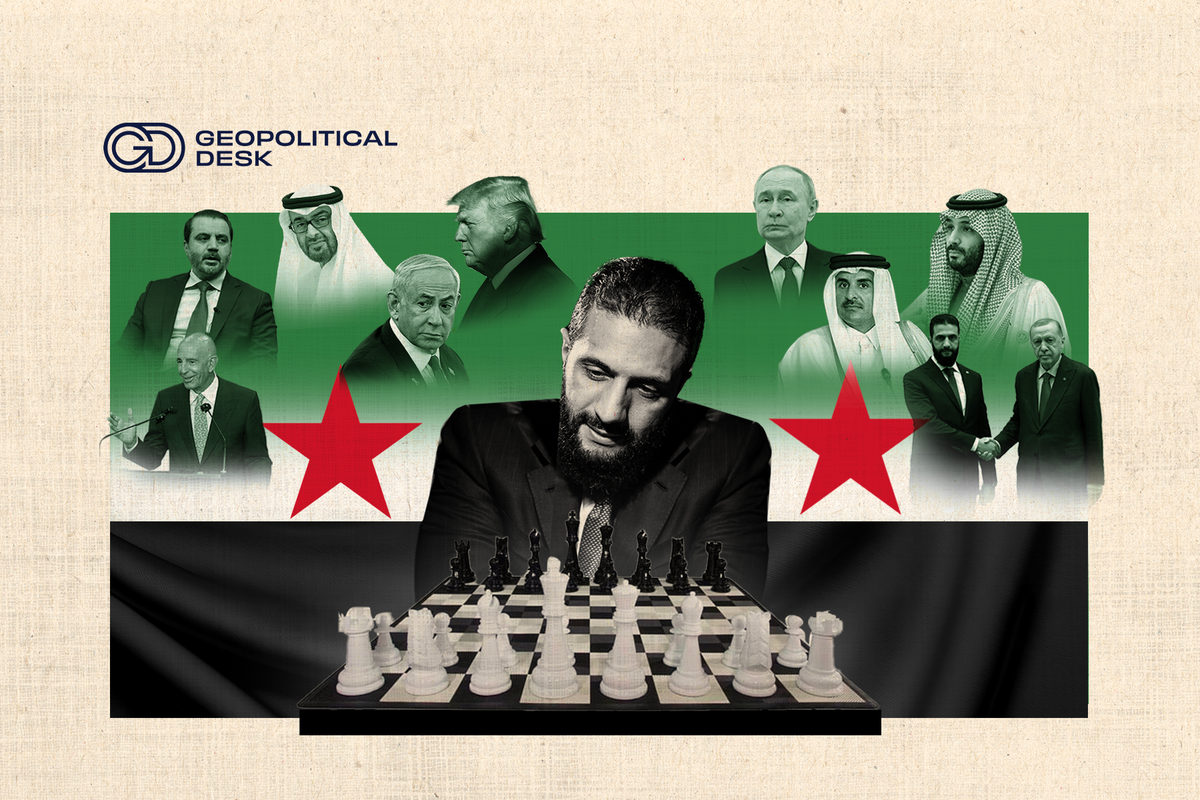
🇲🇦 How Rabat built a global case for Western Sahara
What happened: On 31 October, the UN Security Council adopted Resolution 2797 with near unanimity – widely read inside Morocco as an endorsement of Rabat’s sovereignty claims over Western Sahara. The vote came days before the 50th anniversary of the Green March, adding symbolic weight to what Moroccan officials framed as the “closing” of the Sahara dossier. Algeria and the Polisario Front rejected the resolution, but Rabat celebrated it as a diplomatic watershed after weeks of intense lobbying in which King Mohammed VI personally engaged world leaders to secure support.
