
▸ 🇮🇷 Whether the U.S.–Iran ceasefire holds, and on whose terms
▸ 🇱🇾 A second wind for the U.S. in Libya's diplomatic track (exclusive)
▸ 🇱🇧 Israel's continued operations in Lebanon and the ceasefire's contested scope
▸ 🌍 Join the GPD team at Semafor World Economy in D.C.
Hours before President Trump's own deadline to strike Iranian power plants and bridges last Tuesday, the U.S. President announced that a two-week ceasefire had been agreed between the United States and Iran.
While the announcement was received with relief in many quarters, the main question we have been receiving from clients and subscribers is whether it amounts to anything durable.
The Strait of Hormuz remains effectively closed, oil prices remain high, and Iran has already rejected a U.S. proposal for a 45-day extension.
Meanwhile, Israel continues to strike Lebanon — and the three sides cannot agree on whether Lebanon was ever included in the ceasefire to begin with (Iran says it was, the U.S. and Israel say it wasn't).
The week that preceded the ceasefire announcement was one of the most turbulent of the conflict.
Trump, for his part, threatened further strikes in a profanity-laden post on Truth Social, calling Iranians "crazy bastards" and promising that Tuesday would be "Power Plant Day and Bridge Day." He also called Iranians "animals" at a slightly surreal Easter celebration at the White House.
These observations raise two important questions that will determine the fate of the conflict in the weeks and months to come:
- First, has the U.S. crossed a threshold from being the world's policeman to becoming a rogue state?
- And second, has Iran, by surviving the campaign with its regional position arguably intact, emerged from this conflict in a stronger strategic posture than when it began?
Despite President Trump's alarming disregard for international law in his threats to bomb Iran back to the “Stone Ages” and the Iranian regime's continued survival, neither question has a clean answer yet.
But both will define the next phase of this conflict, ceasefire or not.
Elsewhere, we have a new exclusive that suggests Massad Boulos, Trump's Senior Advisor on Arab and Middle Eastern Affairs, appears poised to achieve a breakthrough on negotiations around Libya's unified budget next week, and has reinvigorated talks for a possible political unity deal.
I'll be in Washington next week for Semafor World Economy. More on that below.
Let's get into it.
A U.S.-Iran ceasefire arrives, but uncertainty remains
What happened: Trump announced a two-week ceasefire with Iran after intensifying rhetoric that suggested the U.S. President was prepared to commit war crimes in Iran. The ceasefire is holding, but Iran has since rejected a U.S. proposal for a 45-day extension. The Strait of Hormuz remains closed.
Why it matters: The ceasefire is real in the narrow sense that large-scale direct U.S.-Iran exchanges have paused. But the conditions that made the conflict possible, and that could reignite it, remain entirely in place. Iran has not reopened the Strait. Israel has not halted operations. And the diplomatic architecture that would be required to convert a two-week pause into a durable settlement does not currently exist.
What this means: Two strategic questions now dominate the post-ceasefire landscape. First: has Iran's regional position been strengthened by surviving the campaign? Tehran entered this conflict as a state under maximum pressure. It absorbed significant strikes, but it also demonstrated missile capability, held the Strait closed, and extracted concessions without capitulating. That is not nothing. Second: has the U.S. become a rogue state? The targeting of civilian infrastructure, the belligerent rhetoric from the White House, and the conduct of the campaign have been noted in capitals from Brussels to Beijing.
Go deeper: Our Iran Desk has been providing Enterprise subscribers with in-depth reporting and scenario analysis on the conflict. We are preparing a new special report outlining our assessment of what comes next.
 Oliver Crowley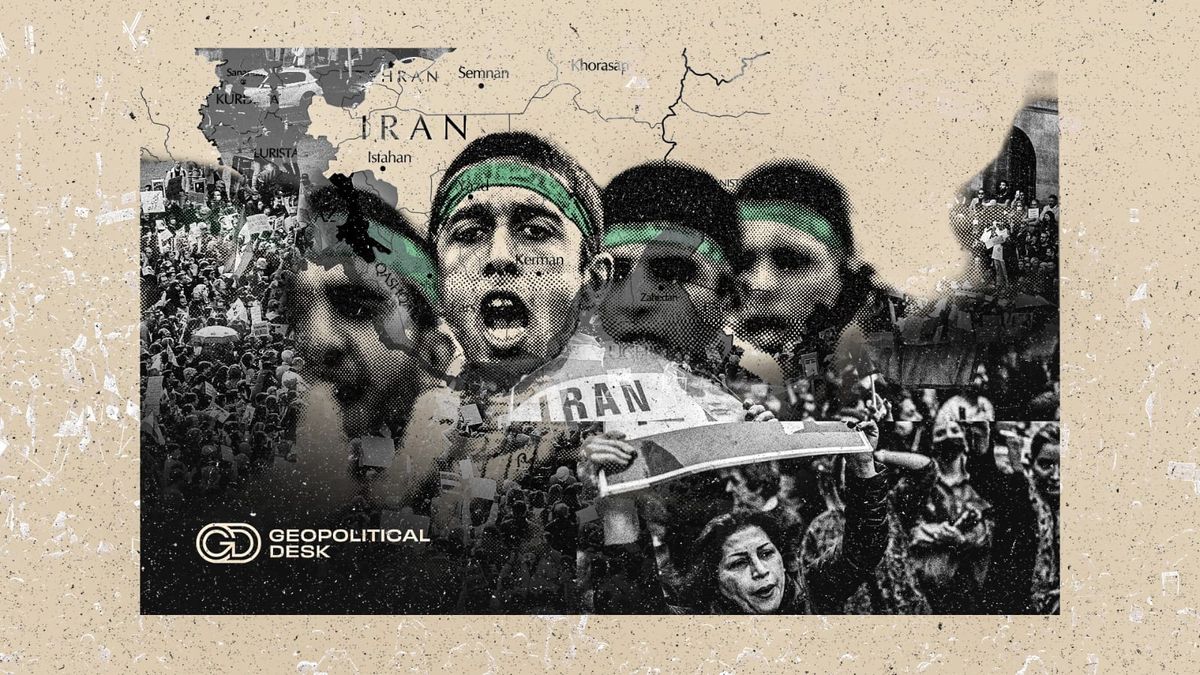
Exclusive: Boulos catches a second wind in Libya negotiations
What happened: Massad Boulos — whose grip on the North Africa portfolio had appeared to be loosening — has re-emerged with renewed traction in Libya's diplomatic track, in what represents a notable reversal from the trajectory we reported several weeks ago.
Why it matters: With everything that's happening in the world, from Iran to Ukraine, U.S. President Donald Trump needs a foreign policy win. Next week could potentially signal the first step towards that success. A more engaged Boulos, with a clearer mandate, changes the calculus for Libyan factions and for the European governments that remain deeply invested in Libyan stability.
What this means: The window for a meaningful diplomatic shift in Libya is narrow and historically prone to closing without warning. Boulos catching a second wind is a positive signal for those hoping for U.S. re-engagement, but the structural obstacles that have blocked progress to date have not disappeared.
Enterprise and Intelligence subscribers can read the full exclusive below:
The Geopolitical Desk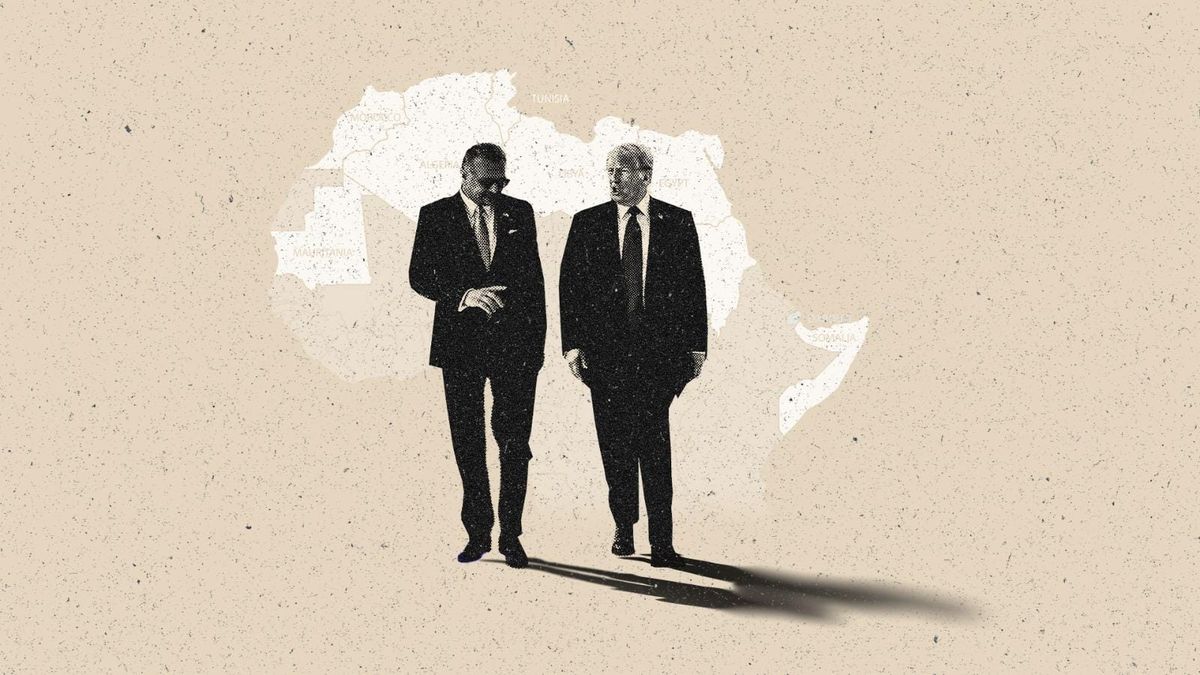
Two more countries move away from democratic governance
What happened: In Myanmar, General Min Aung Hlaing was formally appointed President by his proxy political party, formalising a status quo that has existed since he overthrew the elected government in 2021. In Burkina Faso, junta leader General Ibrahim Traoré — who himself took power in a 2022 coup — told citizens the country should "forget about the question of democracy," pushing previously promised elections back to 2029 at the earliest.
Why it matters: These are part of a broader pattern of military-led governments entrenching themselves while the international mechanisms designed to hold them accountable operate at reduced capacity. The U.S., historically the most assertive external enforcer of democratic norms, is currently occupied elsewhere and operating under an administration with limited appetite for that role.
What this means: For investors and risk analysts with exposure in West Africa or Southeast Asia: the governance risk horizon is lengthening. In Burkina Faso specifically, the delay of elections to 2029 extends the period of policy unpredictability and limits the leverage available to development institutions and commercial partners seeking contractual certainty.
GPD at Semafor World Economy
Next week, I'll be in Washington as part of the inaugural cohort of Principals at Semafor World Economy. The lineup brings together policymakers, investors and business leaders at a moment when geopolitics is moving markets in real time — which is, of course, exactly what GPD exists to help readers navigate.
I'll be in DC for a handful of days and am setting aside time for a small number of meetings, particularly with readers who are working on North Africa, West Asia or energy sector exposure, where we've been covering developments at a granular level.
If you're based in DC or will be there next week and want to connect, feel free to reply directly to this email. I'd welcome the conversation.
Learn more about Semafor World Economy:
The Geopolitical Desk
As always, thank you for reading and for your continued support.
Feel free to reply with feedback or suggestions — or, if you're in DC next week, to arrange a meeting.
See you next week,
Oliver Crowley
Co-Founder, The Geopolitical Desk
P.S. Please forward this to anyone who might find it useful. If you’re reading this second-hand, you can sign up for our free newsletter here.
Professionals across energy markets, diplomacy, risk advisory and investment use GPD Intelligence to track geopolitical developments before they move markets.
If you find this coverage valuable, you can unlock the full Intelligence briefings and scenario analysis.
