🇱🇾 Libya's energy transition remains structurally trapped (full article here)
This week’s newsletter is built around a moment that stuck with me.
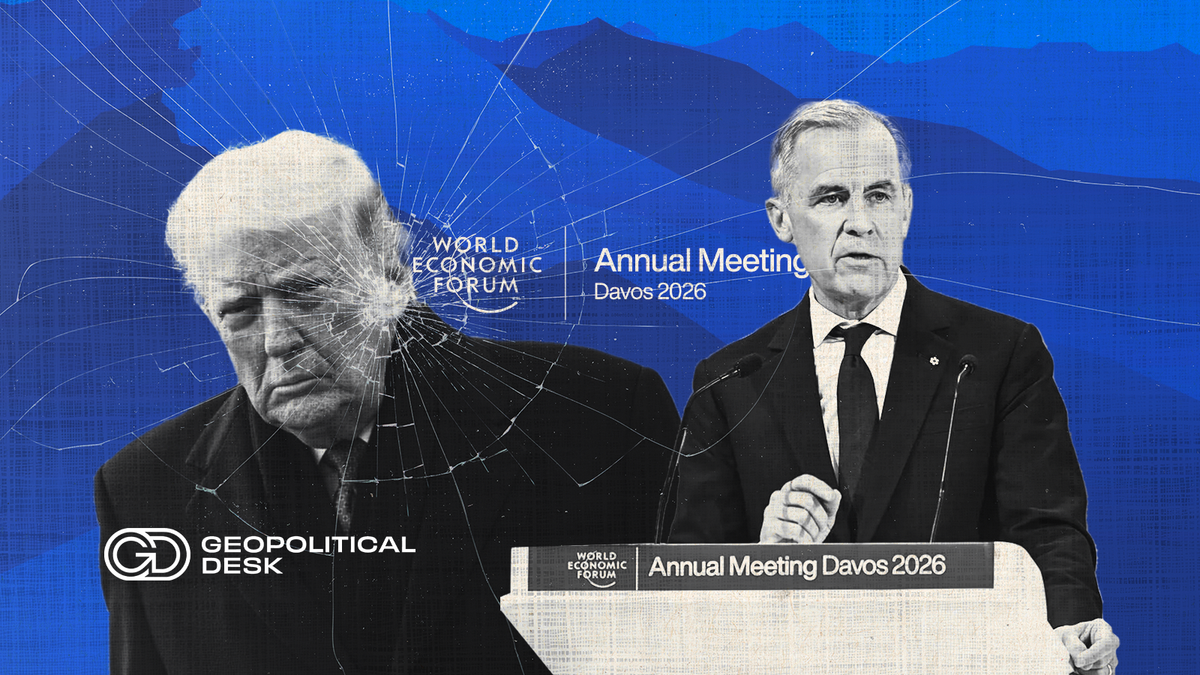
At Davos, Mark Carney described the collapse of a “pleasant fiction” — the idea that the rules-based international order still works as advertised, and that middle powers can remain safe by quietly going along with it.
If you received my last newsletter of 2025, you'll find the argument familiar.
That framing also resonates with two pieces we published this week:
- One looks at Europe’s growing strategic irrelevance and its reluctance to name reality.
- The other looks at Libya’s energy transition, where ambition keeps colliding with political fragmentation and external dependency.
Below is a breakdown of both pieces, although I encourage you to read the original articles to get the full picture.
🇪🇺 Can Europe still save itself from irrelevance?
What happened: Europe has struggled to respond coherently as power politics return. The performance of deference became a form of virtue signalling for European leaders, existing mainly to reinforce an imperfect but functional political status quo.
Why it matters: The rules-based order no longer constrains great powers, and middle powers that continue to perform belief in it risk strategic subordination. The previous arrangement worked for Europe until Trumpism entered the political ecosystem, and suddenly the assumptions that underlied the post-war system started failing.
What this means: Today, most of the threats that Europe has traditionally ascribed to China and Russia (economic coercion, weaponised interdependence, political pressure through trade, and threat to territorial integrity) are coming from the U.S., Europe's closest ally. Unless EU leaders can articulate a clear-eyed response in a world of great powers, the bloc risks becoming a rule-taker in a system that no longer protects it. As Carney put it, sovereignty today is less about rhetoric and more about the ability to withstand pressure.
 The Geopolitical Desk